• 2026.10.06 (Tue)
  • All articles
  • LOGIN
  • JOIN
Global Economic Times
[등록] 2026-09-01 15:48:31
  • Synthesis
  • World
  • Business
  • Industry
  • ICT
  • Distribution Economy
  • Well+Being
  • Travel
  • Eco-News
  • Education
  • Korean Wave News
  • Opinion
  • Arts&Culture
  • Sports
  • People & Life
    • International Student Report
    • With Ambassador
  • Column
    • Cho Kijo Column
    • Cherry Garden Story
    • Ko Yong-chul Column
    • Kim Seul-Ong Column
    • Lee Yeon-sil Column
  • Photo News
  • New Book Guide
MENU
 
Home > Well+Being

National University Hospitals Struggle to Normalize Bed Occupancy and Surgeries Amid Prolonged Medical Dispute

Global Economic Times Reporter / Updated : 2026-10-06 15:56:43
  • -
  • +
  • Print
"No recovery since the medical conflict; more than 4 out of 10 beds remain empty, and surgeries drop by over 20%."


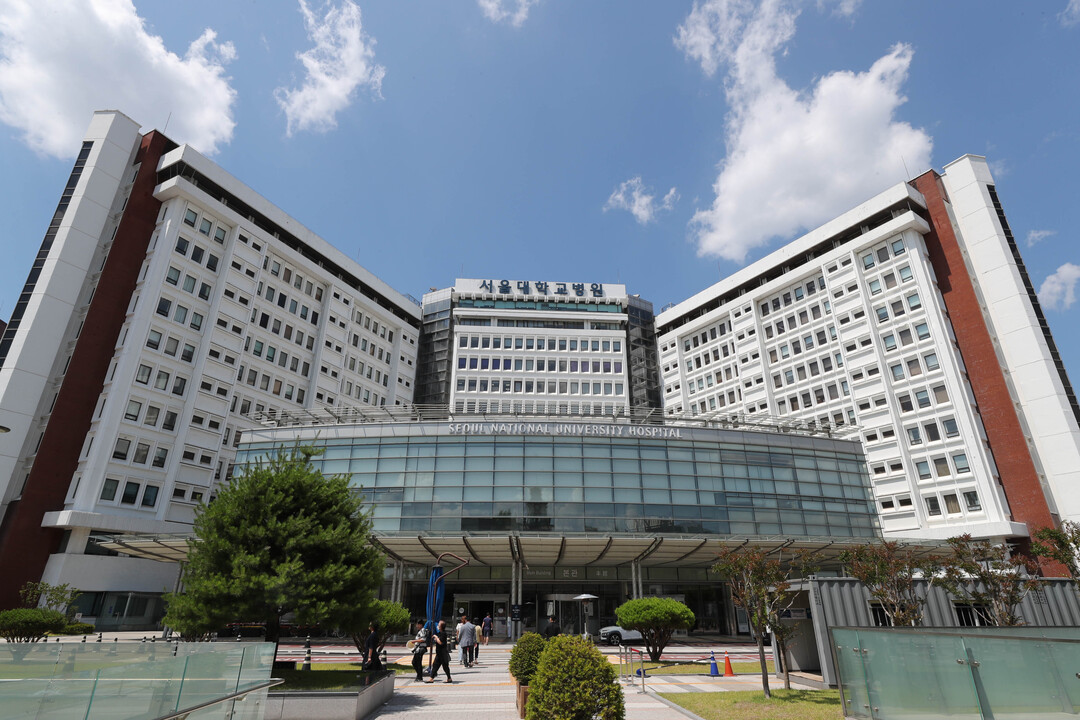
It has been revealed that bed and operating room occupancy rates at regional national university hospitals have failed to recover to levels seen before the conflict between the medical community and the government.

On the 6th, Representative Seo Mi-hwa of the Democratic Party of Korea, a member of the National Health and Welfare Committee, released data submitted by the Ministry of Health and Welfare.

According to the data, the average bed occupancy rate across nine national university hospitals—excluding Seoul National University Hospital—plummeted from 73.6% in 2023 to 56.4% in 2024, and remained stagnant at 56.4% in 2025.

This represents a 17.3 percentage point drop compared to 2023, meaning that more than 4 out of 10 hospital beds are sitting empty.

The downward trend was pronounced across individual hospitals. Comparing 2025 to 2023, Chungbuk National University Hospital experienced the largest decline in bed occupancy, dropping 29.8 percentage points from 77.2% to 47.4%.

This was followed by Gyeongsang National University Hospital (-22.5 percentage points), Kyungpook National University Hospital (-20.4 percentage points), Chonnam National University Hospital (-19.3 percentage points), Kangwon National University Hospital (-17.0 percentage points), and Pusan National University Hospital (-13.4 percentage points).

Jeju National University Hospital also saw a decline of 8.7 percentage points, dropping from 80.7% to 72.0%. Jeju National University Hospital was the only institution among the nine to maintain a bed occupancy rate in the 70% range in 2025.

Representative Seo Mi-hwa commented, "Although regional national university hospitals implemented self-rescue measures such as declaring emergency management, it was insufficient to recover the treatment volume that had shrunk following the medical conflict."

Surgeries Drop from 190,000 to 140,000… Pusan and Chungbuk National University Hospitals See 37% Decrease

The number of surgeries also plunged and has been slow to recover. The total number of surgeries at 10 national university hospitals, including Seoul National University Hospital, sharply declined by 33.6% from 193,213 cases in 2023 to 128,231 cases in 2024.

Although it partially rebounded to 145,810 cases in 2025, it remains 24.5% lower than the 2023 level. As of June 2026, surgeries stood at just 89,804 cases, indicating that the normalization of surgical capacity is progressing sluggishly.

Looking at individual hospitals, Pusan National University Hospital suffered the largest drop in surgeries at 37.6% in 2025 compared to 2023.

It was followed by Chungbuk National University Hospital (-37.4%), Kyungpook National University Hospital (-32.6%), Chonnam National University Hospital (-30.1%), Kangwon National University Hospital (-27.4%), Gyeongsang National University Hospital (-27%), Chungnam National University Hospital (-18.1%), Jeonbuk National University Hospital (-17.4%), Seoul National University Hospital (-16.4%), and Jeju National University Hospital (-5.7%).

Representative Seo Mi-hwa emphasized, "We must promptly restore the medical capacities of national university hospitals that have been contracted due to the medical conflict and regional medical vacuum."

She added, "The Ministry of Health and Welfare must strengthen practical support measures—such as expanding staffing and medical infrastructure—so that national university hospitals can fully perform their roles as core public medical institutions responsible for severe, emergency, and essential care in their regions."

[Copyright (c) Global Economic Times. All Rights Reserved.]

  • #\ormuz Impasse
  • #globaleconomictimes
  • #micorea
  • #mykorea
  • #nammidonganews
  • #singaporenewsk
  • #Samsung
  • #Daewoo
  • #Hyos
Global Economic Times Reporter
Reporter Page

Popular articles

  • Desperate Pursuit of HBM: China’s AI Chip Sector Faces Crippling Bottlenecks as Gray Market Prices Soar

  • APR Accelerates Global Expansion with 'Medicube Relay Pop-Up' Across Major US and European Cities Through October

  • Samsung Electronics Jumps 3.25% Ahead of Chuseok Holiday; SK Hynix Also Gains 1.2%

I like it
Share
  • Facebook
  • X
  • Kakaotalk
  • LINE
  • BAND
  • NAVER
  • https://globaleconomictimes.kr/article/1065596130729771 Copy URL copied.
Comments >

Comments 0

Weekly Hot Issue

  • Police Allocate Defamation Complaint Against 'The Assassins' Creators to Jongno Police Station, Launch Investigation
  • French High School Protests Leave Over 900 Injured: Hand Amputated by Grenade, Student Blinded by Rubber Bullet
  • Major Conglomerate Chiefs See Combined Q3 Stock Wealth Drop by Over 18 Trillion Won, Led by Lee Jae-yong, Chey Tae-won, and Euisun Chung
  • 'Hard-to-Get Tickets' Daejeon Hanwha Life Ballpark... Expanding by 3,000 Seats to Reach 20,000 Seats
  • Daily Lives Crumbling Under Youth Gambling… Urgent Need for Early Detection and Counseling
  • A Watershed Moment for Private-Led Space Era: Nuri Prepared to Launch 15 Satellites Including DaejeonSat

Most Viewed

1
Guitarist Kim Ji-hee to Hold Storytelling Concert 'The Guitar is Happiness'
2
"Coffee Aroma and the Dance of Peace: A Global Cultural Harmony Unfolding This Chuseok" 
3
Samsung Electronics Jumps 3.25% Ahead of Chuseok Holiday; SK Hynix Also Gains 1.2%
4
US Deploys Third Carrier and 10,000 Troops to Middle East Amid Rising Tensions with Iran
5
Gyeongsangbuk-do Promotes Excellence of Korean Traditional Crafts in Washington, D.C.
광고문의
임시1
임시3
임시2

Hot Issue

Euro Hits 17-Month Low as Political and Fiscal Instability in France and Elsewhere Shakes Bond Markets

European Parliament: 1 in 6 Female MEPs Targeted by 'Deepfake Pornography'

Severe Heat and AI Drive Japan's Power Crisis: Consideration of Life Extension for Aging Thermal Power Plants

Global Defense Startups Flood with Investment... Highest in a Decade in the First Half of This Year

Fashion Runway Show 2026

Global Economic Times
korocamia@naver.com
CEO : LEE YEON-SIL
Publisher : KO YONG-CHUL
Registration number : Seoul, A55681
Registration Date : 2024-10-24
Youth Protection Manager: KO YONG-CHUL
Singapore Headquarters
5A Woodlands Road #11-34 The Tennery. S'677728
Korean Branch
Phone : +82(0)10 4724 5264
#304, 6 Nonhyeon-ro 111-gil, Gangnam-gu, Seoul
Copyright © Global Economic Times All Rights Reserved
  • 향기네무료급식
  • BCB부천방송
  • 반달곰 프로젝트
Search
Category
  • All articles
  • Synthesis
  • World
  • Business
  • Industry
  • ICT
  • Distribution Economy
  • Well+Being
  • Travel
  • Eco-News
  • Education
  • Korean Wave News
  • Opinion
  • Arts&Culture
  • Sports
  • People & Life 
    • 전체
    • International Student Report
    • With Ambassador
  • Column 
    • 전체
    • Cho Kijo Column
    • Cherry Garden Story
    • Ko Yong-chul Column
    • Kim Seul-Ong Column
    • Lee Yeon-sil Column
  • Photo News
  • New Book Guide
  • Overseas Koreans
  • Multicultural News