![[등록] 2026-09-01 15:48:31](/support/_updata/banner2/tl181982910_6749.png)


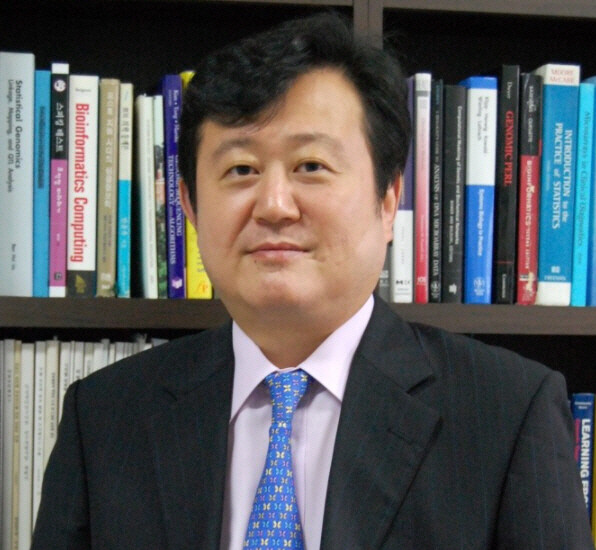
Seoul National University (SNU) is embarking on a groundbreaking educational innovation that breaks down the boundaries between the College of Medicine and the College of Engineering, driving convergence between the two fields. A fully integrated educational system is set to launch, wherein medical students deeply study artificial intelligence (AI) and biometric measurement in the engineering and natural sciences to earn engineering degrees, while science and engineering students explore the structure of the human body and the principles of disease within the medical school and affiliated hospitals. With the goal of introduction in the first semester of 2027, SNU has unveiled the blueprint for the "Health Sciences and Technology (HST) Joint Major" and held an information session for prospective students. Professor Joo-Han Kim, SNU Vice President for Research (professor at Seoul National University College of Medicine), who spearheaded this academic system restructuring, is a physician-scientist who majored in medical informatics at the Harvard-MIT HST program and earned an engineering degree, opening new horizons for convergence education that dismantles barriers between colleges.
A Regular Major Bridging Two-Way Demands of Medicine and Science/Engineering
One of the greatest challenges facing higher education today is the deep educational divide between the profession-oriented medical and pharmaceutical fields and the academia-oriented science and engineering fields. The fundamental question raised by SNU was whether medical students and science/engineering students could systematically and effectively double-major in each other's fields starting from the undergraduate level. Science and technology, engineering principles, and mathematical thinking are essential for medical students to respond to rapidly changing medical environments, while education to accurately understand the human body and diseases is desperately needed for engineering and natural sciences students as well.
The SNU HST Joint Major connects these two-way academic demands into a single regular curriculum. Through this, the initiative aims to simultaneously foster medical scholars equipped with engineering literacy and science/technology experts and engineers who thoroughly understand the clinical field. A core differentiator of this model is that the medical school and science/engineering colleges participate as equal subjects in education and research.
Curriculum Completely Redesigned in Alignment with the Transition to a 6-Year Integrated System
The timing of next year's full restructuring of the medical school academic system from a 2+4 year system to a 6-year integrated system served as an optimal opportunity for introducing this convergence education. Traditional medical education often took the form of short-term intensive education where students took only a single course and earned just 1 credit throughout an entire week, making it fundamentally impossible for students from other colleges to take medical courses, while medical students similarly lacked the leeway to take classes in other majors.
The year 2027, when the transition to the 6-year integrated system takes place through amendments to the Higher Education Act, is the final window of opportunity to fundamentally redesign the curriculum across all 6 years. To organically link timetables and completion systems and break down academic boundaries, the university closely collaborated with the Medical Education Office to extensively overhaul the curriculum. The requirements for acquiring a double degree were designed such that students fulfill their original major's graduation requirements while completing a total of 39 credits, including 18 required major credits and 21 elective major credits under the HST Joint Major requirements. By including numerous courses with cross-recognized credits, the academic burden on students was adjusted to a realistic level, and specific completion scenarios were established enabling medical students to simultaneously acquire an engineering bachelor's degree in HST alongside their medical degree.
Fostering Physicians Who Judge the Limits of Technology and Field-Oriented Engineers
The academic depth taught to students goes beyond a mere foundational level. It aims to equip students with the competency to apply science, technology, and engineering problem-solving methods directly to actual research and clinical practice. To this end, advanced science and engineering major courses—such as data structures and algorithms, artificial intelligence (AI), biometric measurement, regenerative medicine, medical physics, and cellular and tissue engineering—have been heavily incorporated into the regular curriculum. The goal is to cultivate physicians equipped with the ability to independently judge the possibilities and limits of cutting-edge technology.
Conversely, science and engineering students are provided with dedicated courses covering human structures and functions, the understanding of disease occurrence, and the principles of drug action. This helps them avoid becoming overly bogged down in improving technical performance when developing medical devices or new drugs, allowing them instead to macroscopically envision which actual patient problems need solving and how solutions apply to complex medical fields.
"Science and Technology Medicine (STM)," a New Academic Axis Connecting Basics and Clinics
Since its establishment in 1970, Harvard-MIT HST has demonstrated world-class leadership in Kendall Square, the epicenter of biotech innovation. Approximately 20% of Harvard medical students and a large number of MIT students participate in this program. SNU implements this world-class educational philosophy starting from the undergraduate level, guiding students to form a solid common intellectual foundation from the early stages of learning medicine and science/engineering together. The intent is to organically connect SNU's unrivaled resources in medicine, pharmacy, natural sciences, and engineering within the growth paths of undergraduate students as a comprehensive university.
While basic medicine has traditionally explored the principles of the human body in depth and clinical medicine has advanced diagnosis and treatment technologies for patients, the influx of cutting-edge technologies—such as artificial intelligence (AI), data science, robotics, sensors, and new materials—has given birth to a new academic axis called "Science and Technology Medicine (STM)." This domain, which directly connects the fundamental principles of science and technology to solving human health problems, creates a virtuous cycle where medical questions call for new technologies, and innovative technological discoveries in turn evolve medical questions. SNU plans to systematically root this virtuous cycle across education and research.
Introduction of a Research Semester System and Field-Immersive Capstone Projects
Programs to cultivate practical field research and execution capabilities beyond theoretical education are also thoroughly established. Networks have been built enabling students to directly explore research laboratories, participate in full-time internships during vacation periods, and naturally engage in research activities during the semester as well.
In particular, through capstone projects, students are given the opportunity to propose research ideas themselves, go through experimentation and data analysis, and receive advice from advisors and industry mentors to develop outcomes up to the stage of paper writing, patent filing, and even commercialization. The program will rigorously evaluate the ability to apply practical knowledge demanded in the field, such as precision medicine, AI-based new drug development, and clinical trial design.
Institutional supplementary measures have also been prepared to encourage the participation of medical students burdened with heavy workloads. Participation is not mandatory for all medical students; instead, the program aims for a joint major quota of 50 students, including roughly 10 to 20 percent of incoming medical freshmen with an aptitude for science and engineering. Along with the transition to the 6-year integrated system, a "Research Semester" will be introduced, leaving one semester in the 5th year completely open. Non-major medical students can focus on basic and clinical medical research, while HST majors can stay at Gwanak Campus laboratories to intensively take required science and engineering major courses, successfully accomplishing both sufficient credit acquisition and in-depth research.
Fostering Talent That Crosses Boundaries to Ask New Questions
The essence of this educational innovation led by SNU lies in laying a solid foundation that allows students to freely connect and converge the vast resources within the university, transcending the physical and institutional barriers of colleges. Ultimately, the goal is to concurrently nurture physician-scientists who tirelessly research new treatments, engineers who deeply understand the grievances of clinical fields, and convergence talent who directly link mysterious discoveries of life phenomena to solving humanity's health problems. At the cutting-edge boundaries of medicine and science and technology, the endeavors of innovative talents who ask unprecedented questions and seek answers to the end are drawing high expectations.
[Copyright (c) Global Economic Times. All Rights Reserved.]