• 2025.12.11 (Thu)
  • All articles
  • LOGIN
  • JOIN
Global Economic Times
APEC2025KOREA가이드북
  • Synthesis
  • World
  • Business
  • Industry
  • ICT
  • Distribution Economy
  • Well+Being
  • Travel
  • Eco-News
  • Education
  • Korean Wave News
  • Opinion
  • Arts&Culture
  • Sports
  • People & Life
  • Column
    • Cho Kijo Column
    • Lee Yeon-sil Column
    • Ko Yong-chul Column
    • Cherry Garden Story
  • Photo News
  • New Book Guide
MENU
 
Home > Industry

Nuclear Debate Ignites in Australia: Grassroots Movement vs. Scientific Evidence

Desk / Updated : 2025-03-23 14:55:36
  • -
  • +
  • Print

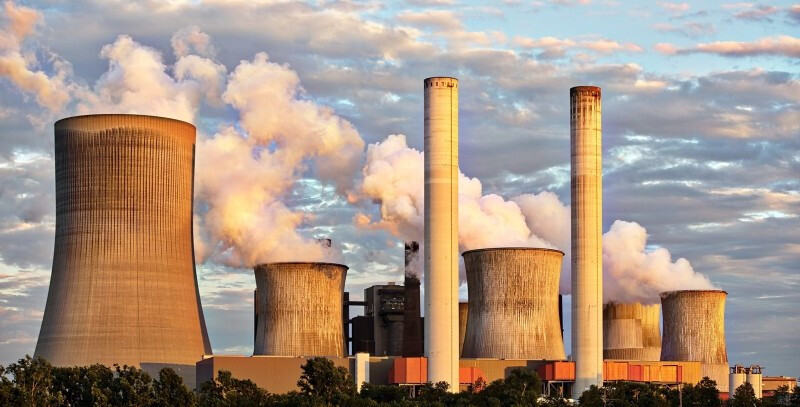
Canberra, Australia – A growing grassroots movement, Nuclear for Australia, is pushing for a national dialogue on the potential role of nuclear power in the country’s energy future. The group, spearheaded by former ANSTO CEO Dr. Adi Paterson and backed by Dick Smith, announced that over 100,000 Australians have signed a petition demanding the removal of the current nuclear power ban.

"Australians are demanding a practical solution to our energy needs," stated Will Shackel, founder of Nuclear for Australia, citing the overwhelming support for their petition.

However, the movement's call for a science-driven conversation faces strong opposition from established scientific bodies. The Commonwealth Scientific and Industrial Research Organisation (CSIRO), a leading authority on scientific and industrial research, has released findings that cast doubt on the viability of nuclear power in Australia.

According to the CSIRO's recent report, nuclear energy is neither cost-competitive nor timely in addressing Australia’s emissions reduction goals. The report highlights that renewable energy sources remain the most economically efficient option, even when considering storage and transmission costs.

Furthermore, the rising costs of international nuclear projects, such as the UK’s Sizewell C, underscore the financial burden associated with nuclear energy. The Institute for Energy Economics and Financial Analysis (IEEFA) warns that implementing similar projects in Australia would lead to substantial increases in household electricity bills.

Critics argue that pursuing nuclear energy would divert valuable time and resources from the immediate and effective implementation of renewable energy solutions. They assert that the current nuclear ban serves to protect Australia from an expensive and unnecessary distraction.

As the debate intensifies, policymakers are faced with the challenge of balancing public sentiment with scientific evidence, as they navigate Australia’s complex energy landscape.

[Copyright (c) Global Economic Times. All Rights Reserved.]

  • #globaleconomictimes
  • #글로벌이코노믹타임즈
  • #한국
  • #중기청
  • #재외동포청
  • #외교부
  • #micorea
  • #mykorea
  • #newsk
  • #nammidonganews
  • #singaporenewsk
Desk
Desk

Popular articles

  • Korean Fashion Brands Set Sights on China: Dunst Opens Pop-up in Shanghai

  • Alliance in a Dilemma: The Fallout of Trump's Advice to Takaichi Not to 'Provoke Taiwan' 

  • Busan Companies Achieve Record CES 2026 Innovation Awards

I like it
Share
  • Facebook
  • X
  • Kakaotalk
  • LINE
  • BAND
  • NAVER
  • https://globaleconomictimes.kr/article/1065592477064774 Copy URL copied.
Comments >

Comments 0

Weekly Hot Issue

  • The Tragedy on the High Seas: Royal Caribbean Sued Over Passenger Death After 33 Drinks and Fatal Restraint
  • Australia's Digital Iron Curtain: The Global Aftershocks of a World-First Social Media Ban
  • A Golden Noel: The Vance Family's First Christmas at the Naval Observatory
  • A New Era of Transparency: Federal Judges Order Release of Voluminous Epstein Case Files
  • Monopoly or Media Evolution? Netflix-Warner Bros. Deal Triggers Bipartisan Antitrust Fury
  • Jay-Z's Marcy Venture Partners Bets $500M on the Global Growth of K-Culture

Most Viewed

1
Korean War Ally, Reborn as an 'Economic Alliance' Across 70 Years: Chuncheon's 'Path of Reciprocity,' a Strategic
2
A Garden Where the City's Rhythm Stops: Dongdaemun's 'Cherry Garden', Cooking Consideration and Diversity
3
The Sudden Halt of Ayumi Hamasaki's Shanghai Concert: Unpacking the Rising Sino-Japanese Tensions
4
Alliance in a Dilemma: The Fallout of Trump's Advice to Takaichi Not to 'Provoke Taiwan' 
5
The Paradox of the 'Juvenile Offender' (Chokbeop Sonyeon): Impunity or Unfinished Rehabilitation?
광고문의
임시1
임시3
임시2

Hot Issue

Monopoly or Media Evolution? Netflix-Warner Bros. Deal Triggers Bipartisan Antitrust Fury

Australia's Digital Iron Curtain: The Global Aftershocks of a World-First Social Media Ban

Forging the Drone Warfighter: USAREUR-AF Launches Inaugural Competition in Germany, Stressing Integrated Lethality

Europe at the Crossroads: Environmental Safeguards Under Threat from 'Simplification' Drive

Let’s recycle the old blankets in Jeju Island’s closet instead of incinerating them.

Global Economic Times
korocamia@naver.com
CEO : LEE YEON-SIL
Publisher : KO YONG-CHUL
Registration number : Seoul, A55681
Registration Date : 2024-10-24
Youth Protection Manager: KO YONG-CHUL
Singapore Headquarters
5A Woodlands Road #11-34 The Tennery. S'677728
Korean Branch
Phone : +82(0)10 4724 5264
#304, 6 Nonhyeon-ro 111-gil, Gangnam-gu, Seoul
Copyright © Global Economic Times All Rights Reserved
  • 에이펙2025
  • APEC2025가이드북TV
  • 독도는우리땅
Search
Category
  • All articles
  • Synthesis
  • World
  • Business
  • Industry
  • ICT
  • Distribution Economy
  • Well+Being
  • Travel
  • Eco-News
  • Education
  • Korean Wave News
  • Opinion
  • Arts&Culture
  • Sports
  • People & Life
  • Column 
    • 전체
    • Cho Kijo Column
    • Lee Yeon-sil Column
    • Ko Yong-chul Column
    • Cherry Garden Story
  • Photo News
  • New Book Guide
  • Multicultural News
  • Jobs & Workers