![[등록] 2026-09-01 15:48:31](/support/_updata/banner2/tl181982910_6749.png)


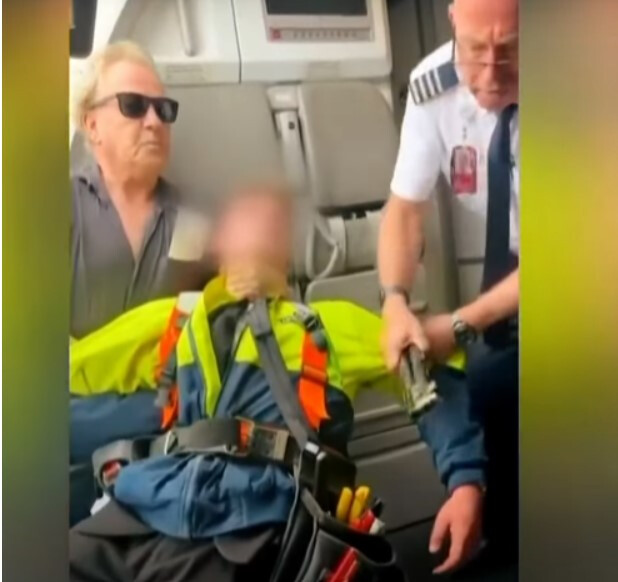
Avalon Airport, Australia – Security vulnerabilities at Australia's smaller and regional airports have been brought into sharp focus following the dramatic citizen's arrest of a teenager who allegedly boarded a Jetstar flight at Avalon Airport with a shotgun and ammunition.
Police have charged a 17-year-old Victorian boy with a range of serious offenses, including unlawfully taking control of an aircraft, making a bomb hoax, and possessing a firearm. The incident has sparked widespread concern about security protocols at airports that lack the robust infrastructure and staffing of major hubs.
Avalon Airport, located near Geelong, approximately 50 kilometers southwest of Melbourne, where the alleged incident occurred, is one such airport. Critically, Avalon, like many regional airports in Australia, does not have a permanent police presence, either state or federal. This absence of dedicated law enforcement personnel is a significant point of concern within the aviation sector.
On Thursday afternoon, the teenager allegedly breached the airport's security fence while dressed in high-visibility clothing and carrying tools. Witnesses reported that he appeared to be a maintenance worker, allowing him to move unchallenged. He then approached Jetstar flight JQ610, an Airbus A320 bound for Sydney, which was already boarded with approximately 150 passengers.
Shortly after entering the aircraft, crew and passengers became aware that he was allegedly carrying a shotgun and ammunition. Garry Clark, a former shearer and boxer seated in 1C, heroically intervened, tackling the teenager to the ground. Clark, along with other passengers, performed a citizen's arrest, restraining the individual until Victoria Police officers arrived from the local area command, located 9 kilometers away. The delay in the arrival of law enforcement has further fueled the debate about security readiness at regional airports.
The Transport Workers Union (TWU), a prominent aviation union representing ground workers and other industry professionals, has called for an urgent meeting with Jetstar to demand a thorough review of security arrangements at Avalon Airport. The airport is operated by transport logistics company Linfox.
While Avalon Airport handles a limited number of commercial flights – approximately 20 daily departures and arrivals – all of these flights are operated by budget carrier Jetstar. Avalon is marketed as an alternative to Melbourne Airport (Tullamarine), offering slightly cheaper base fares and located closer to Geelong.
Broader Security Concerns in Regional Aviation
The Avalon incident has reignited a long-standing debate about security vulnerabilities at smaller airports. Geoff Askew, a former director of security and emergency planning for Qantas and now principal of risk consulting group Askew and Associates, has been a vocal critic of the exemptions that allow many regional airports to operate without passenger security scanners.
Previously, airports handling aircraft with 40 seats or fewer were often exempt from mandatory security screening. In 2020, the Morrison government further eased regulations, permitting additional airports to remove security scanners in an effort to reduce costs. Critics argue that these cost-saving measures have come at the expense of public safety.
Askew emphasized that airports, even with security measures, are not impenetrable fortresses. "Yes, there's a degree of security, most of it is within the passenger side of the terminal [as opposed to the tarmac]," he stated. "At the moment, you've still got vulnerabilities through cargo sheds and catering businesses at an airport. You would need a very expensive fence to prevent an intruder, and eventually these costs are passed on to the passenger."
Economic considerations play a significant role in determining security levels at regional airports. Regional Express (Rex) Airlines, for example, has cited the high cost of security screening as a factor in its decision to withdraw services from certain regional routes. When larger aircraft, such as those operated by Qantas, require airports to implement security screening, the associated costs are typically distributed among all airlines using the airport, leading to increased ticket prices.
Investigation and Future Measures
In the aftermath of the Avalon incident, the Australian Federal Police (AFP) has confirmed that its counter-terrorism and special investigations command is collaborating with Victoria Police. The investigation is expected to focus on a number of key areas, including a review of Avalon Airport's perimeter security, specifically the adequacy of the fencing, and the potential implementation of enhanced surveillance technologies.
Geoff Askew suggested that investigators will likely consider upgrading the airport's fencing, deploying AI-assisted CCTV systems for automated threat detection, and increasing patrols in vulnerable areas.
An aviation insider, a former veteran maintenance engineer with Qantas, expressed serious concerns about the ease with which airport perimeters can be breached, particularly at night. "You can do a monumental amount of damage at an airport at night. Each night, after the crew goes to the motel, the airport manager goes home for dinner, there's nobody there. There's no security monitoring; you could smash the window of a small plane and be in the air within two minutes," the source stated. "There's so many glaringly obvious vulnerabilities in security, a more serious incident is just waiting to happen."
Avalon Airport chief executive Ari Suss stated that the airport is cooperating fully with Victoria Police. "As part of our ongoing commitment to security, we have implemented further measures across the airport, including within the terminal and surrounding areas," Suss said in a statement.
The incident at Avalon Airport serves as a stark reminder of the challenges in maintaining security at regional aviation hubs. The balance between cost-effectiveness and robust security measures remains a critical issue that requires urgent attention to prevent future incidents and ensure the safety of passengers and aviation personnel.
[Copyright (c) Global Economic Times. All Rights Reserved.]