![[등록] 2026-09-01 15:48:31](/support/_updata/banner2/tl181982910_6749.png)


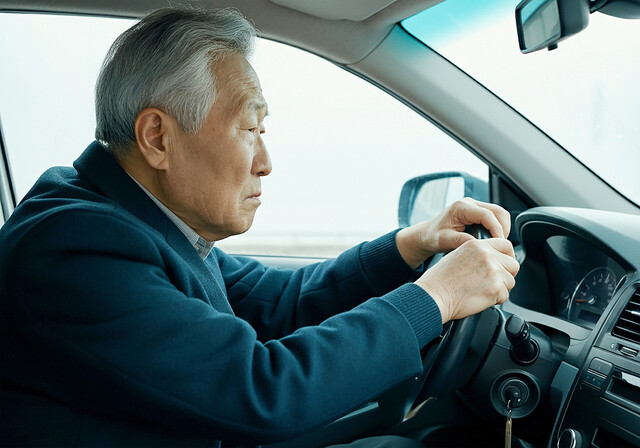
Recently, as our society enters a super-aged era, we are facing a severe safety threat: traffic accidents caused by elderly drivers. A tragic incident not long ago, where a truck driven by a man in his 80s struck and killed a marathon runner, was not a mere mistake but closer to a predictable social disaster. What is even more concerning is that many elderly individuals refuse to let go of the steering wheel, overestimating their past driving experience despite a significant decline in physical capabilities. We have reached a point where we must move beyond simply respecting individual mobility and seriously discuss a mandatory license surrender system starting at the age of 80.
From a medical perspective, the human body undergoes a narrowing of the visual field and a sharp decline in reflexes and judgment as it ages. These are biological limitations that cannot be overcome through individual will or mental strength. When a driver over 80 causes an accident, they may only suffer minor bruises, but the victims often face lifelong disabilities or death. Continuing to drive at the expense of others' lives can no longer be justified under the guise of "individual freedom."
In practice, the attitudes of some elderly drivers reveal the severity of social insensitivity toward safety. There are cases where individuals repeatedly cause major accidents, resulting in totaled vehicles and fatal injuries to others, yet feel no guilt or even boast that they will "drive until 100." This behavior is linked to the loss of "metacognition"—the inability to objectively assess one's own driving skills due to cognitive decline. If one cannot stop themselves, it is the state’s responsibility to stop them through laws and systems.
Current measures, such as strengthened aptitude tests or voluntary surrender programs, have shown limited effectiveness. Incentive-based voluntary systems only work for those whose livelihoods do not depend on driving; they are insufficient to stop those who stubbornly persist in driving. Therefore, a powerful legal mechanism must be established to mandate the surrender of driver’s licenses starting the year one turns 80. From age 81, society should be restructured so that these individuals become beneficiaries of safe, state-provided transportation welfare rather than drivers on the road.
Of course, some may worry about the infringement of mobility rights and age discrimination. However, road safety is an absolute value that must take precedence over any other right. To minimize inconvenience, the government must implement comprehensive supplementary measures, such as dedicated taxi support for the elderly, expanded public transit passes, and strengthened local mobility services. "Guaranteed mobility" does not necessarily have to mean driving oneself.
The tragedy of innocent citizens losing their lives on the street due to the misoperation and errors in judgment of elderly drivers must end. Making license surrender mandatory at age 80 is not an exclusion of the elderly; it is a final safety net to protect both the seniors themselves and our neighbors. The National Assembly and the government must act decisively to overhaul laws regarding elderly drivers before there are more victims, ensuring that "predictable accidents due to age" disappear from Korean roads.
[Copyright (c) Global Economic Times. All Rights Reserved.]