![[등록] 2026-09-01 15:48:31](/support/_updata/banner2/tl181982910_6749.png)


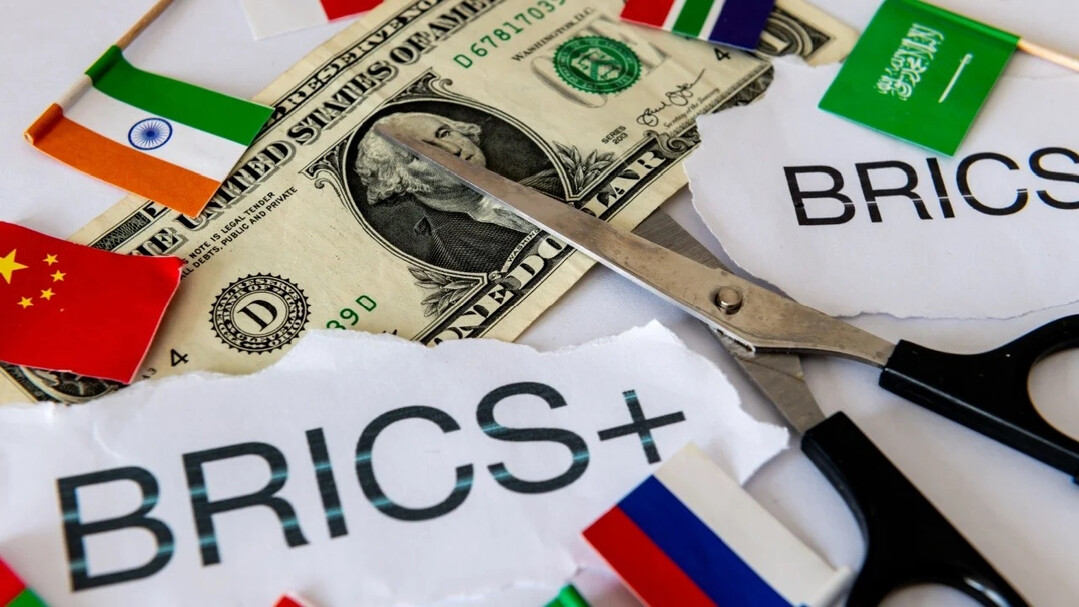
São Paulo – A high-ranking official at the Brazilian Central Bank has dismissed the likelihood of emerging economies, particularly those within the BRICS bloc (Brazil, Russia, India, China, and South Africa), forming a market large enough to realistically threaten the status of the US dollar.
Raul Jungmann, the Director of International Affairs at the Brazilian Central Bank, stated at a recent forum, "We believe that the scenario in which BRICS countries create a common currency or a large asset pool to replace the dominant role of the dollar is, for the time being, highly unlikely." He explained that while the economic scale of the BRICS nations is significant, the differences in their economic structures and monetary policies, as well as the level of development of their financial markets, pose considerable challenges to establishing a single currency system or forming a joint asset pool comparable to the dollar.
Jungmann particularly emphasized that the dollar still holds an overwhelming advantage in terms of the volatility and reliability of currencies, and the depth and liquidity of capital markets. He added, "The size and stability of the US economy, and the historical position and widespread use of the dollar in the global financial market, cannot be easily replaced in the short term."
In recent years, BRICS countries have been making efforts to reduce their dependence on the dollar, such as expanding the use of their own currencies in trade settlements and exploring the establishment of new international payment systems. This is interpreted as a move to mitigate the difficulties faced by emerging economies due to US interest rate hikes and sanctions, and to secure greater influence in the international financial system.
Indeed, BRICS established its own development bank, the New Development Bank (NDB), in 2015 to support infrastructure and sustainable development projects in member countries, which is seen by some as a challenge to the dollar-centric international financial order. Furthermore, some BRICS countries, particularly Russia and China, are increasing the use of their own currencies for transactions such as oil trade, instead of the dollar, and discussions on the adoption of digital currencies are also actively underway.
However, as Director Jungmann pointed out, while the combined economic size of the BRICS countries accounts for a significant portion of the global economy, the differing economic situations and policy objectives of each nation, and the still insufficient level of financial market integration, act as limiting factors in their growth as a practical alternative to the dollar.
For example, while China is the world's second-largest economy, capital controls remain in place, and the international circulation of the yuan is significantly lower than that of the dollar. India also has a rapidly growing economy, but the openness of its financial markets is still limited. Russia faces difficulties in accessing the international financial system due to Western sanctions, and Brazil and South Africa face ongoing challenges in terms of economic growth and currency stability.
Considering these factors comprehensively, the general view among experts is that it is a very difficult task for the BRICS countries to unite and weaken or replace the dominant position of the dollar in the short term by establishing a common financial system. While there may be gradual changes in the dollar-centric international financial order in the long term, depending on the economic growth and financial market development of the BRICS countries, and changes in international political dynamics, the prevailing analysis suggests that the status of the dollar is unlikely to be shaken in the near future.
The Brazilian Central Bank's remarks reflect a cautious assessment of BRICS' de-dollarization efforts and, at the same time, serve to reaffirm the strong position of the dollar in the international financial market. While attention remains focused on whether BRICS countries can strengthen economic cooperation and advance financial market integration, the dollar is expected to maintain its role as the global reserve currency for the foreseeable future.
[Copyright (c) Global Economic Times. All Rights Reserved.]