SEOUL — Amid rising tensions in the Middle East, Iran has issued a stern warning to South Korea against joining U.S.-led military operations, going so far as to quote a traditional Korean proverb. Meanwhile, two Very Large Crude Carriers (VLCCs) linked to South Korea’s Sinokor Maritime group have been struck in consecutive projectile attacks in the Persian Gulf, leaving four crew members injured.
The developments unfold as the South Korean government pushes to expand the operational scope of its anti-piracy Cheonghae Unit closer to the Strait of Hormuz, prompting strong pushback from Tehran.
Iran Cites Korean Proverb, Warns Against Direct and Indirect Support
On November 12 (local time), Esmaeil Baghaei, spokesperson for Iran’s Ministry of Foreign Affairs, posted a message on X (formerly Twitter) citing the Korean proverb: "When a tit (bushtit) tries to walk like a stork, it tears its crotch"—the Korean equivalent of trying to punch above one's weight. The post included an image featuring the proverb written in Korean.
Baghaei warned Seoul against participating in U.S. military operations against Iran, stating that any direct or indirect involvement in aggressive acts or "inhuman economic terrorism" against Tehran would be deemed hostile and illegal.
"This includes the deployment of naval forces and the provision of military and logistical support equipment or personnel," Baghaei wrote. He added that any nation engaging in such actions would bear full responsibility for the consequences.
Although Baghaei did not explicitly name South Korea, the use of a Korean proverb and specific references to naval deployments were widely seen as a direct warning to Seoul, which is currently reviewing the expansion of the Cheonghae Unit's mandate.
Two Sinokor-Linked VLCCs Hit, Four Injured
Prior to Iran's public warning, two VLCCs associated with South Korea’s Sinokor Maritime group were targeted in separate attacks in the Persian Gulf within a 48-hour window.
According to Reuters, citing British maritime authorities and security firms, the Liberia-flagged VLCC Dominica Prosperity was struck by an unidentified projectile on November 11 northwest of Ras Al Khaimah, United Arab Emirates (UAE). The strike hit the vessel's stern, causing a fire in the engine room. All 22 crew members, including 19 Indian nationals, safely evacuated, and firefighting efforts were underway.
The ship’s registered owner is a South Korean corporate entity, "Haut Brion 56," while commercial operations are handled by South Korea's Sinokor Maritime.
A day prior, on November 10, another Liberia-flagged VLCC, the Fujairah Energy, was hit by a projectile while traveling from Al Ruwais to Dubai in UAE territorial waters. Four of its 22 crew members were injured, with one Indian crewman hospitalized on land. The vessel is registered under the South Korean entity "Haut Brion 45" and entered Sinokor's fleet earlier this year.
Lloyd's List reported that the Fujairah Energy is the ninth Sinokor-related VLCC to suffer a projectile attack since June. The UK Maritime Trade Operations (UKMTO) confirmed at least four vessel attacks in the Strait of Hormuz and the Persian Gulf on November 10–11.
While the Iranian Revolutionary Guard Corps (IRGC) Navy claimed on November 11 that two tankers had hit mines and exploded, it did not disclose the names or nationalities of the vessels.
Seoul Seeks Cheonghae Unit Expansion Amid Rising Security Concerns
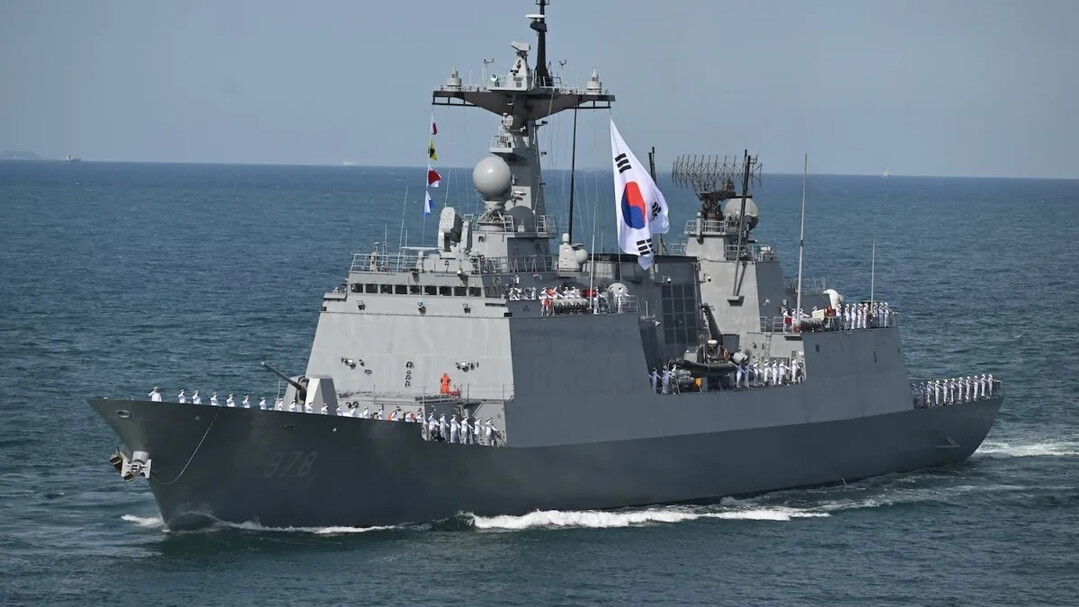
In response to heightening maritime risks driven by U.S.-Israeli and Iranian friction, the South Korean government approved a revised motion on November 10 to extend and expand the mission of the Cheonghae Unit.
Currently deployed in the Gulf of Aden for anti-piracy missions, the unit’s proposed new mandate would extend its operational zone southward off the coast of Oman, closer to the Strait of Hormuz. The amendment also introduces provisions to deploy a P-8A maritime patrol aircraft and unmanned mine-warfare assets, bringing the maximum deployment personnel to 395.
While the Ministry of National Defense emphasized that the unit's primary objective is safeguarding South Korean nationals and commercial vessels without directly intervening in any broader conflict, Iran has repeatedly cautioned Seoul against such deployments.
With the Cheonghae Unit's mandate extension pending review by the National Assembly, South Korea faces the delicate balancing act of protecting its vital maritime trade routes in the Middle East while avoiding military entanglement in regional hostilities.
[Copyright (c) Global Economic Times. All Rights Reserved.]