• 2026.11.20 (Fri)
  • All articles
  • LOGIN
  • JOIN
Global Economic Times
한인동포뉴스(상단)
  • Synthesis
  • World
  • Business
  • Industry
  • ICT
  • Distribution Economy
  • Well+Being
    • Pet Life
    • Halal Horizon
  • Travel
  • Eco-News
  • Education
  • Korean Wave News
  • Opinion
  • Arts&Culture
  • Sports
  • People & Life
    • International Student Report
    • With Ambassador
  • Column
    • Cho Kijo Column
    • Cherry Garden Story
    • Ko Yong-chul Column
    • Kim Bong-seon's Photo Column
    • Kim Seul-Ong Column
    • Lee Yeon-sil Column
    • Professor Lee Soo-young’s Life Essays
  • Photo News
  • New Book Guide
MENU
 
Home > Opinion

The Judiciary’s Narrowed Standard on 'Subverting the Constitution' Questions the Duty to Defend Constitutional Order

KO YONG-CHUL Reporter / Updated : 2026-11-20 13:37:10
  • -
  • +
  • Print

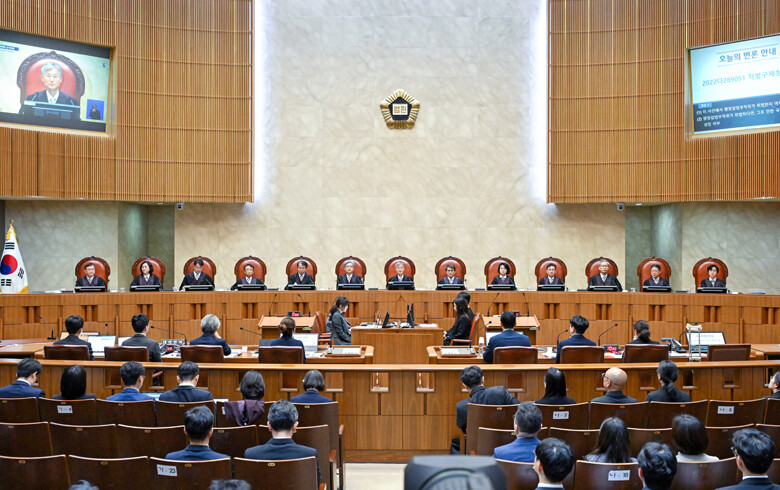
Judicial rulings often serve as a touchstone for gauging the constitutional standards of an era. The recent decision by the Supreme Court’s en banc panel to overturn a 15-year prison sentence and remand the case of former Prime Minister Han Duck-soo—who was charged with engaging in key duties of insurrection—has sparked intense controversy across the legal community and civil society. At the center of the debate is the majority opinion, backed by 9 out of 12 justices, which acquitted Han in principle regarding his "recommendation to convene a Cabinet meeting," ruling that his "purpose of subverting the Constitution" was not sufficiently proven.

In response to the ruling, civil society organizations, including MINBYUN - Lawyers for a Democratic Society (Minbyun) and People’s Solidarity for Participatory Democracy (PSPD), have issued fierce criticisms. In a formal commentary, Minbyun condemned the Supreme Court’s decision as an act that "shakes the foundation of constitutional order," arguing that it provides a logic of absolution for a top-ranking public official. The core issue lies in the fairness of the legal standard applied to a Prime Minister standing at the center of state governance. As Minbyun pointed out, questions arise as to whether applying a lenient standard—treating someone who ordinarily wields immense power as a passive figure unaware of the gravity of a constitutional crisis—aligns with public legal sentiment and common sense. In the face of an unconstitutional declaration of martial law, a Cabinet member’s constitutional duty is not to facilitate mere procedural formalities, but to decisively check and block the abuse of power.

Even more noteworthy is the new legal doctrine introduced by the Supreme Court. Moving beyond existing precedents that deemed "willful negligence" (dolus eventualis) sufficient to establish the purpose of subverting the Constitution, the Court added a requirement to prove "an intent to pursue the realization of the act and tolerate its consequences." Minbyun countered that given the gravity of insurrection, which threatens the very existence of the state, proceeding with an action while recognizing it could paralyze constitutional institutions already warrants full culpability. The group warned that raising the threshold by requiring proof of ambiguous subjective intent not only retreats from established en banc precedents, but also risks serving as a blanket excuse for other defendants in ongoing insurrection trials. PSPD similarly denounced the ruling as an act of "volunteering to be a shield for insurrectionists," demanding accountability from the leadership of the judiciary.

Conversely, perspectives emphasizing strict burden of proof and the principle of legality in criminal trials might defend the majority opinion's intent to scrutinize a defendant's inner motives more rigorously. However, as demonstrated by the dissenting opinion of three justices, including Justice Oh Kyung-mi, who maintained that the act constituted a crime, evaluating the constitutional weight of a top official's actions remains sharply divided even within the Supreme Court.

The interpretation of law does not occur in a vacuum. Particularly when addressing grave threats to constitutional order, judicial rulings send an unmistakable signal to future public officials. Whether the stringent standard of proof for "subverting the Constitution" established by this remand will be remembered as a sophisticated refinement of the rule of law, or as a precedent that lightened the constitutional duties of those in power, remains a critical question as the case returns to the Seoul High Court.

[Copyright (c) Global Economic Times. All Rights Reserved.]

  • #Cherry Garden
  • #HalalFood
  • #Halal
  • #Petlife
  • #Halalhorizone
  • #Hormuz Impasse
  • #Joseon
  • #globaleconomictimes
  • #micore
KO YONG-CHUL Reporter
Reporter Page

Popular articles

  • Culinary Mashups and Nostalgia with a Twist: South Korea’s F&B Giants Vie for Consumer Attention

  • Bank Stocks Hold Firm Amid KOSPI Slump... "Defensive Appeal Strong, but Continued Rally Unlikely"

  • Japanese Hotel Prices Surge Nearly 9% Amid Booming Korean Tourism

I like it
Share
  • Facebook
  • X
  • Kakaotalk
  • LINE
  • BAND
  • NAVER
  • https://globaleconomictimes.kr/article/1065587782861373 Copy URL copied.
Comments >

Comments 0

Weekly Hot Issue

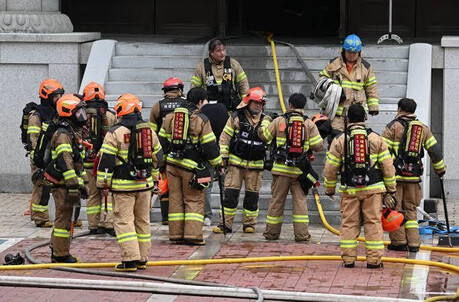
  • Seoul Weighs Overhaul of Firefighter Payroll Funding Amid Rising Local Fiscal Strain
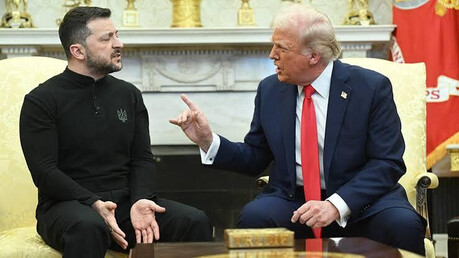
  • Transatlantic Rift Widens as Trump Urges Europe to Halt Ukraine Funding Following Trilateral Summit
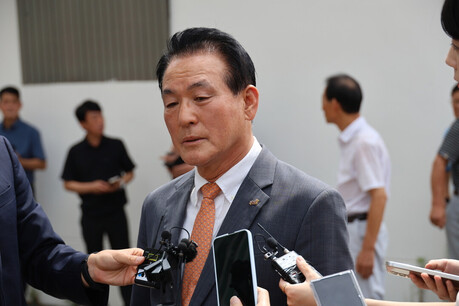
  • Nonsan Mayor’s Re-election in Jeopardy After Appellate Court Upholds 1.5 Million Won Fine
  • Korean American Association of Greater Austin (KAAGA/President Susie Kang) Selects 21 Next-Generation Scholarship Recipients; to Host Korea-U.S. Cultural Festival on December 5
  • It is the very end of November, when the season exhales its deepest breath.
  • Hope Rises from the Ashes: Endangered Flying Squirrels Breed in Wildfire-Scarred South Korean Forest

Most Viewed

1
South Korea and Ethiopia Sign Trilateral MOU to Introduce Liquid-Based Cytology (LBC) Technology for Cervical Cancer Diagnosis
2
Meeting Christmas Early!… Busan Dessert Sales Event "Daldal The Market" Held
3
World Citizens are Flying Directly to Busan... The Era of 4 Million Foreigners is Just Around the Corner
4
Eating 100g of Baechu Kimchi Daily Linked to Lower High-Cholesterol Risks
5
First Snow and Freeze Hit Korea as Winter Officially Begins on 'Ipdeong'
체리가든 스토리
nutri huevos
로타리
동포저널

Hot Issue

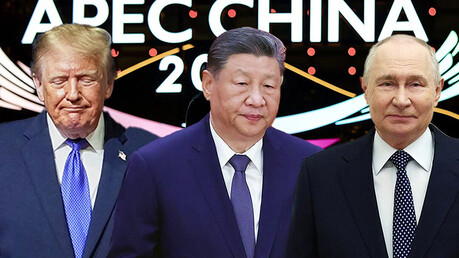
Historic US-China-Russia Summit Yields Grand Rhetoric, Few Concrete Results

KOSPI Clings to 5,000-Point Mark Amid Heavy Foreign Selling; Year-End Rally Seen as Unlikely

Commuters Face Potential Delays as Seoul Subway Workers Launch Work-to-Rule Action

Fashion Runway Show 2026

Let’s recycle the old blankets in Jeju Island’s closet instead of incinerating them.

Global Economic Times
korocamia@naver.com
CEO : LEE YEON-SIL
Publisher & Editor : KO YONG-CHUL
Registration number : Seoul, A55681
Registration Date : 2024-10-24
Youth Protection Manager: KO YONG-CHUL
Singapore Headquarters
5A Woodlands Road #11-34 The Tennery. S'677728
Korean Branch
Phone : +82(0)10 4724 5264
#304, 6 Nonhyeon-ro 111-gil, Gangnam-gu, Seoul
Copyright © Global Economic Times All Rights Reserved
  • News K
  • 반달곰 프로젝트
  • 광고문의
Search
Category
  • All articles
  • Synthesis
  • World
  • Business
  • Industry
  • ICT
  • Distribution Economy
  • Well+Being 
    • 전체
    • Pet Life
    • Halal Horizon
  • Travel
  • Eco-News
  • Education
  • Korean Wave News
  • Opinion
  • Arts&Culture
  • Sports
  • People & Life 
    • 전체
    • International Student Report
    • With Ambassador
  • Column 
    • 전체
    • Cho Kijo Column
    • Cherry Garden Story
    • Ko Yong-chul Column
    • Kim Bong-seon's Photo Column
    • Kim Seul-Ong Column
    • Lee Yeon-sil Column
    • Professor Lee Soo-young’s Life Essays
  • Photo News
  • New Book Guide
  • Overseas Koreans
  • Multicultural News