• 2026.11.24 (Tue)
  • All articles
  • LOGIN
  • JOIN
Global Economic Times
한인동포뉴스(상단)
  • Synthesis
  • World
  • Business
  • Industry
  • ICT
  • Distribution Economy
  • Well+Being
    • Pet Life
    • Halal Horizon
  • Travel
  • Eco-News
  • Education
  • Korean Wave News
  • Opinion
  • Arts&Culture
  • Sports
  • People & Life
    • International Student Report
    • With Ambassador
  • Column
    • Cho Kijo Column
    • Cherry Garden Story
    • Ko Yong-chul Column
    • Kim Bong-seon's Photo Column
    • Kim Seul-Ong Column
    • Lee Yeon-sil Column
    • Professor Lee Soo-young’s Life Essays
  • Photo News
  • New Book Guide
MENU
 
Home > Distribution Economy

South Korean Banks Slash Corporate Retirement Pension Fees Ahead of Mandatory Phased Rollout

Hee Chan Kim Reporter / Updated : 2026-11-24 13:36:22
  • -
  • +
  • Print

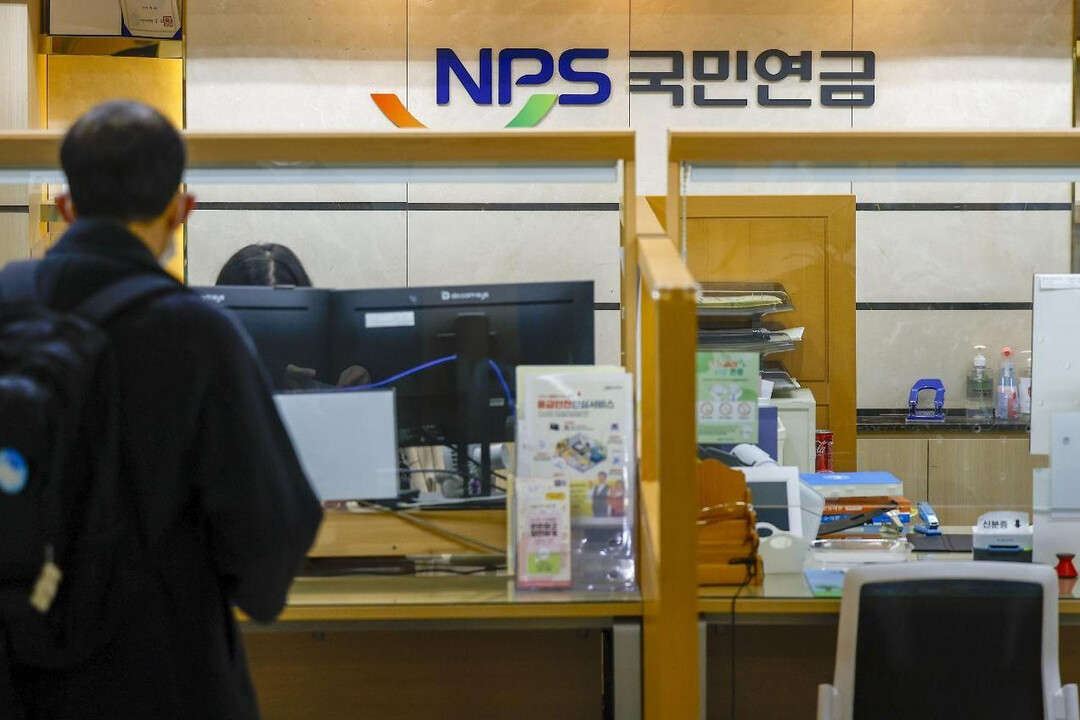
SEOUL — Major commercial banks in South Korea are aggressively cutting corporate retirement pension fees and broadening discount eligibility as the country prepares to mandate external management of employee severance funds.

Starting November 27, KB Kookmin Bank will implement a sweeping fee reduction across its corporate pension offerings, including Defined Benefit (DB), Standard Defined Contribution (DC), and Corporate Individual Retirement Pension (IRP) plans.

Under the revised structure, small and micro-enterprises utilizing Standard DC plans with reserves under 5 billion won will see their annual operation management fees drop to a flat 0.1%, down from the previous 0.14% to 0.19% range. Asset management fees for these accounts will also be trimmed by up to 0.2 percentage points, settling between 0.1% and 0.2% depending on total assets.

Larger corporate accounts under DB plans will also benefit. For average balances between 30 billion and 100 billion won, operation management fees will decrease by 0.07 to 0.11 percentage points, while asset management fees for balances exceeding 30 billion won will drop by as much as 0.15 percentage points. Additionally, KB is lowering the threshold for asset management fee waivers on non-ETF collective investment funds from 70% to 50% of total average balances, encouraging broader corporate investment in performance-based products.

Alongside rate cuts, the bank is expanding its 50% fee discount tier—previously reserved for social enterprises and local cooperatives—to include major mutual finance institutions such as credit unions, Saemaul Geumgo, and agricultural, fisheries, and forestry cooperatives (with 15% to 25% discounts applied to Standard DC plans). Elderly care facilities, disability support centers, and childcare providers will also qualify for the reductions, while public institutions will gain a newly introduced 10% discount.

"The overhaul is aimed at alleviating pension administration costs for businesses while helping workers secure stable retirement income," a KB Kookmin Bank representative noted.

KB's move reflects intensifying competition across the Korean banking sector. Since the launch of the retirement pension in-kind transfer system in October 2024 made switching providers significantly easier, rivals have steadily sweetened their terms. Woori Bank boosted its long-term contract discounts to 25% late last year, followed by Shinhan Bank raising its cap to 20% in July and Gwangju Bank adding up to 10 percentage points to its discount rates last month.

This race to capture market share is heavily driven by upcoming regulatory shifts. Late last month, the South Korean government unveiled a roadmap to mandate the external accumulation of retirement funds, targeting passage in the National Assembly by year-end. Under the phased timeline, the mandate will apply to companies with 100 or more employees in 2028, those with 10 to 99 employees in 2029, and businesses with fewer than 10 workers in 2030.

Data from the National Data Office indicates that as of 2024, only 26.5% of domestic workplaces had adopted a retirement pension system, leaving roughly 6.11 million eligible employees uncovered. While this presents a massive untapped market of small businesses, private banks face looming competition from the state-backed SME Retirement Pension Fund. Beginning in 2028, businesses with 300 or fewer employees that fail to establish a private pension plan will be automatically enrolled into the public fund, forcing commercial lenders to lock in small business clients before the regulatory deadline arrives.

[Copyright (c) Global Economic Times. All Rights Reserved.]

  • #Cherry Garden
  • #HalalFood
  • #Halal
  • #Petlife
  • #Cats
  • #Dogs
  • #Halalhorizone
  • #Hormuz Impasse
  • #Joseon
  • #globaleconomicti
Hee Chan Kim Reporter

Popular articles

  • Andong Launches Inaugural Heritage Film Festival to Blend Local Culture with CinemaA nine-day celebration kicks off on November 7, featuring independent films, cultural exhibitions, and policy forums.

  • How about a World Heritage Kimchi-making trip this weekend? The Pyeongchang Alpine Kimchi Festival runs until November 16.

  • How Did a Once-in-a-Century Grape Become Dirt Cheap?

I like it
Share
  • Facebook
  • X
  • Kakaotalk
  • LINE
  • BAND
  • NAVER
  • https://globaleconomictimes.kr/article/1065587749871627 Copy URL copied.
Comments >

Comments 0

Weekly Hot Issue

  • Bitcoin Rebounds to $60,000 Amid Exchange Slump and Looming South Korean Crypto Regulation
  • House-Rich, Cash-Poor: How Seoul’s Retirees Are Navigating a Coming Tax Squeeze
  • Busan City, Busan Tourism Organization, and Inje University Join Forces with World-Renowned Life Science Scholars to Host IUBMB 2033!
  • Jeonbuk State Culture & Tourism Foundation Successfully Concludes ‘Jeonbuk Bibim Shop’ at the 2026 Korea Tourism Souvenir Fair
  • Busan Pitching Eco-Tourism and AI Insights to Global Travel Buyers at 2026 Mart
  • Busan Charts New Course for Maritime Finance at Annual Industry Week

Most Viewed

1
South Korea and Ethiopia Sign Trilateral MOU to Introduce Liquid-Based Cytology (LBC) Technology for Cervical Cancer Diagnosis
2
South Korean Burger Chain Lotteria Expands Singapore Footprint with Halal Certification and New Teriyaki Lineup
3
AI Semiconductor Stocks Plummet: Philadelphia Index Drops 5.28% and Micron Plunges 7.59% Amid Executive Shakeup and Export Restrictions
4
"Stay Out, Get Paid, or Have Police Stay With You": Shenzhen Imposes Strict Security Ahead of APEC Summit
5
Taiwan Bans Short-Selling Below Previous Close Starting Nov. 23, Raises Margin Ratio to 150%
체리가든 스토리
nutri huevos
로타리
동포저널

Hot Issue

Nvidia Reinstates Jensen Huang After 11-Day Ouster, Sparking Massive Market Rally

Fading Hype and Ethics Scrutiny Shadow Trump’s Second Meme Coin Gala

GOP Pushback on Pentagon Nominees Signals Early Lame-Duck Era for Trump

Fashion Runway Show 2026

Let’s recycle the old blankets in Jeju Island’s closet instead of incinerating them.

Global Economic Times
korocamia@naver.com
CEO : LEE YEON-SIL
Publisher & Editor : KO YONG-CHUL
Registration number : Seoul, A55681
Registration Date : 2024-10-24
Youth Protection Manager: KO YONG-CHUL
Singapore Headquarters
5A Woodlands Road #11-34 The Tennery. S'677728
Korean Branch
Phone : +82(0)10 4724 5264
#304, 6 Nonhyeon-ro 111-gil, Gangnam-gu, Seoul
Copyright © Global Economic Times All Rights Reserved
  • News K
  • 반달곰 프로젝트
  • 광고문의
Search
Category
  • All articles
  • Synthesis
  • World
  • Business
  • Industry
  • ICT
  • Distribution Economy
  • Well+Being 
    • 전체
    • Pet Life
    • Halal Horizon
  • Travel
  • Eco-News
  • Education
  • Korean Wave News
  • Opinion
  • Arts&Culture
  • Sports
  • People & Life 
    • 전체
    • International Student Report
    • With Ambassador
  • Column 
    • 전체
    • Cho Kijo Column
    • Cherry Garden Story
    • Ko Yong-chul Column
    • Kim Bong-seon's Photo Column
    • Kim Seul-Ong Column
    • Lee Yeon-sil Column
    • Professor Lee Soo-young’s Life Essays
  • Photo News
  • New Book Guide
  • Overseas Koreans
  • Multicultural News