![[등록] 2026-09-01 15:48:31](/support/_updata/banner2/tl181982910_6749.png)


The National Forensic Service (NFS) announced that the number of cases confirming family relationships between missing children, individuals with intellectual disabilities, or dementia patients and their families through genetic testing has reached 1,000, exactly 22 years after the system's implementation.
The confirmed family relationships consist of first-degree relations between parents and children, and second-degree relations between siblings.
The genetic testing system to locate missing persons was launched in 2004 with the implementation of the "Act on the Protection and Support of Missing Children, Etc."
Although the system initially focused primarily on missing children, its scope was later expanded to include individuals with intellectual disabilities and dementia patients.
When individuals searching for family members or the families of missing persons visit a police station, or when police collect oral cavity cells from individuals in protective facilities, the Korea Agency for Children's Rights (KACR) assigns encrypted identification codes and manages personal information separately.
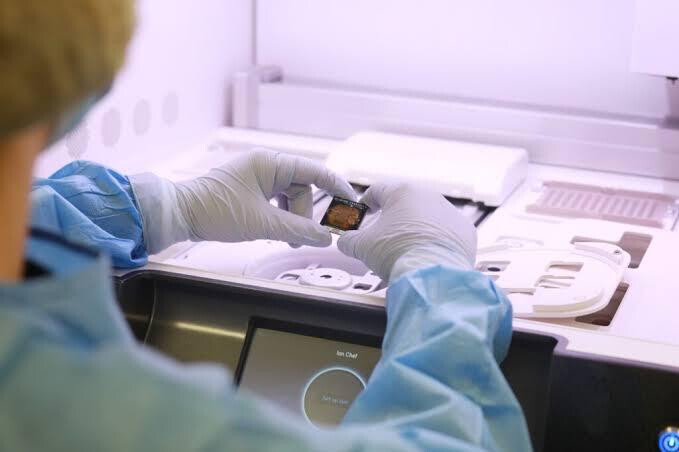
Subsequently, the NFS precisely analyzes the requested oral cavity samples and verifies family relationships using the "DNA Information System for Locating Missing Persons."
The NFS explained that it newly introduced cutting-edge appraisal techniques this year and enhanced the reliability of genetic testing through cross-verification between different analytical systems.
"This achievement of 1,000 cases is the result of 22 years of continuous effort, backed by advanced genetic analysis technology and database advancement," said Lee Bong-woo, Director of the NFS. "Going forward, we will continue to cooperate with relevant agencies to swiftly locate missing persons and help them return to the arms of their families."
[Copyright (c) Global Economic Times. All Rights Reserved.]