![[등록] 2026-09-01 15:48:31](/support/_updata/banner2/tl181982910_6749.png)


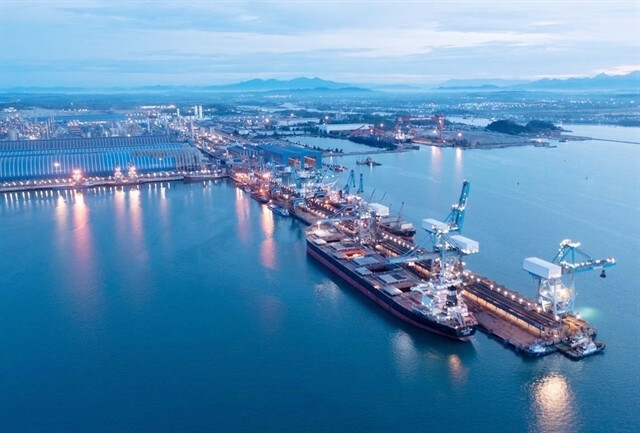
HO CHI MINH CITY — Ho Chi Minh City is officially laying the groundwork to construct a multi-pole national energy and industrial hub designed to reinforce regional energy security, accelerate the green transition, and drive double-digit economic growth across the Southern Key Economic Zone.
The ambition was underscored during a high-level seminar hosted by the city’s Department of Industry and Trade on July 31, 2026, where government officials, industry experts, and corporate leaders gathered to refine the project’s draft outline.
Surging Power Demand Drives Infrastructure Overhaul
Addressing the seminar, Nguyễn Thị Kim Ngọc, Deputy Director of the Department of Industry and Trade, stressed that establishing this hub is vital for the region’s long-term energy capabilities and economic trajectory. “Establishing this hub is crucial for energy security. It will build modern energy capabilities while creating new growth momentum for our double-digit target,” Ngọc stated.
The initiative comes at a critical juncture. High-tech investors entering the region are placing unprecedented pressure on the existing electrical grid. Bùi Tá Hoàng Vũ, Director of the Department, pointed out that while HCM City’s current peak power capacity stands at approximately 9,600 megawatts (MW), a single incoming strategic investor recently requested 2,000 MW—nearly one-fifth of the city’s total capacity. With five major industrial projects slated for investment, energy infrastructure must expand rapidly.
However, Vũ expressed confidence, noting that the city boasts integrated physical and soft infrastructure, deep-sea port logistics, and technological capabilities that position it to become a top regional energy center.
A Multi-Pole Ecosystem with Integrated Value Chains
Rather than concentrating operations in a single location, the national hub will operate as an interconnected multi-pole ecosystem. The draft outline highlights three strategic industrial poles:
Long Sơn Pole: Focuses on petrochemical refining, specialty chemical manufacturing, advanced materials, and carbon capture technology.
Phú Mỹ - Cái Mép - Thị Vải Pole: Dedicated to Liquefied Natural Gas (LNG) importation, gas-to-power generation, specialized deep-sea port operations, and complex energy logistics.
Rạch Dừa - Sao Mai - Bến Đình Pole: Concentrates on offshore wind engineering, heavy industrial manufacturing, oil and gas services, and high-tech equipment maintenance.
These poles will be seamlessly integrated with local universities, research institutes, and the emerging Vietnam International Financial Centre to mobilize green capital and foster innovation.
Lê Việt Cường, Deputy Director of the Institute of Energy, urged policymakers to maintain a unified national strategy: "The city must act as the core of the national clean energy chain. We must build a synchronized ecosystem that connects infrastructure, industry, data, finance, and human resources."
Business leaders emphasized the immense commercial potential of localized renewable supply chains. Highlighting past successes, Trần Hồ Bắc, General Director of PetroVietnam Technical Services Corporation (PTSC), noted that PTSC previously fabricated 33 offshore wind foundations for export to Taiwan, generating over US$400 million and employing more than 3,000 skilled workers. PTSC estimates the new energy hub could contribute $2 billion annually to the regional economy while creating tens of thousands of specialized engineering jobs.
A Three-Phase Roadmap Toward 2045
The ambitious project follows a structured three-phase development strategy extending to 2045:
Phase 1 (2026–2030): Establish spatial planning, legal and regulatory frameworks, data digitization, and shared foundational infrastructure.
Phase 2 (2031–2035): Expand industrial sub-zones, scale up offshore wind supply chains, and significantly raise local content ratios.
Phase 3 (2036–2045): Fully realize the hub into a nationally integrated, internationally competitive energy and industrial center.
The Department of Industry and Trade is currently synthesizing expert recommendations to finalize the proposal before submitting it for central government approval.
[Copyright (c) Global Economic Times. All Rights Reserved.]