• 2026.11.11 (Wed)
  • All articles
  • LOGIN
  • JOIN
Global Economic Times
[등록] 2026-09-01 15:48:31
  • Synthesis
  • World
  • Business
  • Industry
  • ICT
  • Distribution Economy
  • Well+Being
    • Pet Life
    • Halal Horizon
  • Travel
  • Eco-News
  • Education
  • Korean Wave News
  • Opinion
  • Arts&Culture
  • Sports
  • People & Life
    • International Student Report
    • With Ambassador
  • Column
    • Cho Kijo Column
    • Cherry Garden Story
    • Ko Yong-chul Column
    • Kim Bong-seon's Photo Column
    • Kim Seul-Ong Column
    • Lee Yeon-sil Column
  • Photo News
  • New Book Guide
MENU
 
Home > Distribution Economy

KDB Faces Major Litmus Test as Policy Finance Backs Hyundai's 9 Trillion Won Saemangeum AI Hub

Kim Young Min Reporter / Updated : 2026-11-11 13:04:16
  • -
  • +
  • Print


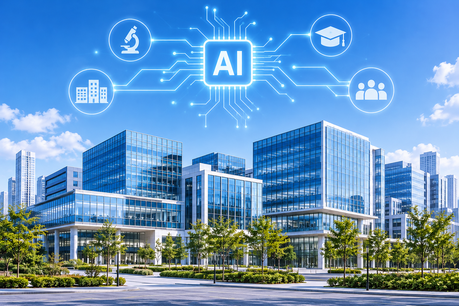
SEOUL — South Korea’s state-backed policy lenders are stepping into unchartered waters. As the global race for physical artificial intelligence (AI) accelerates, the Korea Development Bank (KDB) has taken center stage in underwriting Hyundai Motor Group’s massive 9-trillion-won ($6.5 billion) industrial transformation project in Saemangeum, North Jeolla Province.

The initiative, designed to establish a sprawling regional hub for cutting-edge AI data centers, robotics, and clean energy, represents a high-stakes proving ground for KDB’s risk management and financial engineering capabilities.

Navigating a Multi-Faceted Capital Structure

Under an overarching memorandum of understanding signed last April, KDB and peer state lenders—including the Industrial Bank of Korea, the Export-Import Bank of Korea, and the Korea Credit Guarantee Fund—have been carving out structural funding frameworks. Because the 9-trillion-won outlay spans multiple sectors, integrating state-backed policy capital with private-sector funding remains a complex puzzle.

According to financial industry sources, the funding allocation heavily prioritizes digital infrastructure: roughly 5.8 trillion won (65%) is dedicated to the AI data center. The remainder is distributed across solar power generation (1.3 trillion won), water electrolysis facilities (1 trillion won), a robotics manufacturing cluster (400 billion won), and an AI-driven hydrogen city (400 billion won).

To mitigate structural risks, Hyundai Motor Group announced that five core affiliates—Hyundai Motor, Kia, Hyundai Mobis, Hyundai Rotem, and Hyundai AutoEver—will split the implementation into specialized entities this month. Infrastructure construction and high-performance GPU procurement will be managed by separate Special Purpose Companies (SPCs). Groundbreaking is targeted for March 2027, with commercial operations slated to commence by early 2030.

Balancing High-Tech Volatility with Policy Goals

For KDB, the project tests a fundamental paradigm shift in infrastructure financing. Unlike traditional property-backed project financing (PF), financing an enterprise-grade AI cloud and robotics ecosystem introduces unprecedented variables: rapid technology obsolescence cycles for graphic processing units (GPUs), volatile compute demand, and intensive power and cooling demands.

Market watchers report that the Financial Services Commission (FSC) and KDB are currently evaluating a 1.7-trillion-won investment and loan package through the National Growth Fund to help finance the project's massive GPU procurement phase. However, exact financial syndication ratios and loan covenants are still under negotiation.

Beyond technical risk, the initiative aligns with Seoul’s broader push for "productive finance" and balanced regional growth. While KDB leadership has emphasized using the National Growth Fund to channel capital into non-metropolitan areas—surpassing initial regional quotas—policymakers face mounting pressure to ensure that these multi-trillion-won subsidies stimulate genuine regional supply chains and small-business ecosystems rather than exclusively benefiting a corporate titan.

As KDB navigates this high-profile venture, industry analysts suggest its success will set a definitive precedent for how state policy banks can de-risk private investments in fast-moving, capital-intensive technology sectors without compromising fiscal stability.

[Copyright (c) Global Economic Times. All Rights Reserved.]
  • #Cherry Garden
  • #HalalFood
  • #Halal
  • #Petlife
  • #Halalhorizone
  • #Hormuz Impasse
  • #globaleconomictimes
  • #micorea
  • #mykor
Kim Young Min Reporter

Popular articles

  • Global Credit Spreads Widened to 17-Month High Amid AI Investment Concerns

  • Hollys Suffers Personal Information Leak… "Please Change Your Membership Password Immediately"

  • Jeonbuk Special Self-Governing Province Hosts Integrated Animal Healthcare Industry and Pet Culture Exposition

I like it
Share
  • Facebook
  • X
  • Kakaotalk
  • LINE
  • BAND
  • NAVER
  • https://globaleconomictimes.kr/article/1065585801790054 Copy URL copied.
Comments >

Comments 0

Weekly Hot Issue

  • Bridging Distances: Africa and the Middle East Korean Communities Forge Historic Regional Alliance in Addis Ababa
  • Beyond the Clean Bill of Health: Why You Still Feel Unwell After Normal Test Results
  • Echoes of Baek Seok in Dalian: A Poetry Recital Bridging Divides and Generations
  • Global Fossil Fuel Carbon Emissions Expected to Drop by 0.4% Despite Economic Growth
  • South Korea's Real Estate Sector Emphasizes Human Trust Amid AI Integration
  • Korea’s Trade Insurer Fuels Record-Breaking Export Drive with 100 Trillion Won in SME Support

Most Viewed

1
South Korea and Ethiopia Sign Trilateral MOU to Introduce Liquid-Based Cytology (LBC) Technology for Cervical Cancer Diagnosis
2
US Army Conducts Rare Temporary Burial Drills to Prepare for Worst-Case Large-Scale War Scenarios
3
World Citizens are Flying Directly to Busan... The Era of 4 Million Foreigners is Just Around the Corner
4
From Kim Whanki to Pokémon Cards... Seoul Auction Opens the Floodgates
5
Eating 100g of Baechu Kimchi Daily Linked to Lower High-Cholesterol Risks
체리가든 스토리
nutri huevos
로타리
동포저널

Hot Issue

LG Electronics and Skyscanner Partner to Bring Smart Travel Planning to Living Rooms

Regional Tourism in South Korea Struggles as Infrastructure Lags Behind Inbound Airport Growth

Miky Lee Honored with Asian Hall of Fame’s Centennial Medal for Pioneering Global K-Culture

Fashion Runway Show 2026

Let’s recycle the old blankets in Jeju Island’s closet instead of incinerating them.

Global Economic Times
korocamia@naver.com
CEO : LEE YEON-SIL
Publisher : KO YONG-CHUL
Registration number : Seoul, A55681
Registration Date : 2024-10-24
Youth Protection Manager: KO YONG-CHUL
Singapore Headquarters
5A Woodlands Road #11-34 The Tennery. S'677728
Korean Branch
Phone : +82(0)10 4724 5264
#304, 6 Nonhyeon-ro 111-gil, Gangnam-gu, Seoul
Copyright © Global Economic Times All Rights Reserved
  • News K
  • 반달곰 프로젝트
  • 광고문의
Search
Category
  • All articles
  • Synthesis
  • World
  • Business
  • Industry
  • ICT
  • Distribution Economy
  • Well+Being 
    • 전체
    • Pet Life
    • Halal Horizon
  • Travel
  • Eco-News
  • Education
  • Korean Wave News
  • Opinion
  • Arts&Culture
  • Sports
  • People & Life 
    • 전체
    • International Student Report
    • With Ambassador
  • Column 
    • 전체
    • Cho Kijo Column
    • Cherry Garden Story
    • Ko Yong-chul Column
    • Kim Bong-seon's Photo Column
    • Kim Seul-Ong Column
    • Lee Yeon-sil Column
  • Photo News
  • New Book Guide
  • Overseas Koreans
  • Multicultural News