• 2026.10.25 (Sun)
  • All articles
  • LOGIN
  • JOIN
Global Economic Times
[등록] 2026-09-01 15:48:31
  • Synthesis
  • World
  • Business
  • Industry
  • ICT
  • Distribution Economy
  • Well+Being
    • Pet Life
    • Halal Horizon
  • Travel
  • Eco-News
  • Education
  • Korean Wave News
  • Opinion
  • Arts&Culture
  • Sports
  • People & Life
    • International Student Report
    • With Ambassador
  • Column
    • Cho Kijo Column
    • Cherry Garden Story
    • Ko Yong-chul Column
    • Kim Seul-Ong Column
    • Lee Yeon-sil Column
  • Photo News
  • New Book Guide
MENU
 
Home > ICT

Korean Research Team Corrects 15-Year-Old International Standard Error in Power Semiconductors

Global Economic Times Reporter / Updated : 2026-10-25 12:46:20
  • -
  • +
  • Print


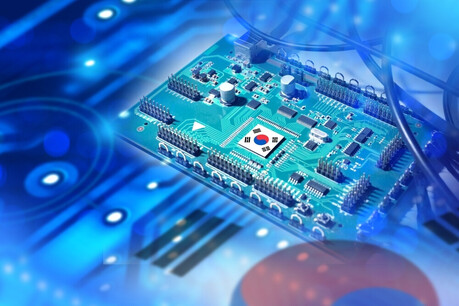
A domestic research team has discovered an error in the international standard used to determine defects in power semiconductors.

A Korean research team has revealed that an international evaluation index used to detect defects in 'SiC (Silicon Carbide)' power semiconductors—core components for electric vehicles and renewable energy facilities—contained errors, correcting the standard for the first time in about 15 years while proposing a new index.

The Korea Electrotechnology Research Institute (KERI) announced on the 25th that Dr. Moon-kyung Na, a principal researcher at the Next-Generation Semiconductor Research Center, along with a joint research team including Prof. Soon-gu Hong's team from Chungnam National University, Horiba STEC Korea, and SK siltron, successfully identified the true emission wavelength (characteristic luminescence wavelength) of internal defects in SiC semiconductors, which had been mistakenly known worldwide for about 15 years. The research results were published in the September 8 issue of the international journal Acta Materialia.

SiC power semiconductors are components that control current direction and power conversion while withstanding harsh environments of high temperatures and high pressures. They are widely used in advanced industries that must endure high voltages and heat, such as electric vehicles and renewable energy facilities.

During the semiconductor manufacturing process, if 'Stacking Faults' occur—where atoms pile up layer by layer but become minutely misaligned—the power semiconductor cannot perform at its full potential, making meticulous quality control essential.

In the industry, 'Photoluminescence (PL) inspection,' which tests semiconductors by shooting light, is utilized to find defects without breaking the semiconductor wafer. This method leverages the fact that the wavelength of light emitted from a defective area differs from that emitted from a defect-free area.

Analyzing over 100,000 defect data points contained in 207 commercial wafers, the research team revealed that 'Frank-type stacking faults' are the primary type of defect. Frank-type stacking faults occur when a single layer of atoms is missing or newly inserted within the crystal structure of the semiconductor—much like a cake layered with sheets and cream, where an extra layer of cream is added instead of the sheet.

Among Frank-type stacking faults, the '(4,1) Frank-type stacking fault' was known to emit 424-nanometer (nm, 1nm = 1 billionth of a meter) light, a standard reflected in the International Electrotechnical Commission (IEC) standards for 15 years. This standard had not been derived by meticulously comparing light signals with actual atomic structures on a 1-to-1 basis.

The research team located the defects using light and then precisely cut those exact locations in units of nanometers to directly verify them using atomic-resolution high-angle annular dark-field scanning transmission electron microscopy (HAADF HR-STEM). The results revealed that the actual indicator for the (4,1) Frank-type stacking fault is 459nm, not 424nm.

This achievement has a significant industrial impact as it dramatically improves the accuracy of quality inspection for invisible semiconductor materials. By accurately tracing the causes of defects to improve manufacturing processes, it can ultimately substantially enhance the quality and safety of electric vehicles and power conversion systems.

"This holds great significance in correcting long-standing global evaluation standards by directly connecting light signals with actual atomic structures without a single error," said Principal Researcher Na.

[Copyright (c) Global Economic Times. All Rights Reserved.]

  • #Cherry Garden
  • #HalalFood
  • #Halal
  • #Petlife
  • #Halalhorizone
  • #Hormuz Impasse
  • #globaleconomictimes
  • #micorea
  • #mykor
Global Economic Times Reporter
Reporter Page

Popular articles

  • "Some Chicken Actual Weight Less Than Displayed"... Industry Says "Large Variance After Cooking"

  • Gyeongsangbuk-do Joins Hands with Maryland and IonQ to Accelerate Global Quantum Industry Cooperation

  • Samsung Electronics Enters the 100 Trillion Won Quarterly Operating Profit Era

I like it
Share
  • Facebook
  • X
  • Kakaotalk
  • LINE
  • BAND
  • NAVER
  • https://globaleconomictimes.kr/article/1065584733312875 Copy URL copied.
Comments >

Comments 0

Weekly Hot Issue

  • 'Goddess of Victory: Nikke' 4th Anniversary Special Broadcast: "Concluding the Ark Story... Preparing for What Lies Beyond the Final Battle"
  • Pearl Abyss’s 'Crimson Desert' Targets Technical Award at the 2026 Korea Game Awards
  • Gravity's "Ragnarok Online PLUS+" Takes Its First Step... Official Guide and Archive Core Summary
  • Human language prefers safety over happiness?
  • Qnity Strengthens 'Customer Collaboration' Strategy for Semiconductor Material Innovation… “Shortening South Korea’s Semiconductor Development Cycles”
  • Detective in Disguise, Close Romance… TVING's "My Guilty Person"

Most Viewed

1
Nearly 900 Schools Temporarily Closed as 'Flu' Epidemic Sweeps Japan
2
US Pushes to Deploy Special Task Force to the Korean Peninsula—Is It Also Targeting China?
3
Samsung Electronics Enters the 100 Trillion Won Quarterly Operating Profit Era
4
AI Companies Rush to Go Public, But Face Sudden Brakes Amid Cooling Investor Sentiment
5
McDonald's Korea Expands and Relocates Headquarters to Booyoung Taepyeong Building in Taepyeong-ro
체리가든 스토리
nutri huevos
로타리
동포저널

Hot Issue

Wall Street Falls as Middle East Escalation Fears and Surging Oil Prices Send Dow Down 1.2%

Global Credit Spreads Widened to 17-Month High Amid AI Investment Concerns

Investor Deposits Plummet by 51 Trillion Won in Four Months, Dropping to Lowest Level This Year

Fashion Runway Show 2026

Let’s recycle the old blankets in Jeju Island’s closet instead of incinerating them.

Global Economic Times
korocamia@naver.com
CEO : LEE YEON-SIL
Publisher : KO YONG-CHUL
Registration number : Seoul, A55681
Registration Date : 2024-10-24
Youth Protection Manager: KO YONG-CHUL
Singapore Headquarters
5A Woodlands Road #11-34 The Tennery. S'677728
Korean Branch
Phone : +82(0)10 4724 5264
#304, 6 Nonhyeon-ro 111-gil, Gangnam-gu, Seoul
Copyright © Global Economic Times All Rights Reserved
  • 향기네무료급식
  • APEC2025
  • 반달곰 프로젝트
Search
Category
  • All articles
  • Synthesis
  • World
  • Business
  • Industry
  • ICT
  • Distribution Economy
  • Well+Being 
    • 전체
    • Pet Life
    • Halal Horizon
  • Travel
  • Eco-News
  • Education
  • Korean Wave News
  • Opinion
  • Arts&Culture
  • Sports
  • People & Life 
    • 전체
    • International Student Report
    • With Ambassador
  • Column 
    • 전체
    • Cho Kijo Column
    • Cherry Garden Story
    • Ko Yong-chul Column
    • Kim Seul-Ong Column
    • Lee Yeon-sil Column
  • Photo News
  • New Book Guide
  • Overseas Koreans
  • Multicultural News