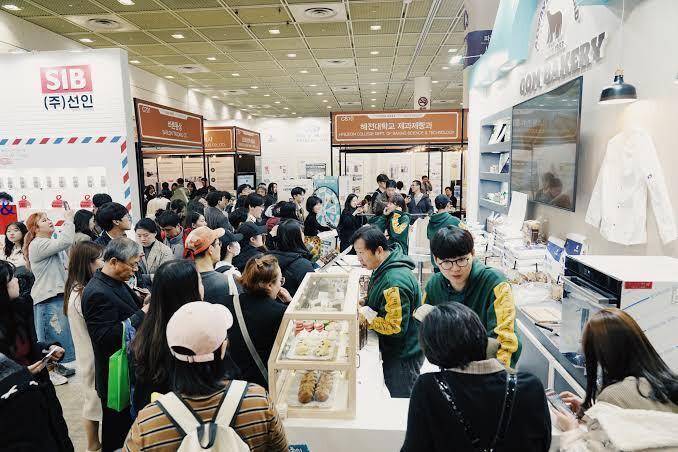
SEOUL — South Korea’s premier international food exposition, Food Week Korea 2026, officially closed its doors on Friday, marking historic highs in both international attendance and trade volume. The four-day trade show underscored the accelerating global momentum of K-Food, highlighting a strategic shift toward export diversification and heightened business-to-business (B2B) engagement.
Hosted at COEX in southern Seoul from November 4 to 7 under the banner "Connecting the World through Taste, Communicating through K-Food," the 2026 edition spanned 1,622 booths. It drew roughly 56,000 industry professionals, international buyers, and general visitors, eclipsing last year’s attendance metric.
Organized by the Ministry of Agriculture, Food and Rural Affairs (MAFRA), the exhibition pivoted heavily toward facilitating global commercial partnerships rather than mere consumer showcases. Over three intensive days of B2B matching sessions, participants completed 2,937 business consultations. These meetings generated $14 million in tentative and confirmed contract agreements—an 18% year-on-year surge—including 47 finalized on-site deals.
A standout trend at this year's expo was the diversification of foreign buyer demand. While processed goods previously anchored overseas interest, international importers zeroed in on Korean culinary foundations, specifically authentic sauces and specialized food ingredients. Major U.S. institutional food service and retail delegates expressed keen interest in integrating Korean marinades, such as bulgogi sauce, into domestic dining sectors, initiating dialogue for commercial-scale supply.
Furthermore, fresh agricultural produce and traditional alcoholic beverages experienced explosive growth. On-site contracts for fresh fruits—like premium grapes and strawberries—alongside artisanal Korean liquors reached approximately $8 million, marking a staggering 515% increase compared to 2025. This surge illustrates that K-Food’s footprint is successfully widening past processed snack staples into fresh produce and beverage sectors.
To cement these gains, key industry stakeholders signed a tripartite Memorandum of Understanding (MOU) during the event, launching a specialized high-brix strawberry export pilot initiative linking domestic growers, exporters, and Singaporean importers. Meanwhile, regional agricultural specialties, such as premium desserts crafted from Sancheong dried persimmons infused with local citrus and ginseng, captured intense buyer interest, demonstrating the high commercial value of local agri-food processing.
Agriculture Minister Song Mi-ryung visited the exhibition floor on its closing day to inspect operations and encourage participating enterprises. "K-Food is currently navigating a golden window of opportunity to expand its global culinary footprint," Minister Song remarked, pledging robust governmental policy and diplomatic backing for overseas ventures.
With a solidified network connecting domestic producers to overseas markets, Korean food authorities plan to leverage advanced food-tech—including AI and robotics—alongside ingredient-focused export strategies to secure the long-term competitiveness of K-Food worldwide.
[Copyright (c) Global Economic Times. All Rights Reserved.]