• 2026.05.27 (Wed)
  • All articles
  • LOGIN
  • JOIN
Global Economic Times
fashionrunwayshow2026
  • Synthesis
  • World
  • Business
  • Industry
  • ICT
  • Distribution Economy
  • Well+Being
  • Travel
  • Eco-News
  • Education
  • Korean Wave News
  • Opinion
  • Arts&Culture
  • Sports
  • People & Life
    • International Student Report
    • With Ambassador
  • Column
    • Cho Kijo Column
    • Cherry Garden Story
    • Ko Yong-chul Column
    • Kim Seul-Ong Column
    • Lee Yeon-sil Column
  • Photo News
  • New Book Guide
MENU
 
Home > Synthesis

USFK Commander Labels South Korea a 'Dagger' to China, Highlighting Strategic Military Value

Global Economic Times Reporter / Updated : 2026-05-27 12:41:13
  • -
  • +
  • Print
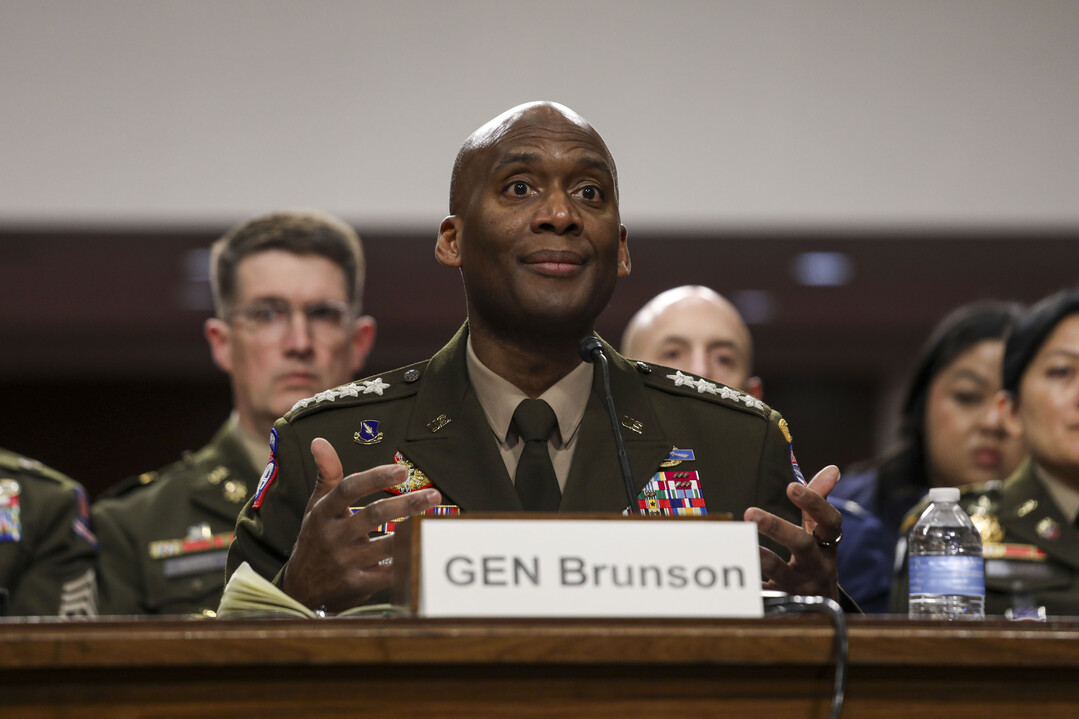
Gen. Xavier Brunson underscores Seoul's geopolitical weight in countering Beijing, while revealing cloud infrastructure collaboration with Samsung to secure wartime communications.


SEOUL — Gen. Xavier Brunson, the commander of U.S. Forces Korea (USFK), has characterized South Korea as a "dagger" aimed at the heart of China from Beijing's perspective, emphasizing the country’s critical geopolitical and military value in Washington’s Indo-Pacific strategy.

Speaking during a podcast hosted by the U.S. Army War College, Gen. Brunson provided a candid assessment of the strategic landscape in Northeast Asia. "When China looks out from its eastern coast, it sees South Korea positioned like a dagger at the center of Asia," Brunson said. He contrasted this with Japan, which he described as a "shield" countering Beijing's ambitions to expand beyond the South China Sea.

The 'Dagger and Shield' Strategy in the Indo-Pacific
Analysts view Brunson’s remarks as a clear articulation of South Korea’s dual-purpose military value: a deterrent against North Korean aggression and a vital forward-deployed asset to contain China.

Beijing has long viewed the presence of American troops and advanced military hardware on the Korean Peninsula with intense skepticism. Most notably, China fiercely opposed the deployment of the Terminal High Altitude Area Defense (THAAD) system in South Korea, frequently labeling it a U.S. tool of encirclement—effectively a "dagger" at its doorstep.

Brunson’s metaphor aligns with his previous strategic assessments. Last year, he described South Korea’s geography as akin to an "unsinkable aircraft carrier" anchored between Japan and the Chinese mainland, signaling that the traditional Washington-Seoul alliance is rapidly evolving beyond its legacy focus on Pyongyang.

Aligning with Trump 2.0’s Foreign Policy
The timing of the commander’s remarks is particularly significant as the second Trump administration takes shape. Foreign policy experts suggest that while Washington remains committed to the South Korean alliance, its primary focus is shifting toward minilateralism and countering China's regional dominance.

Under the mantra of "alliance modernization," the U.S. is expected to pressure regional allies to take on greater burdens. By framing South Korea as a pivotal geopolitical counterweight to China, Gen. Brunson appears to be justifying the continued presence of approximately 28,500 U.S. troops in Korea, while simultaneously signaling that Seoul's strategic role must expand in tandem with rising regional threats.

Securing the Digital Battlefield: The Samsung Partnership
Beyond geopolitical rhetoric, Gen. Brunson highlighted concrete steps being taken to modernize the alliance's technological capabilities, specifically focusing on wartime communication resilience.

He revealed that USFK is currently collaborating with South Korean tech giant Samsung to develop and deploy a robust cloud computing infrastructure. The initiative aims to ensure uninterrupted communication between U.S. and South Korean forces, even in worst-case scenarios where conventional communication networks are jammed, severed, or neutralized by adversaries.

"We are currently working with Samsung to build a cloud infrastructure," Brunson stated, emphasizing that securing the digital high ground is just as critical as maintaining physical deterrence. "This will ensure that even in a degraded or denied communication environment, our alliance can maintain seamless command and control."
As the geopolitical tug-of-war between Washington and Beijing intensifies, South Korea increasingly finds itself at the epicenter of global strategic competition. Gen. Brunson’s latest remarks underscore that the Korean Peninsula is no longer just a frozen theater of the Cold War, but a critical linchpin shaping the future of the Indo-Pacific security architecture.

[Copyright (c) Global Economic Times. All Rights Reserved.]
  • #Hormuz Impasse
  • #globaleconomictimes
  • #micorea
  • #mykorea
  • #nammidonganews
  • #singaporenewsk
  • #Samsung
  • #Daewoo
  • #Hyos
Global Economic Times Reporter
Reporter Page

Popular articles

  • Iran Imposes Transit Fees on Strait of Hormuz Amid Escalating Maritime Tensions

  • Hyundai Motor Group Bets $700 Million on Mexico Amid Trade Policy Volatility

  • China Halts Sulfuric Acid Exports, Triggering Global 'Raw Material Shock'

I like it
Share
  • Facebook
  • X
  • Kakaotalk
  • LINE
  • BAND
  • NAVER
  • https://globaleconomictimes.kr/article/1065584374087933 Copy URL copied.
Comments >

Comments 0

Weekly Hot Issue

  • US Signals Potential Re-Imposition of 'Global 10% Tariff' Post-July Expiration, Citing Section 122 Authority
  • MUSINSA Reaches Historic High in Q1 2026 Driven by Global Push and Offline Expansion
  • Taste of South Korea Met in Hongdae, Seoul… Paraguayan Traditional Restaurant ‘CASA LATINO’
  • World’s First ‘Horticultural Healing’ Stage: 2026 Taean International Horticultural Healing Expo Concludes Successfully After a 30-Day Journey
  • Iran War End Imminent: "Iran Striking Dramatic Agreement to Relinquish Enriched Uranium Stockpile"
  • White House Shooter Identified as 21-Year-Old Nasir Best with History of Mental Illness Claiming to be "Jesus"

Most Viewed

1
SK hynix CEO Kwak Noh-jung Meets Bill Gates and Satya Nadella to Solidify AI Memory Alliance
2
Alleged Marital Rift Between Macrons Tied to Iranian Actress: New Claims Emerge
3
IRANIAN STATE MEDIA DEMONSTRATES ASSAULT RIFLES ON-AIR, TARGETING UAE FLAG AMID RISING REGIONAL PRESSURES
4
"Chasing Samsung & SK Hynix": Semiconductor ETFs Soar While Inverse Products Plunge
5
AIDC Emerges as New Growth Engine for Telcos, Filling the Void Left by Stagnant Wireless Revenues
광고문의
임시1
임시3
임시2

Hot Issue

USFK Commander Labels South Korea a 'Dagger' to China, Highlighting Strategic Military Value

KOSPI Smashes Through 8,400 Barrier for First Time in History

Department Stores Surge as Hypermarkets Struggle: The Deepening Polarization of Retail Consumption

Bomb Attack Targets Moving Train in Pakistan: At Least 29 Dead, 102 Injured

Fashion Runway Show 2026

Global Economic Times
korocamia@naver.com
CEO : LEE YEON-SIL
Publisher : KO YONG-CHUL
Registration number : Seoul, A55681
Registration Date : 2024-10-24
Youth Protection Manager: KO YONG-CHUL
Singapore Headquarters
5A Woodlands Road #11-34 The Tennery. S'677728
Korean Branch
Phone : +82(0)10 4724 5264
#304, 6 Nonhyeon-ro 111-gil, Gangnam-gu, Seoul
Copyright © Global Economic Times All Rights Reserved
  • 에이펙2025
  • APEC2025가이드북TV
  • 반달곰 프로젝트
Search
Category
  • All articles
  • Synthesis
  • World
  • Business
  • Industry
  • ICT
  • Distribution Economy
  • Well+Being
  • Travel
  • Eco-News
  • Education
  • Korean Wave News
  • Opinion
  • Arts&Culture
  • Sports
  • People & Life 
    • 전체
    • International Student Report
    • With Ambassador
  • Column 
    • 전체
    • Cho Kijo Column
    • Cherry Garden Story
    • Ko Yong-chul Column
    • Kim Seul-Ong Column
    • Lee Yeon-sil Column
  • Photo News
  • New Book Guide
  • Multicultural News
  • Jobs & Workers