![[등록] 2026-09-01 15:48:31](/support/_updata/banner2/tl181982910_6749.png)


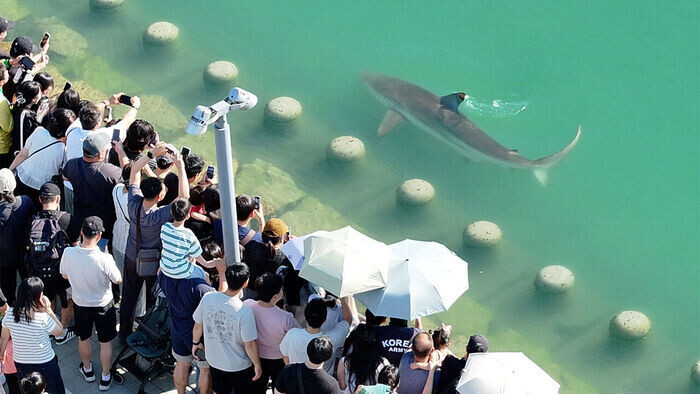
An unexpected visitor in the coastal waters of Busan has triggered a massive wave of public fascination, breathing extraordinary life into local commerce and driving nationwide consumer trends. What began as an unusual marine animal sighting has rapidly transformed into a viral cultural phenomenon, affectionately dubbed the "shark boom".
A Sudden Marine Visitor Grips the Nation
The phenomenon kicked off when a large shark, estimated to be about 3.5 meters (11.5 feet) long, was first spotted swimming inside the artificial waterway at the Busan North Port Waterfront Park located in Dong-gu, Busan. Believed by experts to be drawn in by prey or shifting coastal water temperatures, the marine creature lingered near the pedestrian walkways, surfacing periodically to reveal its dorsal fin.
As photos and videos spread rapidly across social media platforms like Instagram and Threads, the park quickly turned into an impromptu hotspot. Over the subsequent weekend, nearly 30,000 curious residents and tourists flocked to the waterfront—drawing crowds four to five times larger than usual. Visitors lined the railings for hours, children clutched shark dolls, and onlookers eagerly shared viewing tips online.
Local Commercial Surge and Surprising Sales Spikes
The massive influx of sightseers translated into an unprecedented business windfall for local merchants and nearby convenience stores. According to data released by BGF Retail, total sales at CU convenience stores situated near the North Port Waterfront Park skyrocketed by 48.6% during the peak of the weekend crowds compared to the previous week.
The nature of the crowd's needs resulted in staggering item-specific growth:
Portable Power Banks: Sales soared by an incredible 815.5% as visitors heavily utilized and drained their phone batteries filming and broadcasting the shark.
Toys and Novelties: Sales spiked by 422.7%, largely driven by families with children purchasing items like Pokémon cards and character merchandise.
Instant and Convenience Foods: Ready-to-eat hot items such as dakgangjeong (sweet crispy chicken) and roasted sweet potatoes jumped 166.2%, while bottled water rose 55.0%, ice grew 46.3%, and triangle gimbap increased 32.3%.
Even nearby cafes experienced overwhelming demand. One local coffee shop employee jokingly dubbed their store the "Ediya Jaws Branch" on social media, noting that staff and family members alike were completely overwhelmed trying to keep up with the endless queues of customers.
The "Shark Effect" Spreads Nationwide
Beyond the immediate vicinity of Busan's harbor, the sighting triggered a widespread psychological and marketing trend centered around ocean-themed goods. Consumers across South Korea naturally gravitated toward products reminiscent of the viral event.
Nationwide data from CU convenience stores from September 19 to 21 highlighted clear increases in "associated consumption":
Jaws Bar: Sales of the iconic shark-shaped ice pop grew by 12.5% nationwide (and 28.4% within Busan's Dong-gu district).
Goraebab: The popular sea animal-shaped snack saw a 10.5% increase nationally and 21.6% locally.
Baby Shark Merchandise: Products featuring Pinkfong's globally renowned character rose 13.9% across the country and 33.3% in Dong-gu.
Financial markets also felt the ripple effect, with shares of intellectual property owners experiencing temporary upward volatility as the meme saturated digital feeds. While safety authorities and local government officials continue to monitor the marine animal's movements and advise public caution, the unexpected visitor has undeniably left an indelible mark on South Korea's retail landscape, transforming a rare wildlife moment into an extraordinary celebration of community curiosity and commercial resilience.
[Copyright (c) Global Economic Times. All Rights Reserved.]