• 2026.11.19 (Thu)
  • All articles
  • LOGIN
  • JOIN
Global Economic Times
한인동포뉴스(상단)
  • Synthesis
  • World
  • Business
  • Industry
  • ICT
  • Distribution Economy
  • Well+Being
    • Pet Life
    • Halal Horizon
  • Travel
  • Eco-News
  • Education
  • Korean Wave News
  • Opinion
  • Arts&Culture
  • Sports
  • People & Life
    • International Student Report
    • With Ambassador
  • Column
    • Cho Kijo Column
    • Cherry Garden Story
    • Ko Yong-chul Column
    • Kim Bong-seon's Photo Column
    • Kim Seul-Ong Column
    • Lee Yeon-sil Column
    • Professor Lee Soo-young’s Life Essays
  • Photo News
  • New Book Guide
MENU
 
Home > People & Life

Cost of Education Weighs Heavily on Families, With 57% Feeling the Financial Strain

Min Gyu Mi Reporter / Updated : 2026-11-18 12:28:44
  • -
  • +
  • Print
Over half of South Korean household heads report education cost burdens, while nearly 60% of university students rely on family support for tuition.


A recent government survey reveals that nearly 60% of household heads with school-aged children feel financially burdened by education expenses, while an equivalent proportion of college and graduate students rely heavily on their families to pay tuition.

According to the "2026 Social Survey" released by the National Statistics Agency on the 18th, 57.0% of household heads aged 30 and older with student children responded that children's education costs are burdensome. This figure represents a 3.9 percentage point (p) decrease compared to 60.9% in 2024.

Meanwhile, 31.0% of respondents stated that the financial burden is "moderate," and 12.1% felt it was "not burdensome."

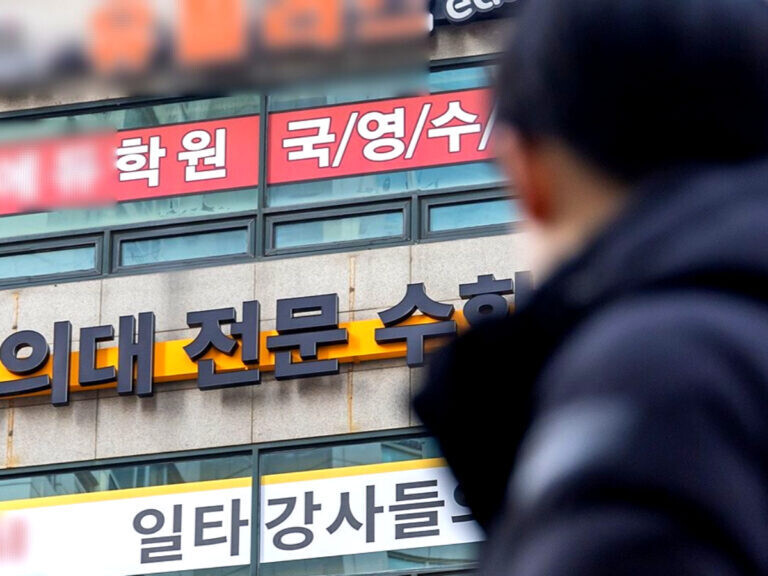
Among those who reported feeling burdened, "extra-curricular expenses excluding school tuition" (such as private tutoring and hagwon fees) accounted for the largest share at 71.7%. This was followed by "school tuition fees" at 22.0% and "boarding, lodging, or dormitory expenses" at 6.3%.

The weight of education costs varied significantly by age group. In their 30s and 40s, parents felt the heaviest burden from extra-curricular education costs, reaching 86.0% and 87.7%, respectively. In contrast, 55.7% of respondents aged 60 and older cited standard school tuition fees as their primary financial concern.

Tuition Financing and Student Life

For the first semester of this year, "help from parents and family" remained the most common way for university and graduate students to cover tuition, standing at 58.2%. This was followed by scholarships (26.1%), self-funding through part-time work (8.1%), and student loans (7.7%). Family support decreased slightly by 0.1 percentage points from two years prior, while scholarship reliance increased by 0.7 percentage points.

Overall satisfaction with school life among middle and high school students dropped by 1.8 percentage points to 55.5%. Satisfaction by category ranked as follows: peer relationships (71.7%), relationships with teachers (65.7%), educational content (58.7%), school facilities (56.4%), surrounding school environment (54.3%), and teaching methods (52.2%).

When asked why they study, 74.6% of middle and high school students cited "to secure a good job or career," followed by "to enter a desired university or graduate school" (65.3%) and "to meet the expectations of people around them" (49.4%). Only 18.1% studied simply because they enjoyed it.

Stress Levels and Health Insights

Overall, workplace stress remained a major factor, with 58.0% of workers reporting stress from their jobs over the past two weeks—outpacing stress from school life (34.7%) and family life (31.6%).

The survey also highlighted a gender gap in daily stress: women reported higher stress levels across all life domains compared to men. Specifically, school-related stress stood at 40.2% for women versus 29.5% for men, while family-related stress was 36.7% for women and 26.5% for men.

Regarding health, 33.7% of respondents expressed constant anxiety about contracting cancer, with women (38.5%) showing higher apprehension than men (28.7%). Health management practices heavily featured regular health check-ups (88.3%) and adequate sleep (79.9%), though regular breakfast habits lagged significantly among younger demographics, remaining at 42.1% for those in their 20s and 46.4% for those in their 30s.

[Copyright (c) Global Economic Times. All Rights Reserved.]

  • #Cherry Garden
  • #HalalFood
  • #Halal
  • #Petlife
  • #Halalhorizone
  • #Hormuz Impasse
  • #Joseon
  • #globaleconomictimes
  • #micore
Min Gyu Mi Reporter
Min Gyu Mi Reporter

Popular articles

  • Bucheon City Holds ‘2026 Webtoon Convergence Contest’… Accepting Submissions Until November 11

  • "Swap Snacks for Two Handfuls of Pecans?": How Triglycerides Dropped After 12 Weeks

  • International St. Mary’s Hospital Takes Over Incheon Airport Terminal 1 Medical Facility

I like it
Share
  • Facebook
  • X
  • Kakaotalk
  • LINE
  • BAND
  • NAVER
  • https://globaleconomictimes.kr/article/1065583630635066 Copy URL copied.
Comments >

Comments 0

Weekly Hot Issue

  • AI Music Tops Melon Chart: Is the K-Pop Production Formula Changing?
  • Beyond the Crossroads: How South Korea Can Forge a New Order in an Age of Global Upheaval
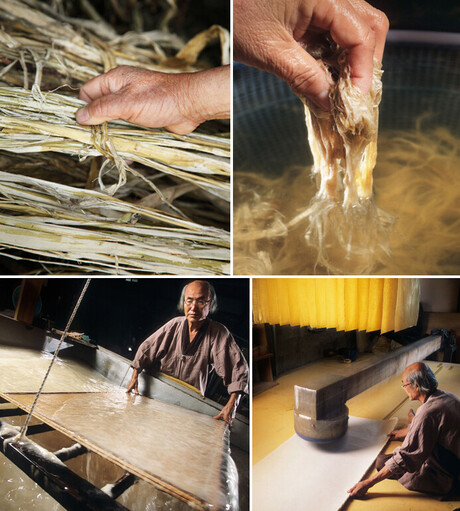
  • Pohang Struggles to Safeguard Its Hanji Heritage Amid Aging Artisans and Shifting Markets
  • KOGAS Chief Calls for Gas Price Adjustments to Clear Massive Backlog of Unpaid Bills
  • South Korea and China Reach Landmark Service and Investment FTA Agreement Translation
  • KDI Forecasts "Nearing 4% Growth" Next Year Despite Export Slowdown—Here’s Why

Most Viewed

1
South Korea and Ethiopia Sign Trilateral MOU to Introduce Liquid-Based Cytology (LBC) Technology for Cervical Cancer Diagnosis
2
Meeting Christmas Early!… Busan Dessert Sales Event "Daldal The Market" Held
3
World Citizens are Flying Directly to Busan... The Era of 4 Million Foreigners is Just Around the Corner
4
Eating 100g of Baechu Kimchi Daily Linked to Lower High-Cholesterol Risks
5
First Snow and Freeze Hit Korea as Winter Officially Begins on 'Ipdeong'
체리가든 스토리
nutri huevos
로타리
동포저널

Hot Issue

ASEAN Summit Wraps Up: Trump Holds Back-to-Back Talks with Quad and Southeast Asian Leaders

"Chilean Wine is More Than Just Cabernet Sauvignon"… Cono Sur Bets Big on Pinot Noir

"Semiconductor Boom Drives Exceptional Growth": IMF Lifts South Korea’s 2026 Growth Outlook to 3.9%

Fashion Runway Show 2026

Let’s recycle the old blankets in Jeju Island’s closet instead of incinerating them.

Global Economic Times
korocamia@naver.com
CEO : LEE YEON-SIL
Publisher & Editor : KO YONG-CHUL
Registration number : Seoul, A55681
Registration Date : 2024-10-24
Youth Protection Manager: KO YONG-CHUL
Singapore Headquarters
5A Woodlands Road #11-34 The Tennery. S'677728
Korean Branch
Phone : +82(0)10 4724 5264
#304, 6 Nonhyeon-ro 111-gil, Gangnam-gu, Seoul
Copyright © Global Economic Times All Rights Reserved
  • News K
  • 반달곰 프로젝트
  • 광고문의
Search
Category
  • All articles
  • Synthesis
  • World
  • Business
  • Industry
  • ICT
  • Distribution Economy
  • Well+Being 
    • 전체
    • Pet Life
    • Halal Horizon
  • Travel
  • Eco-News
  • Education
  • Korean Wave News
  • Opinion
  • Arts&Culture
  • Sports
  • People & Life 
    • 전체
    • International Student Report
    • With Ambassador
  • Column 
    • 전체
    • Cho Kijo Column
    • Cherry Garden Story
    • Ko Yong-chul Column
    • Kim Bong-seon's Photo Column
    • Kim Seul-Ong Column
    • Lee Yeon-sil Column
    • Professor Lee Soo-young’s Life Essays
  • Photo News
  • New Book Guide
  • Overseas Koreans
  • Multicultural News