![[등록] 2026-09-01 15:48:31](/support/_updata/banner2/tl181982910_6749.png)


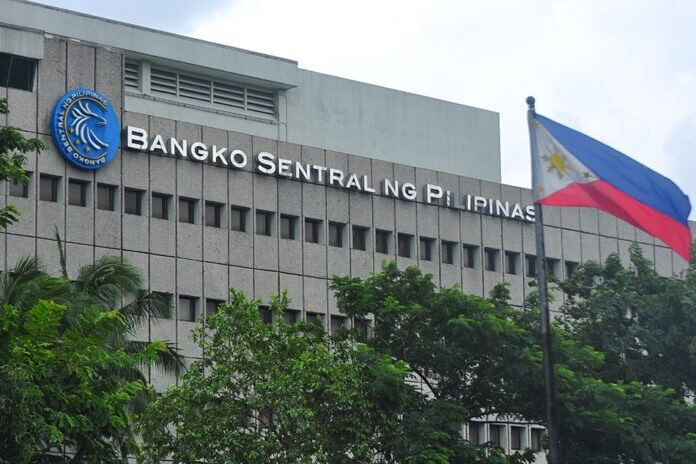
MANILA — Expansion in Philippine bank lending and domestic money supply eased in June 2026, reflecting heightened caution among corporate borrowers and households alongside a broader shift toward disciplined balance-sheet management.
Data released by Bangko Sentral ng Pilipinas (BSP) on Friday revealed that outstanding loans granted by universal and commercial banks (U/KBs) grew by 9.8 percent year-on-year in June, bringing the total loan portfolio to PHP 14.88 trillion. The pace marked a noticeable deceleration from the 12.1 percent expansion recorded in May.
Commercial lending for business activities rose by 9.2 percent, supported by essential sectors including real estate, energy utilities, wholesale and retail trade, and transport. However, overall corporate borrowing slowed compared to May’s 11.7 percent growth, dragged down by softer demand in construction, education, and administrative services.
Household credit also posted a milder expansion of 17.8 percent, down from 19 percent in May, driven by calmer growth in motor vehicle financing and credit card usage.
Financial analysts attribute the moderating trends to macroeconomic prudence rather than underlying structural weakness. Jonathan Ravelas, senior adviser at Reyes Tacandong & Co., noted that both businesses and consumers are adopting a wait-and-see posture amid lingering global uncertainties. Companies are currently prioritizing operational efficiency and cash preservation over rapid capital expansion. Similarly, consumers remain selective with their expenditure, favoring essentials despite stabilizing domestic inflation.
"Lending growth remains healthy and positive, indicating that the economy is still expanding, albeit at a more measured and sustainable pace," Ravelas said.
In tandem with credit activity, domestic liquidity (M3)—the broadest measure of money supply—grew by 10.6 percent to PHP 20.5 trillion in June. While continuing to buffer economic liquidity, the growth rate slowed from May’s 12.8 percent expansion, directly influenced by the cooler pace of bank credit generation.
Public sector debt issuances, government spending withdrawals, and a 6.1 percent rise in the central bank's net foreign assets (NFA) helped sustain overall liquidity levels during the month.
The central bank reiterated its commitment to managing financial dynamics proactively, emphasizing that domestic liquidity conditions will remain aligned with its long-term price and financial stability objectives.
[Copyright (c) Global Economic Times. All Rights Reserved.]