![[등록] 2026-09-01 15:48:31](/support/_updata/banner2/tl181982910_6749.png)


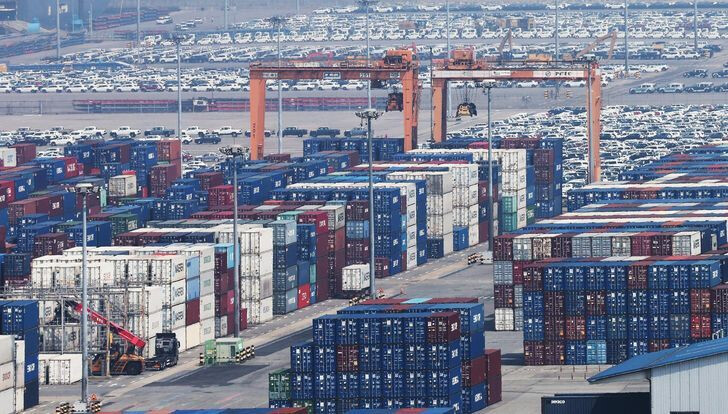
SEOUL — The economic shockwaves from the prolonged war in the Middle East have officially begun to seep into the South Korean real economy. While a booming semiconductor export sector continues to anchor overall growth, the twin pressures of disrupted crude oil supplies and sustained high energy prices are increasingly stifling production, driving up inflation, and clouding the nation’s macroeconomic outlook.
According to the "June Economic Trends" report released by the Korea Development Institute (KDI) on Monday, the negative repercussions of the geopolitical conflict are becoming tangible, significantly elevating downside risks for Africa and Asia's prominent tech-driven economy.
The state-funded think tank pointed out that energy-dependent sectors are bearing the brunt of the crisis. Due to persistent bottlenecks in shipping routes and disruptions in crude oil transportation—compounded by the prolonged blockade of the Strait of Hormuz—South Korea’s domestic petroleum refining production witnessed a staggering 20.5% drop. Consequently, export volumes for refined petroleum products and overall trade with Middle Eastern nations have faced a sharp contraction.
This supply-side crunch is rapidly translating into domestic inflationary pressure. South Korea’s consumer price index (CPI) for May accelerated to 3.1% year-on-year, reversing brief signs of stabilization earlier this year. The spike was overwhelmingly driven by petroleum products, which skyrocketed by 24.2%. The surge has trickled down into public services and transport, pushing core inflation—which excludes volatile food and energy prices—to 2.5%, while keeping consumer inflation expectations stubbornly high.
The KDI report highlights a stark divergence between the semiconductor industry and the rest of the economy. In April, all-industry production maintained a modest upward trajectory, bolstered heavily by chips and financial services. Driven by global artificial intelligence (AI) infrastructure demands, facility investments surged 8.1%, accompanied by a massive influx of semiconductor manufacturing equipment imports.
Conversely, the domestic construction sector remains mired in a severe slump. Construction production fell 5.5% year-on-year, with construction value completed—the actual progress of building projects—also shrinking by 5.5%. Both residential and civil engineering sectors are struggling as high oil prices drive up the costs of vital construction materials. KDI warned that delayed groundbreakings and prolonged project timelines could significantly defer any meaningful recovery in the housing market.
Amidst these compounding headwinds, domestic consumption has shown surprising resilience. April’s retail sales slowed to a 1.6% growth rate but managed to sustain an upward quarterly average. Furthermore, the Composite Consumer Sentiment Index (CCSI) rebounded to 106.1 in May. Analysts attribute this temporary cushion to the government's recent cash handouts aimed at offsetting high fuel expenses, which KDI expects will offer brief support to private spending.
Nevertheless, the think tank raised concerns over long-term stability. "While the semiconductor sector acts as a powerful buffer, high global interest rates and intensifying geopolitical uncertainties are deteriorating investment conditions for non-tech industries," the KDI stated, emphasizing that prolonged trade vulnerabilities could choke off broader economic momentum.
[Copyright (c) Global Economic Times. All Rights Reserved.]