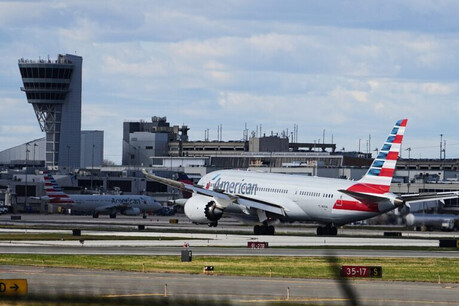
The recent incident that paralyzed air routes across the eastern United States, causing the cancellation and delay of thousands of flights, starkly revealed the painful underside of a superpower leading in advanced technology. The cause of this aviation chaos was neither a cyber terror attack nor artificial intelligence. The trigger was a system overload that occurred during the very basic and routine process of replacing aging copper communication lines with cables.
Due to an error during the work, thousands of excessive connection attempts flooded network devices every few seconds, disrupting communication between air traffic controllers and pilots as well as radar data transmission. Unable to immediately identify the cause, authorities had no choice but to issue a nationwide ground stop for safety, instantly bringing skies across the United States to a halt.
What makes it even more painful is that this accident was by no means a one-off happening born of coincidence. Just a few years ago, a network paralysis incident that stranded thousands of aircraft occurred due to a simple database update mistake by an outsourcing company. Though the specific details differed, at their root lay consistently outdated and neglected infrastructure. Immediately after this crisis, U.S. aviation authorities pointed out that massive budgets are required to normalize the system, offering sharp criticism toward the Congress that had been passive in allocating budgets.
This crisis is not merely a problem for the United States alone. As the airspace of a global hub connecting the entire world came to a halt, sequential cancellations and delays followed at airports around the world, including South Korea, leaving bewildered travelers venting their anger. Even commotion broke out as foreign cargo planes made emergency diversions to nearby airports due to concerns over fuel shortages caused by extended flight times.
While everyone was engrossed only in visible, glamorous cutting-edge technology and digital innovation, the invisible foundational infrastructure—the 'bloodvessels' supporting society—had worn out and decayed. The 'man-made disaster' brought on by short-sighted budget cuts and neglect ultimately returned as a giant boomerang binding the feet of the entire world. This U.S. aviation chaos serves as a stern warning of how devastating economic and social costs are paid when the aging of national infrastructure is neglected.
[Copyright (c) Global Economic Times. All Rights Reserved.]