• 2026.06.27 (Sat)
  • All articles
  • LOGIN
  • JOIN
Global Economic Times
fashionrunwayshow2026
  • Synthesis
  • World
  • Business
  • Industry
  • ICT
  • Distribution Economy
  • Well+Being
  • Travel
  • Eco-News
  • Education
  • Korean Wave News
  • Opinion
  • Arts&Culture
  • Sports
  • People & Life
    • International Student Report
    • With Ambassador
  • Column
    • Cho Kijo Column
    • Cherry Garden Story
    • Ko Yong-chul Column
    • Kim Seul-Ong Column
    • Lee Yeon-sil Column
  • Photo News
  • New Book Guide
MENU
 
Home > Distribution Economy

Political Debates Spark Over Semiconductor "Windfall" Redistribution

Hee Chan Kim Reporter / Updated : 2026-06-27 11:46:47
  • -
  • +
  • Print


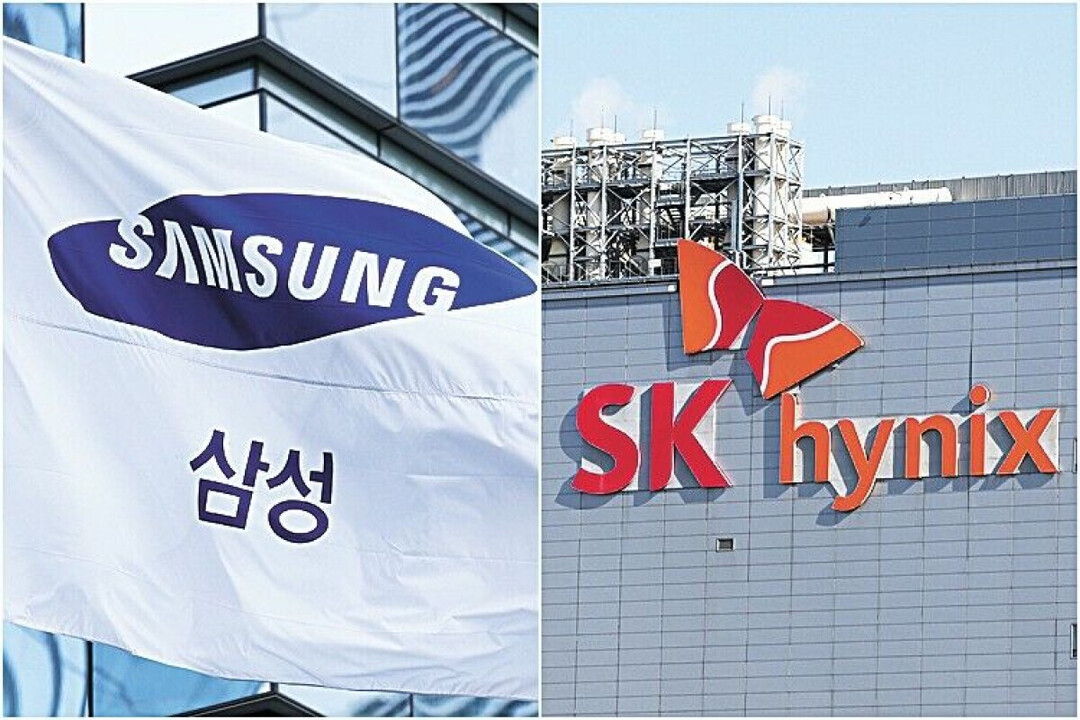
As South Korea’s semiconductor industry rides the crest of an unprecedented AI-driven boom in 2026, a contentious debate has emerged within political circles regarding how to manage the resulting surge in tax revenue. While the nation celebrates record-breaking corporate performance, lawmakers and policy experts are clashing over whether these gains should be redistributed to the public or prioritized for long-term industrial investment. 

The Proposal for a "National Dividend"

On June 25, 2026, a forum hosted by members of the Democratic Party, the Basic Income Party, and the Social Democratic Party, alongside civic groups, proposed the creation of a "national dividend-type" sovereign wealth fund. Proponents, including Oh Joon-ho of the Institute for Basic Income Policy, argued that the current prosperity is not reaching every segment of society equally. 

The proposal suggests establishing a fund fed by excess tax revenue—potentially reaching 100 trillion won over the next three years—to provide monthly cash dividends to citizens. Under this model, simulations suggest that a citizen could receive 108,000 won monthly initially, with payments scaling to 620,000 won after 30 years. Supporters maintain that such a fund would ensure the fruits of innovation are shared broadly, rather than remaining concentrated within a few large corporations. 

Industrial Reality vs. Optimistic Projections

Critics and government officials warn that such calculations rely on an overly optimistic view of the semiconductor market. The semiconductor industry is historically cyclical, characterized by periods of intense expansion followed by inevitable downturns. Experts caution that treating volatile "earnings surprises" as permanent, fixed income for social spending could lead to fiscal instability. 

Moreover, the term "excess tax revenue" itself is subject to scrutiny; it merely signifies that collections exceeded government forecasts, not that the state possesses idle surplus funds. Given that South Korea has maintained significant annual fiscal deficits since 2020, financial experts emphasize that reinvesting in technological competitiveness, R&D, and infrastructure is more critical for long-term growth than immediate consumption. President Lee Jae-myung has also signaled that the government’s focus lies on investing in future growth engines and expanding high-quality jobs rather than direct corporate profit redistribution. 

Concerns Over Legal and Market Impacts

The push for a "national dividend" has sparked concerns regarding legal boundaries and corporate autonomy. Some advocates suggest amending the National Finance Act or creating a special law to facilitate this fund, while others propose converting government infrastructure support into "public equity" stakes in companies. Business groups and industry experts have pushed back, arguing that such measures could function as disguised regulations, ultimately stifling investment incentives. 

As the global AI boom continues to demand high-end chips, South Korea faces a strategic crossroads. Balancing the immediate desire for social welfare with the necessity of maintaining a competitive edge in a volatile global market remains the central challenge. Without a clear, sustainable strategy, there is a risk that the current period of prosperity may be squandered rather than leveraged into a foundation for durable economic stability.

[Copyright (c) Global Economic Times. All Rights Reserved.]
  • #Hormuz Impasse
  • #globaleconomictimes
  • #micorea
  • #mykorea
  • #nammidonganews
  • #singaporenewsk
  • #Samsung
  • #Daewoo
  • #Hyos
Hee Chan Kim Reporter

Popular articles

  • Taihan Cable & Solution Secures 140-Billion-Won Extra-High Voltage Power Grid Contract in Singapore, Proving Global Competitiveness

  • 'Clicking' and 'Popping' in Shoulders and Knees: When Should You Consult a Doctor?

  • 'K-Medicine' Sweep Drives Foreign Medical Spending in Korea to Record High of 250 Billion Won

I like it
Share
  • Facebook
  • X
  • Kakaotalk
  • LINE
  • BAND
  • NAVER
  • https://globaleconomictimes.kr/article/1065581125480337 Copy URL copied.
Comments >

Comments 0

Weekly Hot Issue

  • Kia’s Strategic Pivot: Accelerating Electrification Through SDV, PBV, and EREV Innovation
  • Devastating Twin Earthquakes Strike Venezuela: Death Toll Rises Amid Humanitarian Crisis
  • Hyundai Motor Prioritizes "Customer Experience" Over Pricing: Aiming for Lifelong Loyalty with the New Avante
  • South Korea's Path to Round of 32 Grows Perilous Following Australia-Paraguay Draw
  • The True Face of Our Politics After Stripping Away the Mask of Fairness
  • The Word of a U.S. President Worth Less Than a Dollar

Most Viewed

1
[In-depth Report] The Islamic ‘Halal Barrier’ Just Around the Corner… The Silent Screams of K-Beauty SMEs
2
Asking about the Future of ‘Hangeul City Ulsan’… Special Lecture by Novelist Kim Jin-myung to be Held
3
Embassy of Pakistan in Seoul Hosts Commemorative Event for the 150th Birth Anniversary of Muhammad Ali Jinnah
4
KOSPI Hits Historic 9,300 Milestone as Market Cap Surpasses 8,000 Trillion Won
5
'K-Medicine' Sweep Drives Foreign Medical Spending in Korea to Record High of 250 Billion Won
광고문의
임시1
임시3
임시2

Hot Issue

Devastating Twin Earthquakes Strike Venezuela: Death Toll Rises Amid Humanitarian Crisis

Political Debates Spark Over Semiconductor "Windfall" Redistribution

Google Play Hosts 'ChangGoo Alumni Day' to Accelerate Global Expansion for 760 Korean Startups

Government Slashes Petroleum Price Caps by 150 Won per Liter amid Easing Middle East Tensions

Fashion Runway Show 2026

Global Economic Times
korocamia@naver.com
CEO : LEE YEON-SIL
Publisher : KO YONG-CHUL
Registration number : Seoul, A55681
Registration Date : 2024-10-24
Youth Protection Manager: KO YONG-CHUL
Singapore Headquarters
5A Woodlands Road #11-34 The Tennery. S'677728
Korean Branch
Phone : +82(0)10 4724 5264
#304, 6 Nonhyeon-ro 111-gil, Gangnam-gu, Seoul
Copyright © Global Economic Times All Rights Reserved
  • 향기네무료급식
  • BCB부천방송
  • 반달곰 프로젝트
Search
Category
  • All articles
  • Synthesis
  • World
  • Business
  • Industry
  • ICT
  • Distribution Economy
  • Well+Being
  • Travel
  • Eco-News
  • Education
  • Korean Wave News
  • Opinion
  • Arts&Culture
  • Sports
  • People & Life 
    • 전체
    • International Student Report
    • With Ambassador
  • Column 
    • 전체
    • Cho Kijo Column
    • Cherry Garden Story
    • Ko Yong-chul Column
    • Kim Seul-Ong Column
    • Lee Yeon-sil Column
  • Photo News
  • New Book Guide
  • Multicultural News
  • Jobs & Workers