• 2026.11.29 (Sun)
  • All articles
  • LOGIN
  • JOIN
Global Economic Times
한인동포뉴스(상단)
  • Synthesis
  • World
  • Business
  • Industry
  • ICT
  • Distribution Economy
  • Well+Being
    • Pet Life
    • Halal Horizon
  • Travel
  • Eco-News
  • Education
  • Korean Wave News
  • Opinion
  • Arts&Culture
  • Sports
  • People & Life
    • International Student Report
    • With Ambassador
  • Column
    • Cho Kijo Column
    • Cherry Garden Story
    • Ko Yong-chul Column
    • Kim Bong-seon's Photo Column
    • Kim Seul-Ong Column
    • Lee Yeon-sil Column
    • Professor Lee Soo-young’s Life Essays
  • Photo News
  • New Book Guide
MENU
 
Home > Distribution Economy

Proposed Tax Relief in Seoul Could Be Erased by Surging Home Valuations

Yim Kwangsoo Correspondent / Updated : 2026-11-29 11:35:09
  • -
  • +
  • Print


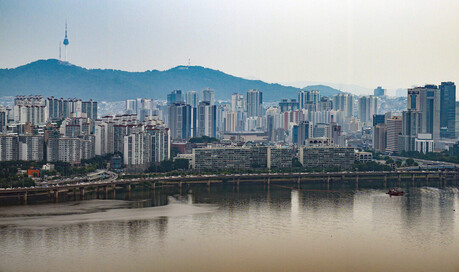
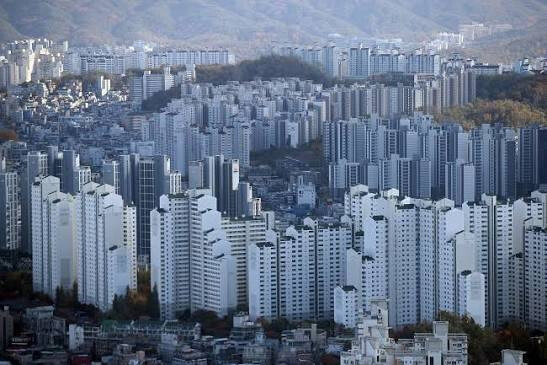
SEOUL — South Korean homeowners hoping for property tax relief next year may still face sharply higher bills if government-assessed property values continue their rapid climb, according to recent real estate tax projections.

While the South Korean government is pushing legislative reforms to ease the Comprehensive Real Estate Tax (CRET) for single-home owner-occupiers, rising property valuations threaten to outpace the proposed tax breaks. Data modeled by the real estate tax platform Sellimon indicates that if official housing assessments next year match this year’s growth rates, total holding taxes—combining standard property taxes and the CRET—could surge by more than 95% for certain prime Seoul apartments, even if the pending tax cuts pass the National Assembly.

The simulations, which assume sole ownership, primary residency, and no supplementary tax credits, highlight how steep valuation hikes can push properties well past revised exemption thresholds.

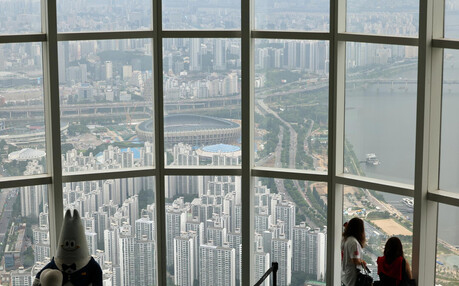
In Seoul’s affluent Banpo neighborhood, an 84-square-meter unit at Raemian One Bailey saw its official valuation jump 33% this year. A repeat of that increase next year would drive the owner's total holding tax up 61.7%, from 28.11 million won to 45.44 million won. Roughly 95% of that 17.34 million won increase would stem directly from the CRET, which is projected to nearly double from 18.72 million won to 35.22 million won.

Other major complexes across the capital face similar trajectories:

Acro River Park (Banpo): Holding taxes could climb 50.2% to 36.17 million won.
Jamsil Jugong Complex 5 (Songpa): Projected to rise 63.0% to 21.92 million won.
Eunma Apartment (Daechi): Estimated to jump 69.1% to 18.10 million won.
Acro Riverheim (Heukseok): Recorded the steepest projected spike at 95.3%, rising from 5.75 million won to 11.22 million won if its 43.9% valuation growth repeats.

At the heart of the government's reform package is a proposal to raise the basic CRET deduction for single-home owner-occupiers from 1.2 billion won to 1.4 billion won in assessed value. The Ministry of Economy and Finance maintains that the measure will provide meaningful relief once the housing market stabilizes.

However, properties hovering near the current threshold remain vulnerable. For instance, an 84-square-meter unit at Mokdong Hillstate in western Seoul—currently assessed at 1.377 billion won—would see its CRET wiped out entirely from 449,000 won to zero if valuations hold steady. Yet another 23% assessment hike would push the property past the new 1.4 billion won ceiling, more than doubling its CRET bill to 901,000 won.

The potential tax squeeze extends beyond Seoul's traditional luxury districts. According to the Korea Real Estate Board, apartment prices through mid-November have posted double-digit gains in northern Seoul districts like Seongbuk (17.76%) and Seodaemun (15.03%), as well as in Gyeonggi Province hubs including Hwaseong's Dongtan (23.01%), Suwon's Yeongtong (19.29%), and Gwangmyeong (19.08%). If official assessments reflect these market gains next year, a broader pool of homeowners could be pulled into the CRET bracket.

Meanwhile, the fate of the tax reform remains stalled in parliament. While the administration favors a tiered deduction—1.4 billion won for owner-occupiers versus 1.2 billion won for non-residents—some lawmakers are advocating for a blanket 1.4 billion won exemption regardless of residency. Following four days of tax subcommittee deliberations ending November 27, the National Assembly's Strategy and Finance Committee adjourned without reaching an agreement.

[Copyright (c) Global Economic Times. All Rights Reserved.]
  • #Cherry Garden
  • #HalalFood
  • #Halal
  • #Petlife
  • #Cats
  • #Dogs
  • #Halalhorizone
  • #Hormuz Impasse
  • #Joseon
  • #globaleconomicti
Yim Kwangsoo Correspondent
Yim Kwangsoo Correspondent 前 재파라과이한인회장, 前 남미동아뉴스 발행인, 평통자문위원, 현 남미동아뉴스 편집인

Popular articles

  • Digital Detour: Why MZ Generation is Trading Smartphones for "Diginori" and Analog Diaries

  • 16 Gyeongsangbuk-do Carbon Material Enterprises Showcase Cutting-Edge Technologies at 'Carbon Korea 2026'

  • Autumn Harmony in Chuncheon: Gangwon State Wraps Up "2026 Gangwon Music Festival"

I like it
Share
  • Facebook
  • X
  • Kakaotalk
  • LINE
  • BAND
  • NAVER
  • https://globaleconomictimes.kr/article/1065580413788567 Copy URL copied.
Comments >

Comments 0

Weekly Hot Issue

  • Soaring Home Prices and Tight Loans Prompt an 'Exodus from Seoul'
  • Expected 'Zero Comprehensive Real Estate Tax'... Burden on Single-Homeowners Grows if Official Prices Rise
  • "We Will Set the Standard for Inclusive Finance"... NH NongHyup Financial Group Materializes 'Safe Care' Model
  • South Korea’s Major Banks See 2.4 Trillion Won Surge in Household Debt Amid Stock Market Swings
  • ‘30,000 → 20,000 KRW’ Save 10,000 KRW Monthly on ChatGPT… A Look at Credit Card Companies’ AI Subscription Discount Competition
  • Samsung Electro-Mechanics Plunges Over 60% From Peak as AI Rally Cools

Most Viewed

1
Memory Chip Rout Deepens as Wall Street Questions AI Spending and DRAM Pricing
2
Exercise Beats Diet in Extending Lifespan, Major Review Finds
3
South Korean Burger Chain Lotteria Expands Singapore Footprint with Halal Certification and New Teriyaki Lineup
4
AI Semiconductor Stocks Plummet: Philadelphia Index Drops 5.28% and Micron Plunges 7.59% Amid Executive Shakeup and Export Restrictions
5
"Stay Out, Get Paid, or Have Police Stay With You": Shenzhen Imposes Strict Security Ahead of APEC Summit
체리가든 스토리
nutri huevos
로타리
동포저널

Hot Issue

IDF Faces Backlash Over Allegations of Using Gaza Civilians to Clear Booby-Trapped Sites

South Korea’s Chip-Fueled 4% Growth Masks Deepening Domestic Divide

LG Electronics Meets Future Customers on Mexican Campus… Opens First Overseas ‘Another Campus’

Fashion Runway Show 2026

Let’s recycle the old blankets in Jeju Island’s closet instead of incinerating them.

Global Economic Times
korocamia@naver.com
CEO : LEE YEON-SIL
Publisher & Editor : KO YONG-CHUL
Registration number : Seoul, A55681
Registration Date : 2024-10-24
Youth Protection Manager: KO YONG-CHUL
Singapore Headquarters
5A Woodlands Road #11-34 The Tennery. S'677728
Korean Branch
Phone : +82(0)10 4724 5264
#304, 6 Nonhyeon-ro 111-gil, Gangnam-gu, Seoul
Copyright © Global Economic Times All Rights Reserved
  • News K
  • 반달곰 프로젝트
  • 광고문의
Search
Category
  • All articles
  • Synthesis
  • World
  • Business
  • Industry
  • ICT
  • Distribution Economy
  • Well+Being 
    • 전체
    • Pet Life
    • Halal Horizon
  • Travel
  • Eco-News
  • Education
  • Korean Wave News
  • Opinion
  • Arts&Culture
  • Sports
  • People & Life 
    • 전체
    • International Student Report
    • With Ambassador
  • Column 
    • 전체
    • Cho Kijo Column
    • Cherry Garden Story
    • Ko Yong-chul Column
    • Kim Bong-seon's Photo Column
    • Kim Seul-Ong Column
    • Lee Yeon-sil Column
    • Professor Lee Soo-young’s Life Essays
  • Photo News
  • New Book Guide
  • Overseas Koreans
  • Multicultural News