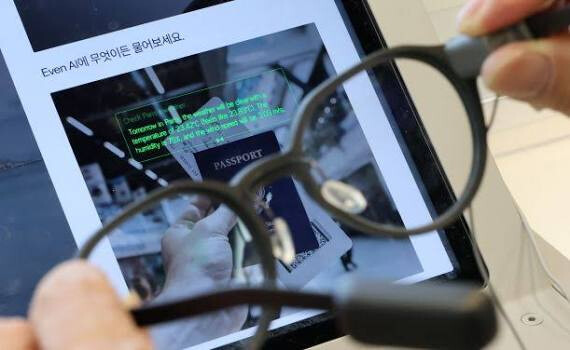
SEOUL — As concerns grow in South Korea and across Asia over academic dishonesty facilitated by advanced electronic devices such as artificial intelligence (AI) and smart glasses, neighboring countries are significantly ramping up their security and surveillance protocols. While nations like China and India have heavily integrated AI monitoring systems and wireless signal jammers, Japan has leaned toward tightening regulations on prohibited items due to budgetary constraints.
According to local media reports from outlets such as China Central Television (CCTV) and Xinhua, China dramatically intensified its crackdown on high-tech exam cheating beginning with the national college entrance examination (Gaokao) last June. Authorities deployed intelligent security screening gates to improve the detection of banned items, including smartphones and smart glasses, while expanding the use of smart exam-room surveillance systems.
Possession of information-transmitting devices—such as smartphones, smartwatches, and smart glasses—is treated as cheating regardless of actual use, carrying penalties that include the annulment of all test scores and a one- to three-year ban from retaking the Gaokao. In Guangzhou, Guangdong province, authorities introduced AI-powered CCTV surveillance capable of automatically flagging abnormal behavior by students or proctors. Candidates must also pass a stringent three-stage security screening process before entering examination rooms.
Wireless signal blocking technology has also become standard in Chinese exam centers. Shandong province deployed 1,528 intelligent security gates alongside 40,275 fifth-generation (5G) signal jammers, while Anhui province operated systems capable of blocking Wi-Fi, Bluetooth, and walkie-talkie frequencies alongside 5G networks.
Major Chinese tech companies—including Tencent (Yuanbao), Alibaba (Qianwen), and DeepSeek—temporarily suspended specific AI features capable of solving test questions during the national entrance exams. When prompted with exam questions, these services displayed notices stating that the function was unavailable to ensure examination fairness. Furthermore, upcoming national civil service and military recruitment examinations in China mandate that candidates wear only standard prescription glasses, subjecting non-compliant examinees to special inspections.
In Taiwan, exam guidelines were revised to make candidates' consent to personal belonging inspections mandatory, empowering proctors to intervene more actively.
Meanwhile, in India, leaked exam papers ahead of the National Eligibility cum Entrance Test (NEET) for undergraduate medical programs in May triggered large-scale protests by Gen Z online groups, ultimately leading to the resignation of then-Education Minister Dharmendra Prasad. The National Testing Agency (NTA) subsequently nullified the original exam and administered a re-test a month later across 5,400 centers equipped with 138,000 CCTV cameras.
The re-tests utilized AI-driven real-time video analytics to detect suspicious candidate behavior. To counter electronic cheating, the NTA installed over 51,000 mobile phone jammers, introduced biometric verification systems, and conducted physical searches of candidates. Following the re-tests, Prime Minister Narendra Modi emphasized the need to leverage technology for transparent examination systems, establishing a high-level task force led by Infosys co-founder Nandan Nilekani.
In Japan, high-profile cheating incidents—including a 2024 Waseda University entrance exam where a student used smart glasses to photograph and transmit exam papers for outside assistance, and a 2022 Common Test incident involving smartphone photography—prompted a cautious policy response. While the National Center University Entrance Examinations considered installing smartphone signal jammers, the plan was shelved due to projected annual costs of approximately 10 billion yen (roughly $64 million USD) and logistical hurdles.
Instead, Japan updated its Common Test guidelines to explicitly prohibit smart glasses and granted proctors the authority to instruct candidates to raise their heads or temporarily remove masks, glasses, or hats during examinations. The Ministry of Education, Culture, Sports, Science and Technology (MEXT) has consistently advised universities nationwide to clearly list prohibited devices in application guidelines, conduct pre-exam bag checks, and involve local police when necessary.
Similarly, in Vietnam, 74 candidates faced disqualification during the high-school graduation examinations held in June, with 69 caught bringing unauthorized mobile phones into exam rooms, and some attempting to use AI to solve test questions. Local authorities introduced portable security screening equipment at select test sites, trained proctors to identify AI-assisted cheating, and launched police investigations into the infractions.
[Copyright (c) Global Economic Times. All Rights Reserved.]