
• 2026.11.11 (Wed)
  • All articles
  • LOGIN
  • JOIN
Global Economic Times
[등록] 2026-09-01 15:48:31
  • Synthesis
  • World
  • Business
  • Industry
  • ICT
  • Distribution Economy
  • Well+Being
    • Pet Life
    • Halal Horizon
  • Travel
  • Eco-News
  • Education
  • Korean Wave News
  • Opinion
  • Arts&Culture
  • Sports
  • People & Life
    • International Student Report
    • With Ambassador
  • Column
    • Cho Kijo Column
    • Cherry Garden Story
    • Ko Yong-chul Column
    • Kim Bong-seon's Photo Column
    • Kim Seul-Ong Column
    • Lee Yeon-sil Column
  • Photo News
  • New Book Guide
MENU
 
Home > World

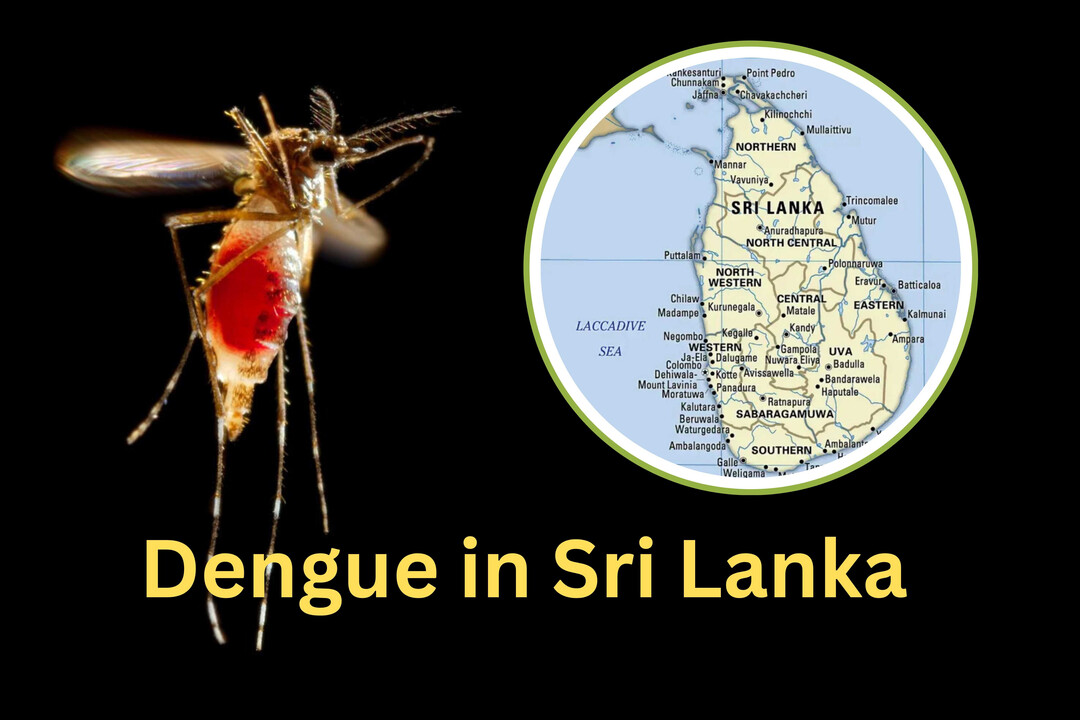
Sri Lanka Faces Rapid Spread of Dengue Variant; Death Toll Reaches 24 This Year

Greace Nunez Correspondent / Updated : 2026-06-16 10:47:17
  • -
  • +
  • Print


COLOMBO — Sri Lanka is grappling with a concerning surge in dengue fever cases, as health authorities report that a new variant of the virus is spreading rapidly across the island nation. Official data released on Tuesday indicates that 24 people have already lost their lives to the disease since the beginning of 2026, including four children.

According to reports from the Xinhua News Agency, the total number of confirmed infections has climbed to 41,144 as of June 16. The rapid escalation of the outbreak has prompted immediate and large-scale intervention from the Sri Lankan government.

Climate Change and Monsoon Rains Fueling the Outbreak

Dengue fever, a viral infection transmitted primarily by the Aedes mosquito, is endemic to many tropical and subtropical regions. After an incubation period typically ranging from three to 14 days, patients often experience high fever, severe headaches, pain behind the eyes, and debilitating muscle and joint aches. In severe cases, the infection can progress to hemorrhagic fever, which may be fatal if not treated promptly.

Health experts point to a convergence of factors contributing to the current crisis. Climate change, coupled with recent heavy monsoon rains and widespread flooding, has created an ideal breeding ground for mosquitoes. The excess standing water allows for rapid proliferation of larvae, significantly increasing the transmission risk in populated areas.

Nationwide Containment and Eradication Efforts

In response to the rapid spread of the variant, the Sri Lankan Ministry of Health launched a comprehensive, nationwide vector control program starting June 15. The initiative is structured as a week-long mobilization effort to eliminate mosquito breeding sites systematically:

June 15–17: Focus on public spaces and communal areas.
June 18: Targeted operations in kindergartens, primary, and secondary schools.
June 19: Decontamination and cleaning of public institutions and private sector workplaces.
June 20: Community-wide outreach to households and their immediate surroundings.
The government has emphasized that success in curbing the outbreak requires collective action, stating that individual vigilance is as important as official measures. Public health officials have warned that failing to maintain sanitary conditions—specifically those that facilitate mosquito breeding—could lead to legal repercussions.

A History of Recurrent Outbreaks

While Sri Lanka experiences annual spikes in dengue cases, the severity of the current situation has raised alarm bells. The country previously faced a catastrophic surge in 2017, which remains the deadliest outbreak in recorded history, claiming the lives of over 400 people.

Health authorities are urging the public to remain vigilant, keep residential areas free of stagnant water, and seek immediate medical attention if symptoms such as high fever or persistent pain appear. With the monsoon season intensifying the environmental risks, the government remains committed to intensifying surveillance and sanitation efforts to prevent further loss of life.

The international health community continues to monitor the situation, as the emergence of the new variant underscores the ongoing challenge that tropical diseases pose in an era of shifting global climate patterns.

[Copyright (c) Global Economic Times. All Rights Reserved.]

  • #Hormuz Impasse
  • #globaleconomictimes
  • #micorea
  • #mykorea
  • #nammidonganews
  • #singaporenewsk
  • #Samsung
  • #Daewoo
  • #Hyos
Greace Nunez Correspondent

Popular articles

  • Mass Shooting in Pennsylvania: Head of Household Kills 8 Family Members and Acquaintances Before Committing Suicide

  • Amazon Courts ‘Global No. 1’ K-Beauty

  • Bill Gates: "AI Will Replace Most Human Jobs... Extreme Turmoil Expected Over the Next 20 Years"

I like it
Share
  • Facebook
  • X
  • Kakaotalk
  • LINE
  • BAND
  • NAVER
  • https://globaleconomictimes.kr/article/1065577531768474 Copy URL copied.
Comments >

Comments 0

Weekly Hot Issue

  • Inha University Caught in Campus Culture Clash Over Proposed Rhee Syng-man Statue Revival
  • Honoring a Legacy: Poet Oh Dong-chun Recognized for Lifelong Dedication to Hangul and Sijo Poetry
  • Bongeunsa Temple to Host 2026 Patriotic Buddhism Cultural Festa
  • South Korea Confronts a Growing Health Crisis as Adult Obesity Rates Surge
  • Pain of Chosei Coal Mine Meets Japanese Readers: Moon Young-sook Publishes Japanese Edition of 'Black Sea'
  • Beyond the Trillion-Dollar Mark: China’s Trade Surplus and the Debate Over Global Economic Dominance

Most Viewed

1
US Army Conducts Rare Temporary Burial Drills to Prepare for Worst-Case Large-Scale War Scenarios
2
World Citizens are Flying Directly to Busan... The Era of 4 Million Foreigners is Just Around the Corner
3
Eating 100g of Baechu Kimchi Daily Linked to Lower High-Cholesterol Risks
4
Meeting Christmas Early!… Busan Dessert Sales Event "Daldal The Market" Held
5
November Shopping Festival Sparks Retail War in South Korea: Where to Find the Best Deals
체리가든 스토리
nutri huevos
로타리
동포저널

Hot Issue

Jensen Huang Faces Shareholder Class Action and Leadership Scrutiny Amid Espionage Allegations Involving Former Associate

Disgraced South Korean Scientist Hwang Woo-suk Becomes UAE Citizen

Is South Korea Heading Toward France's Path? Aging Population and Fiscal Pressures Looming Ahead

Fashion Runway Show 2026

Let’s recycle the old blankets in Jeju Island’s closet instead of incinerating them.

Global Economic Times
korocamia@naver.com
CEO : LEE YEON-SIL
Publisher : KO YONG-CHUL
Registration number : Seoul, A55681
Registration Date : 2024-10-24
Youth Protection Manager: KO YONG-CHUL
Singapore Headquarters
5A Woodlands Road #11-34 The Tennery. S'677728
Korean Branch
Phone : +82(0)10 4724 5264
#304, 6 Nonhyeon-ro 111-gil, Gangnam-gu, Seoul
Copyright © Global Economic Times All Rights Reserved
  • News K
  • 반달곰 프로젝트
  • 광고문의
Search
Category
  • All articles
  • Synthesis
  • World
  • Business
  • Industry
  • ICT
  • Distribution Economy
  • Well+Being 
    • 전체
    • Pet Life
    • Halal Horizon
  • Travel
  • Eco-News
  • Education
  • Korean Wave News
  • Opinion
  • Arts&Culture
  • Sports
  • People & Life 
    • 전체
    • International Student Report
    • With Ambassador
  • Column 
    • 전체
    • Cho Kijo Column
    • Cherry Garden Story
    • Ko Yong-chul Column
    • Kim Bong-seon's Photo Column
    • Kim Seul-Ong Column
    • Lee Yeon-sil Column
  • Photo News
  • New Book Guide
  • Overseas Koreans
  • Multicultural News