![[등록] 2026-09-01 15:48:31](/support/_updata/banner2/tl181982910_6749.png)


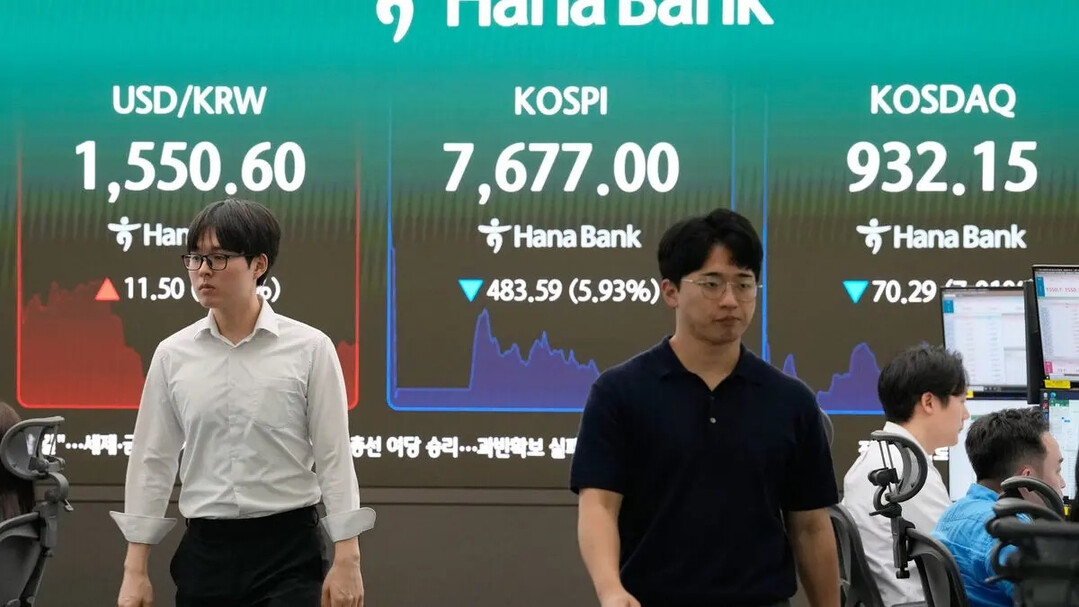
The South Korean benchmark stock index, KOSPI, suffered a sharp decline in early trading on Thursday, tumbling to the 7,400 level. The market faced a perfect storm of negative catalysts, including escalating geopolitical tensions in the Middle East, renewed skepticism over the artificial intelligence (AI) industry, and heightened supply-and-demand caution ahead of the domestic gift and option simultaneous expiration day (Quadruple Witching Day).
Heavy selling by foreign and institutional investors dragged down major market heavyweights, including tech giants Samsung Electronics and SK hynix, driving up overall market volatility once again.
Market Open and Investor Flow
According to the Korea Exchange (KRX) on June 11, the KOSPI opened at 7,509.62, down 2.86% from the previous session. The index rapidly extended its losses immediately after the opening bell, breaching the crucial 7,500 psychological support line to touch an intra-day low of 7,390.
As of 9:10 AM, trading volume data from the main board showed distinct divergence among investor groups:
Foreign Investors: Net sellers of 385.2 billion KRW
Institutional Investors: Net sellers of 6.2 billion KRW
Retail Investors (Individuals): Net buyers of 376.1 billion KRW, attempting to scoop up shares on the dip.
Heavyweights and Sectors Take a Hit
Most of the top-cap companies experienced broad-based declines. Investment firm SK Square led the downward spiral with a steep drop of over 8%. Other conglomerates and industrial leaders, including SK Inc., Hyundai Motor, and Doosan Enerbility, also retreated significantly.
The nation's two leading semiconductor manufacturers were not immune to the sell-off:
Samsung Electronics fell 4.30%
SK hynix shed 3.32%
In terms of industry sectors, paper and wood products stood out as the sole gainer, holding onto a marginal increase. Conversely, nearly all other sectors bled red, with securities, metals, and machinery equipment recording the sharpest declines, plummeting by around 5%.
Global Headwinds and Wall Street Rout
The domestic market crash followed a bleak overnight session on Wall Street. Although the U.S. Consumer Price Index (CPI) for May came in line with market consensus, sentiment was severely battered by geopolitical headlines. Former President Donald Trump issued a warning regarding additional military strikes against Iran, causing global crude oil prices to surge.
Compounding the anxiety, reports emerged that SoftBank's negotiations for an OpenAI stock-collateralized loan had hit a stalemate, refueling concerns over a potential slowdown in the AI boom.
Consequently, all three major U.S. indexes closed sharply lower:
Dow Jones Industrial Average: Dropped 953.33 points (-1.87%) to close at 49,918.78
S&P 500 Index: Decreased by 119.66 points (-1.87%) to 7,266.99
Nasdaq Composite: Fell 509.32 points (-1.98%) to finish at 25,169.50
Expert Outlook: A Technical Correction
Market analysts suggest that the Korean stock market is currently absorbing a combination of external shocks—such as the U.S. airstrikes and the SoftBank-induced tech slump—alongside internal structural pressure from the local derivatives expiration day.
Ji-young Han, a research analyst at Kiwoom Securities, offered a reassuring perspective on the current downturn. "Since entering June, the market has faced frequent price corrections and amplifying volatility," Han noted. "However, this rout is not triggered by a decay in economic or corporate fundamentals. Rather, it bears the strong characteristics of a short-term technical adjustment brought about by supply-and-demand disruptions in Exchange-Traded Funds (ETFs) and the aftermath of a previously overheated market."
Han advised investors against panic selling during this period of turbulent volatility. "Unless clear signals of deteriorating fundamental economic health emerge, the most realistic and prudent strategy right now is to maintain current portfolio positions," the analyst concluded.
[Copyright (c) Global Economic Times. All Rights Reserved.]