• 2026.11.16 (Mon)
  • All articles
  • LOGIN
  • JOIN
Global Economic Times
한인동포뉴스(상단)
  • Synthesis
  • World
  • Business
  • Industry
  • ICT
  • Distribution Economy
  • Well+Being
    • Pet Life
    • Halal Horizon
  • Travel
  • Eco-News
  • Education
  • Korean Wave News
  • Opinion
  • Arts&Culture
  • Sports
  • People & Life
    • International Student Report
    • With Ambassador
  • Column
    • Cho Kijo Column
    • Cherry Garden Story
    • Ko Yong-chul Column
    • Kim Bong-seon's Photo Column
    • Kim Seul-Ong Column
    • Lee Yeon-sil Column
    • Professor Lee Soo-young’s Life Essays
  • Photo News
  • New Book Guide
MENU
 
Home > Distribution Economy

Salmon Roe Shortage Threatens Japan’s Iconic Sushi Culture as Prices Projected to Surge

Desk / Updated : 2026-11-16 10:19:36
  • -
  • +
  • Print


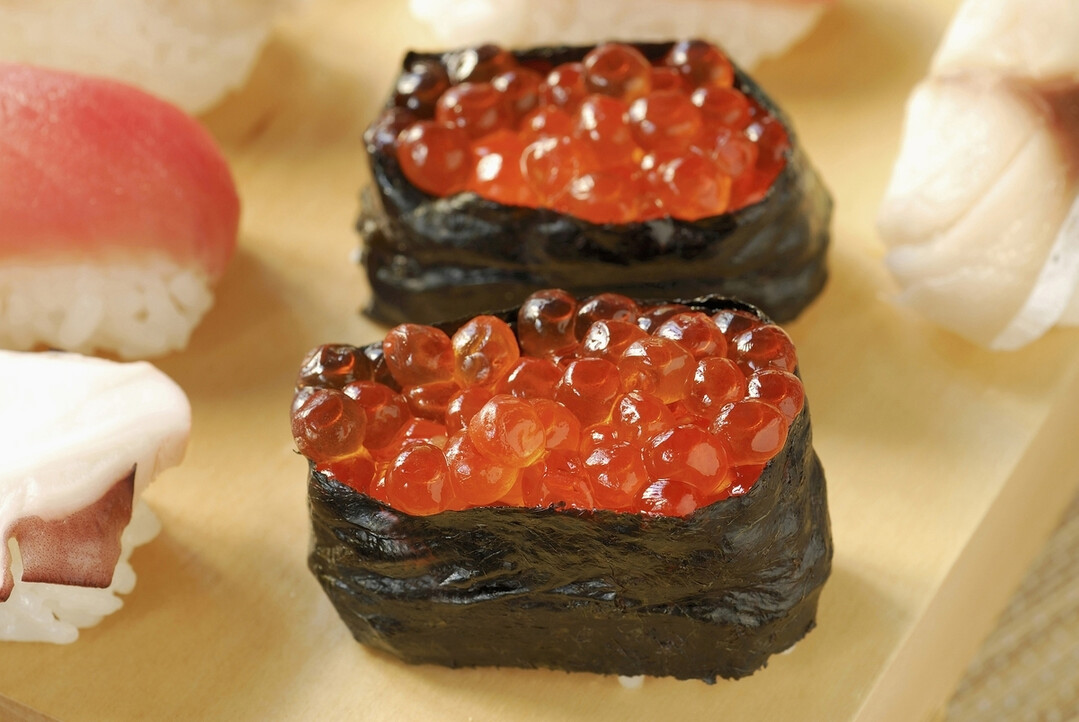
TOKYO — The beloved salmon roe known as ikura—a staple atop sushi and rice balls across Japan—is facing a severe disappearance from menus due to a steep drop in wild salmon catches in Russia and Alaska, sparking major concerns within the culinary industry.

According to a recent report by the Financial Times, Russia’s primary wild salmon catch plummeted by 60% compared to last year. Meanwhile, Alaska, another major hub, has reported harvest yields more than 20% below initial projections.

Industry experts warn that a dramatic decline in the seasonal supply entering markets this month will likely trigger a massive price spike. Masahide Kaeriyama, a professor emeritus at Hokkaido University, noted that Russia has experienced an unprecedentedly rapid decline in salmon populations over the past two years.

The root of the shortage lies in the biological limits of commercial salmon farming. Cultured salmon are predominantly raised for their meat, and females are frequently harvested before their roe can fully mature, strictly limiting the supply available for edible roe.

Climate factors, particularly El Niño and rising sea temperatures, are heavily blamed for the shrinking wild salmon populations. Russia's state fisheries institute, VNIRO, confirmed that El Niño has significantly disrupted wild salmon yields.

Warmer waters are also altering migration routes. While Hokkaido, Japan, and British Columbia, Canada, were historically prime habitats, salmon are increasingly shifting toward Alaska and Russian waters. Consequently, wild salmon catches in Hokkaido have plunged by more than 90% over the last two decades, according to the FT.

The crisis is intensified by surging global demand. As Japanese cuisine continues to gain worldwide popularity, international orders for ikura are mounting despite shrinking supplies. Industry insiders warn that a prolonged shortage could deal a severe blow to Japan’s broader fisheries sector, valued at approximately $22 billion (approx. 29.48 trillion KRW).

The soaring costs are heavily burdening the restaurant industry. Masaki Yao of seafood distributor Toyosuichibadotcom predicts that a 250g pack of salmon roe could soon surge to between 16,000 and 20,000 yen (approx. $105–$130 USD), marking a staggering tenfold increase compared to a decade ago.

"We are entering uncharted territory where we no longer know if consumers will be willing to pay these prices," Yao said, adding that some high-end sushi courses may quietly drop ikura altogether.

Budget-friendly conveyor-belt sushi chains are increasingly substituting salmon roe with trout roe, which is smaller and offers a milder flavor and texture, yet provides financial relief. However, as the price of trout roe also climbs, businesses are running out of options. A Tokyo izakaya owner revealed plans to halt sales of ikura rice bowls if trout roe hits 15,000 yen per kilogram this month.

Some establishments are choosing to scrap the menu items entirely rather than compromise on quality. "Onigiri Bongo," a historic 66-year-old rice ball shop in Tokyo, is considering suspending its popular ikura rice ball because absorbing the surging ingredient costs without sacrificing standards is nearly impossible.

Analysts point out that the global boom of Japanese food is further exacerbating the supply crunch, as high-end Japanese restaurants in the U.S. and beyond aggressively compete for a dwindling harvest.

To combat the supply deficit, expanding aquaculture is being explored as a viable alternative. Japanese seafood producer Okamura Foods plans to focus on cultivating high-yield trout strains at Northern European fish farms to boost roe production.

[Copyright (c) Global Economic Times. All Rights Reserved.]

  • #Cherry Garden
  • #HalalFood
  • #Halal
  • #Petlife
  • #Halalhorizone
  • #Hormuz Impasse
  • #Joseon
  • #globaleconomictimes
  • #micore
Desk
Desk

Popular articles

  • DS Securities: "European Defense Stocks Shift Trend, Raising Potential for Korean Defense Sector Gains"

  • Beijing Demands Washington Deliver on Tariff Cuts to Unlock U.S. Farm Exports

  • HSBC to Review Islamic Fund’s $38M Stake in Palantir Amid British Muslim Backlash

I like it
Share
  • Facebook
  • X
  • Kakaotalk
  • LINE
  • BAND
  • NAVER
  • https://globaleconomictimes.kr/article/1065575921762162 Copy URL copied.
Comments >

Comments 0

Weekly Hot Issue

  • Parnas Hotel Posts Record-Breaking Q3 Operating Profit of 41.9 Billion Won
  • Korea McNulty Posts 15% Increase in Q3 Sales and Turns to Operating Profit
  • Korean Pharmaceutical and Bio-Pharma Association Explores Exchanges and Workforce Training Cooperation with Irish Industry
  • Government to Accumulate Semiconductor Boom-Driven Tax Revenue in Future Response Fund; Publishes English Brief
  • Subsidies Provided for Protecting Fishery Resources… Jeonnam-Gwangju Accepts Applications Until December 11
  • LG Electronics Strengthens Safety and Quality of Humanoid Robots to Secure Early Reliability

Most Viewed

1
South Korea and Ethiopia Sign Trilateral MOU to Introduce Liquid-Based Cytology (LBC) Technology for Cervical Cancer Diagnosis
2
From Kim Whanki to Pokémon Cards... Seoul Auction Opens the Floodgates
3
Meeting Christmas Early!… Busan Dessert Sales Event "Daldal The Market" Held
4
World Citizens are Flying Directly to Busan... The Era of 4 Million Foreigners is Just Around the Corner
5
Eating 100g of Baechu Kimchi Daily Linked to Lower High-Cholesterol Risks
체리가든 스토리
nutri huevos
로타리
동포저널

Hot Issue

Continuing U.S. Flight Disruption Crisis: 4,100 Flights Canceled on the 14th

US Explores 'Donbas for NATO' Proposal as Peace Talks Encounter Major Hurdles

Fixing the Flaws: Western Startups Clean Up Chinese AI for Global Corporate Use

Fashion Runway Show 2026

Let’s recycle the old blankets in Jeju Island’s closet instead of incinerating them.

Global Economic Times
korocamia@naver.com
CEO : LEE YEON-SIL
Publisher : KO YONG-CHUL
Registration number : Seoul, A55681
Registration Date : 2024-10-24
Youth Protection Manager: KO YONG-CHUL
Singapore Headquarters
5A Woodlands Road #11-34 The Tennery. S'677728
Korean Branch
Phone : +82(0)10 4724 5264
#304, 6 Nonhyeon-ro 111-gil, Gangnam-gu, Seoul
Copyright © Global Economic Times All Rights Reserved
  • News K
  • 반달곰 프로젝트
  • 광고문의
Search
Category
  • All articles
  • Synthesis
  • World
  • Business
  • Industry
  • ICT
  • Distribution Economy
  • Well+Being 
    • 전체
    • Pet Life
    • Halal Horizon
  • Travel
  • Eco-News
  • Education
  • Korean Wave News
  • Opinion
  • Arts&Culture
  • Sports
  • People & Life 
    • 전체
    • International Student Report
    • With Ambassador
  • Column 
    • 전체
    • Cho Kijo Column
    • Cherry Garden Story
    • Ko Yong-chul Column
    • Kim Bong-seon's Photo Column
    • Kim Seul-Ong Column
    • Lee Yeon-sil Column
    • Professor Lee Soo-young’s Life Essays
  • Photo News
  • New Book Guide
  • Overseas Koreans
  • Multicultural News