• 2026.11.29 (Sun)
  • All articles
  • LOGIN
  • JOIN
Global Economic Times
한인동포뉴스(상단)
  • Synthesis
  • World
  • Business
  • Industry
  • ICT
  • Distribution Economy
  • Well+Being
    • Pet Life
    • Halal Horizon
  • Travel
  • Eco-News
  • Education
  • Korean Wave News
  • Opinion
  • Arts&Culture
  • Sports
  • People & Life
    • International Student Report
    • With Ambassador
  • Column
    • Cho Kijo Column
    • Cherry Garden Story
    • Ko Yong-chul Column
    • Kim Bong-seon's Photo Column
    • Kim Seul-Ong Column
    • Lee Yeon-sil Column
    • Professor Lee Soo-young’s Life Essays
  • Photo News
  • New Book Guide
MENU
 
Home > Eco-News

Seventeen Years After ‘The Age of Stupid,’ COP31 Collapse Signals Global Deadlock on Fossil Fuels

Eugenio Rodolfo Sanabria Reporter / Updated : 2026-11-29 10:15:54
  • -
  • +
  • Print


ANTALYA, Turkey — When British director Franny Armstrong released her landmark docudrama The Age of Stupid in 2009, it served as an urgent cinematic plea ahead of the Copenhagen climate summit (COP15). Set in a devastated 2055 where London is flooded and the Alps are bare, the film featured a lone archivist—played by the late Pete Postlethwaite—questioning why humanity failed to act when it still had the chance.

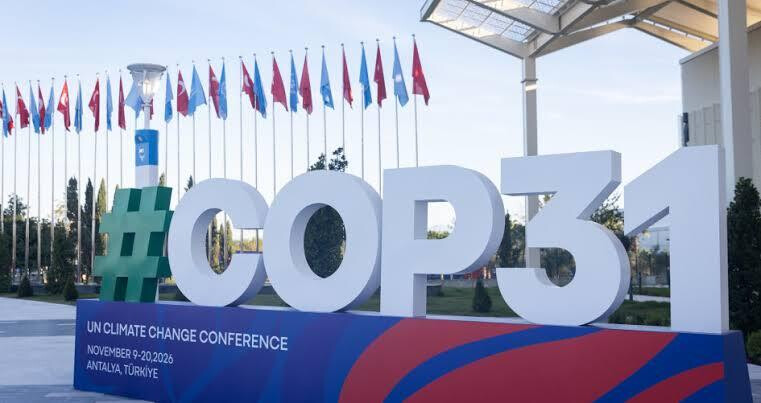
Seventeen years later, following the breakdown of the 31st UN Climate Change Conference (COP31) in Antalya, Turkey, in November 2026, that fictional question feels less like a distant warning and more like a real-time indictment.

Despite dragging talks two days past the deadline, COP31 negotiators failed to pass a overarching cover decision to guide global climate action. The sticking point remained the exact issue that has haunted climate diplomacy for decades: fossil fuels.

A bloc including the European Union, Panama, and the Marshall Islands rejected the final draft text after the phrase "fossil fuels" was scrubbed entirely from the document—a move driven by pushback from major oil-producing nations like Saudi Arabia and Russia.

The fallout quickly devolved into finger-pointing. While UN Secretary-General António Guterres voiced profound disappointment over the stalemate, OPEC Secretary-General Haitham Al Ghais defended oil exporters' engagement and laid the blame squarely on the EU. For vulnerable Pacific island states, however, geopolitical posturing translates directly into delayed funding and existential risk.

The geopolitical landscape has shifted notably since 2009. Whereas former U.S. President Barack Obama personally flew to Copenhagen to salvage talks at COP15, the Trump administration opted not to send an official delegation to Antalya at all.

The parallels between 2009 and 2026 are striking. Back in 2009, Armstrong’s film—backed by a Guinness World Record solar-powered premiere in London and a live performance by Radiohead’s Thom Yorke—mobilized public campaigns like "10:10" to demand a legally binding successor to the Kyoto Protocol. Yet COP15 ended in disappointment, with nations merely "taking note" of a non-binding accord.

Today, the excuses for inaction are harder to justify on technical grounds. Climate science is unequivocal, and the cost of renewable technologies like solar, wind, and battery storage has plummeted over the past two decades. Moreover, COP31 did manage to salvage minor agreements on climate adaptation and just transition frameworks, alongside ongoing private-sector pushes toward electrification.

Still, the core human dilemma captured in Armstrong’s 2009 interviews remains unresolved. The film profiled everyday people caught in the fossil-fuel economy—from a New Orleans oil worker who saved lives during Hurricane Katrina to an Indian budget airline founder advocating for affordable travel in developing nations, and a Nigerian student washing oil-tainted fish to pay for medical school.

For some, fossil fuels represent economic survival; for others, upward mobility. Until international climate diplomacy moves beyond abstract targets to concrete agreements on funding, job creation, and equitable burden-sharing between wealthy and developing nations, the world risks turning a 2009 movie script into a self-fulfilling prophecy.

[Copyright (c) Global Economic Times. All Rights Reserved.]

  • #Cherry Garden
  • #HalalFood
  • #Halal
  • #Petlife
  • #Cats
  • #Dogs
  • #Halalhorizone
  • #Hormuz Impasse
  • #Joseon
  • #globaleconomicti
Eugenio Rodolfo Sanabria Reporter

Popular articles

  • From "Kneeling" Suppliers to the AI Era: Will Long-Term Agreements Redefine Tech’s Power Dynamics?

  • South Korea’s HBM Chips Flow into China via Smuggling Networks Amid US Export Controls

  • Wall Street Suffers Historic Rout as Regulatory Concerns and Leveraged Unwinding Wipe Out $3.2 Trillion

I like it
Share
  • Facebook
  • X
  • Kakaotalk
  • LINE
  • BAND
  • NAVER
  • https://globaleconomictimes.kr/article/1065575708332186 Copy URL copied.
Comments >

Comments 0

Weekly Hot Issue

  • The Wisdom of Earning and Sharing Wealth
  • Pentagon’s Cloud One Suffers Major Cyber Breach, Raising Alarm Over Military Logistics
  • Nvidia’s Jensen Huang Expected to Skip GTC DC Keynote Amid Packed Congressional Hearing Schedule
  • GOP Fractures Over Trump’s Tariff Agenda Following Midterm Losses, Sparking 2028 Policy Debate
  • Magnitude 5.0 Quake Rattles Los Angeles, Disrupting LAX Flights and Damaging Infrastructure
  • Chinese School Disciplined Over Punishing Student for Speaking Local Dialect

Most Viewed

1
Memory Chip Rout Deepens as Wall Street Questions AI Spending and DRAM Pricing
2
Exercise Beats Diet in Extending Lifespan, Major Review Finds
3
South Korean Burger Chain Lotteria Expands Singapore Footprint with Halal Certification and New Teriyaki Lineup
4
AI Semiconductor Stocks Plummet: Philadelphia Index Drops 5.28% and Micron Plunges 7.59% Amid Executive Shakeup and Export Restrictions
5
"Stay Out, Get Paid, or Have Police Stay With You": Shenzhen Imposes Strict Security Ahead of APEC Summit
체리가든 스토리
nutri huevos
로타리
동포저널

Hot Issue

Magnitude 5.0 Quake Rattles Los Angeles, Disrupting LAX Flights and Damaging Infrastructure

IDF Faces Backlash Over Allegations of Using Gaza Civilians to Clear Booby-Trapped Sites

South Korea’s Chip-Fueled 4% Growth Masks Deepening Domestic Divide

Fashion Runway Show 2026

Let’s recycle the old blankets in Jeju Island’s closet instead of incinerating them.

Global Economic Times
korocamia@naver.com
CEO : LEE YEON-SIL
Publisher & Editor : KO YONG-CHUL
Registration number : Seoul, A55681
Registration Date : 2024-10-24
Youth Protection Manager: KO YONG-CHUL
Singapore Headquarters
5A Woodlands Road #11-34 The Tennery. S'677728
Korean Branch
Phone : +82(0)10 4724 5264
#304, 6 Nonhyeon-ro 111-gil, Gangnam-gu, Seoul
Copyright © Global Economic Times All Rights Reserved
  • News K
  • 반달곰 프로젝트
  • 광고문의
Search
Category
  • All articles
  • Synthesis
  • World
  • Business
  • Industry
  • ICT
  • Distribution Economy
  • Well+Being 
    • 전체
    • Pet Life
    • Halal Horizon
  • Travel
  • Eco-News
  • Education
  • Korean Wave News
  • Opinion
  • Arts&Culture
  • Sports
  • People & Life 
    • 전체
    • International Student Report
    • With Ambassador
  • Column 
    • 전체
    • Cho Kijo Column
    • Cherry Garden Story
    • Ko Yong-chul Column
    • Kim Bong-seon's Photo Column
    • Kim Seul-Ong Column
    • Lee Yeon-sil Column
    • Professor Lee Soo-young’s Life Essays
  • Photo News
  • New Book Guide
  • Overseas Koreans
  • Multicultural News