![[등록] 2026-09-01 15:48:31](/support/_updata/banner2/tl181982910_6749.png)


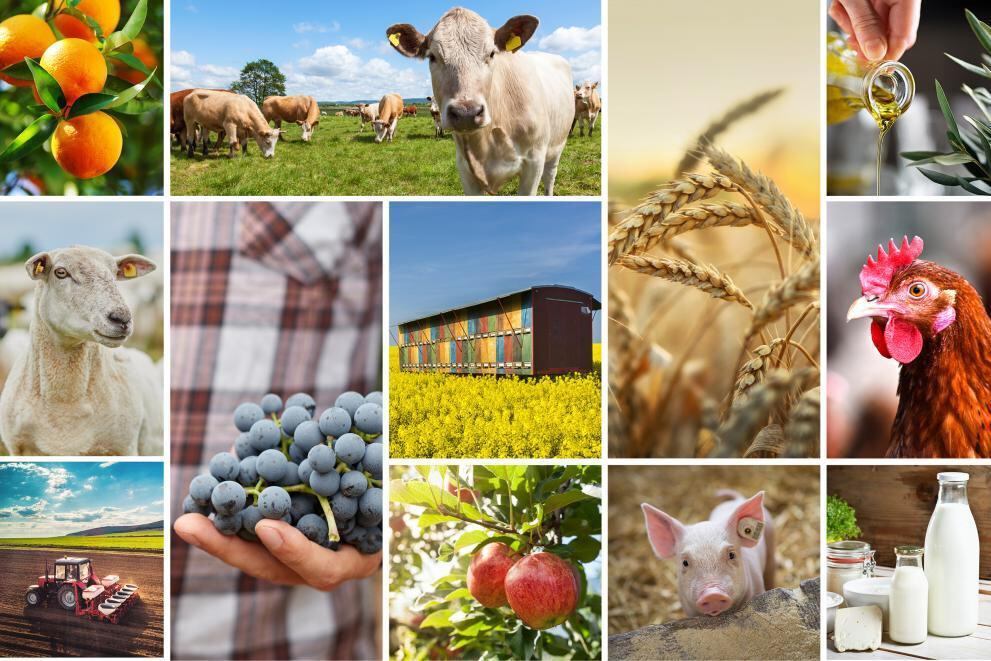
Korean agricultural and food exports are entering a new turning point. With the expansion of Free Trade Agreements (FTAs) increasing opportunities to enter overseas markets, export items are diversifying from traditional K-foods like ramen and kimchi to fresh produce such as Oriental melons, grapes, and strawberries. However, signing an FTA does not automatically lead to export expansion. Farms and exporting companies still face significant hurdles on the ground, including certificate of origin issuance, securing export volumes, customs clearance, and logistics. Non-tariff barriers such as country-specific quarantine and certification standards, as well as residual pesticide regulations, continue to weigh heavily on them.
This series examines the potential for export growth through success stories of farms and companies that actively utilized FTAs to pioneer overseas markets, while also exploring the structural limitations of the institutional framework through cases where exports were suspended or abandoned. Furthermore, by analyzing non-tariff barriers and on-the-ground challenges in major export destinations, this report proposes the policies and support directions necessary for Korean agri-food to continuously secure global competitiveness. Ultimately, translating FTAs into actual export achievements depends on field-level utilization capabilities and targeted policy support.
K-Food Exports Exceed $10 Billion in Record Time, Expanding Its Boundaries
Korean agricultural and fishery food exports have surpassed the USD 10 billion mark at the fastest pace in history. As processed foods like ramen and kimchi maintain their steady growth, fresh agricultural products—including strawberries, grapes, and shine muscats—are gaining recognition in overseas markets, broadening the horizon of K-food and widening export avenues for domestic farms. In particular, farms that leveraged quality enhancement, overseas marketing efforts, and government export support are drawing attention for successfully carving out global distribution paths.
South Korea currently maintains a total of 23 FTAs with 60 countries and regions. Starting with the South Korea-Chile FTA in 2004, the country has continuously expanded its trade foundation through agreements with major economies such as Singapore, the European Free Trade Association (EFTA), ASEAN, the European Union, the United States, China, and Vietnam. The nation has also diversified its export markets by embracing multilateral FTAs, such as the Regional Comprehensive Economic Partnership (RCEP) launched in 2022, alongside cooperation with emerging markets like the South Korea-Cambodia FTA.
Buoyed by this expanding trade network, agricultural and fishery food exports are showing steep growth. According to the Korea Agro-Fisheries & Food Trade Corporation (aT), agricultural and fishery food exports surpassed USD 10 billion in 253 days this year—19 days faster than the previous year. Since first breaking the USD 10 billion milestone in 2021, the achievement date has advanced every year, reflecting an accelerating export momentum.
Export markets are also expanding beyond traditional powerhouses. Exports to the United States rose 12.9% year-on-year to USD 1.814 billion, while shipments to China grew 14.0% to USD 1.669 billion. Market diversification is actively underway as exports increase not only in these traditional major markets but also in emerging regions across the Middle East and Europe.
Export items are similarly breaking away from a heavy reliance on a few processed goods. Ramen exports reached USD 1.307 billion, up 27.2% from the previous year, while strawberries grew 15.5% to USD 60.98 million, and grapes surged 64.6% to USD 45.18 million. Seasoned seaweed and oyster exports also contributed to the overall expansion, increasing by 8.0% and 8.2%, respectively.
Of note is the remarkable growth of fresh agricultural products. This demonstrates that the export competitiveness of K-food is extending beyond processed goods into fresh produce cultivated by domestic farms. As global sales channels for local agricultural products expand via FTAs, the prospect of agricultural exports cementing themselves as a new growth engine for domestic farming is growing stronger.
Targeting Global Markets with Domestic Varieties Like 'Red Claret' and 'Gloristar' Grapes
A prime example is the export challenge undertaken by farms utilizing locally bred new grape varieties, 'Red Claret' and 'Gloristar'. Moving away from a heavy dependence on foreign grape varieties, these farms pioneered exports starting with Vietnam and subsequently expanded their distribution to the United States and Canada. Rather than simply increasing production volume, they met the quality, storage, and logistical requirements demanded by overseas consumers, establishing a fresh farm management model of "produced domestically, sold globally."
The rise in exports of fresh produce like strawberries, grapes, and pears vividly illustrates this shift. Grape exports expanded centered around Taiwan amid rising overseas consumer preference for premium fruits, while pear exports more than doubled to the U.S. alongside a recovery in crop yields. Oriental melons also boosted exports by targeting new consumer demand for "minimalist fruits" with reasonable pricing tailored to the rising single-person household demographic in Japan.
Expanding K-Agri-Food Markets: Examining Both Achievements and Tasks
These cases demonstrate the viability of entering overseas markets by leveraging existing FTAs. While an FTA serves as a channel for foreign agricultural goods to enter the domestic market, it equally functions as a springboard for local agricultural products to reach broader global consumers. However, to convert this market entry potential into tangible export performance, the key strategy lies in utilizing the trade environment shaped by FTAs to find new breakthroughs in export markets rather than evading open competition.
In the first half of this year, total "K-Food+" exports hit a record high for the first half of a year, rising 4.1% year-on-year to USD 7.045 billion. Focusing solely on agricultural foods, exports grew 5.0% to USD 5.381 billion. In particular, distribution channels are rapidly expanding into emerging markets alongside traditional ones, with exports to the Middle East surging 25.2%, Latin America 19.5%, Europe 17.9%, and North America 11.0%.
The formula for export success has also evolved. In the past, production volume and price competitiveness were the core pillars of exporting. Today, connecting the entire export process—ranging from variety development, quality control, quarantine compliance, and storage/logistics to securing local distribution networks and marketing—has become paramount.
An FTA does not guarantee export success simply by being signed. Now that market accessibility has been elevated and the trade foundation widened, translating those opportunities into actual exports rests upon the dedication of farms, enterprises, and supportive policies.
$10 Billion Is Just a Starting Point: Engaging More Farms in Global Expansion
The government and aT are channeling their support into on-the-ground assistance for exporting companies, fostering strategic items, pioneering emerging markets, expanding overseas distribution networks, and responding to non-tariff barriers. In the second half of the year, authorities plan to pursue large-scale retail entry and local marketing with the goal of achieving USD 100 million in grape exports, while also discovering new export items targeted at markets where quarantine negotiations have been successfully concluded.
Hitting USD 10 billion in K-food exports is no longer just a target, but a fresh starting point. The challenge moving forward is to go beyond the export of a few hit products, enabling more farms to leverage existing trade frameworks and government export support to pioneer overseas sales channels and connect domestically produced crops directly to the tables of global consumers. Given that agricultural competitiveness in the FTA era is shifting from "how much you produce" to "how wide a market you can sell to," exports can serve as a vital new breakthrough for domestic agriculture.
[Copyright (c) Global Economic Times. All Rights Reserved.]