![[등록] 2026-09-01 15:48:31](/support/_updata/banner2/tl181982910_6749.png)


The turmoil in the Middle East is plunging into pitch-black darkness. As the U.S. Central Command conducted precision strikes on Iran’s key oil hub, Kharg Island, and the sound of artillery echoed, our government carried out "Operation Desert Light" to rescue our citizens amid the rapidly escalating war. The moment the KC-330 Cygnus transport aircraft, carrying 204 residents, touched down safely in Seongnam, we reaffirmed the very reason for the state's existence. However, before we could even breathe a sigh of relief, South Korea stands at a massive crossroads between the ROK-U.S. alliance, energy security, and peace.
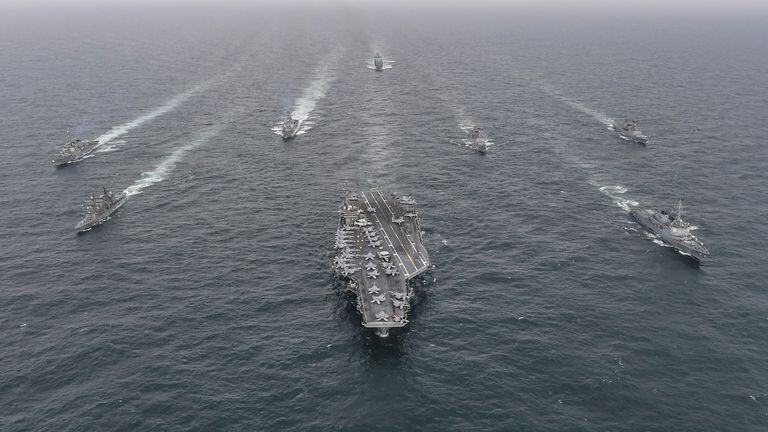
President Donald Trump has taken to social media to overtly pressure allies, including South Korea, to participate militarily in the Strait of Hormuz. Though he used the word "hopefully," this is effectively an unjust demand to send South Korean warships into a death trap in the name of the alliance. We must now coolly ask ourselves: Is joining the United States in this irrational military action truly in line with our national interest and human peace?
First, we must face the essence of this conflict. The Trump administration’s uncontrolled, arbitrary military actions lean more toward political calculation and the logic of power than international consensus or a long-term peace roadmap. While it is undeniable that a blockade of the Strait of Hormuz is a grave threat to our energy security, the solution does not necessarily have to be the physical conflict of "dispatching warships." Rather, military intervention risks driving diplomatic relations with Iran to an irreparable point and making our citizens and vessels in the Middle East permanent targets for terrorism and attack.
The value of an alliance lies in mutual respect and the pursuit of shared values. Blind following is not an alliance; it is subordination. It is profoundly unjust to pass the burden of military tension sparked by the U.S. onto its allies. South Korea has already fulfilled its alliance obligations through multiple past deployments. However, the nature of this Hormuz crisis is different. Getting caught in a whirlwind of a baseless war, spilling the blood of our young soldiers, and solidifying hostile relations with Middle Eastern nations is a dangerous gamble with the nation's future as collateral.
The government must firmly and clearly communicate our position to the United States. We must express that South Korea adheres to the principle of peaceful resolution and will focus on humanitarian aid and diplomatic mediation rather than military contribution. Stabilizing crude oil supplies is a task to be solved through multilateral cooperation with the international community; it is not a simple arithmetic problem solved by putting aircraft carriers and destroyers at the forefront.
As "Operation Desert Light" demonstrated, the state’s top priority is the safe return of its people. Sending warships into the theater of war could be an act of extinguishing that very light ourselves. It is desperate that we maintain our balance without being shaken by President Trump's harsh pressure. It is time to show the dignity of a sovereign nation that protects the values of national interest and peace without being swept away by the frenzy of irrational militarism. The power to overcome the rough waves of Hormuz must come not from artillery fire, but from cool-headed diplomacy and wise restraint.
[Copyright (c) Global Economic Times. All Rights Reserved.]