![[등록] 2026-09-01 15:48:31](/support/_updata/banner2/tl181982910_6749.png)


(C) Autopost
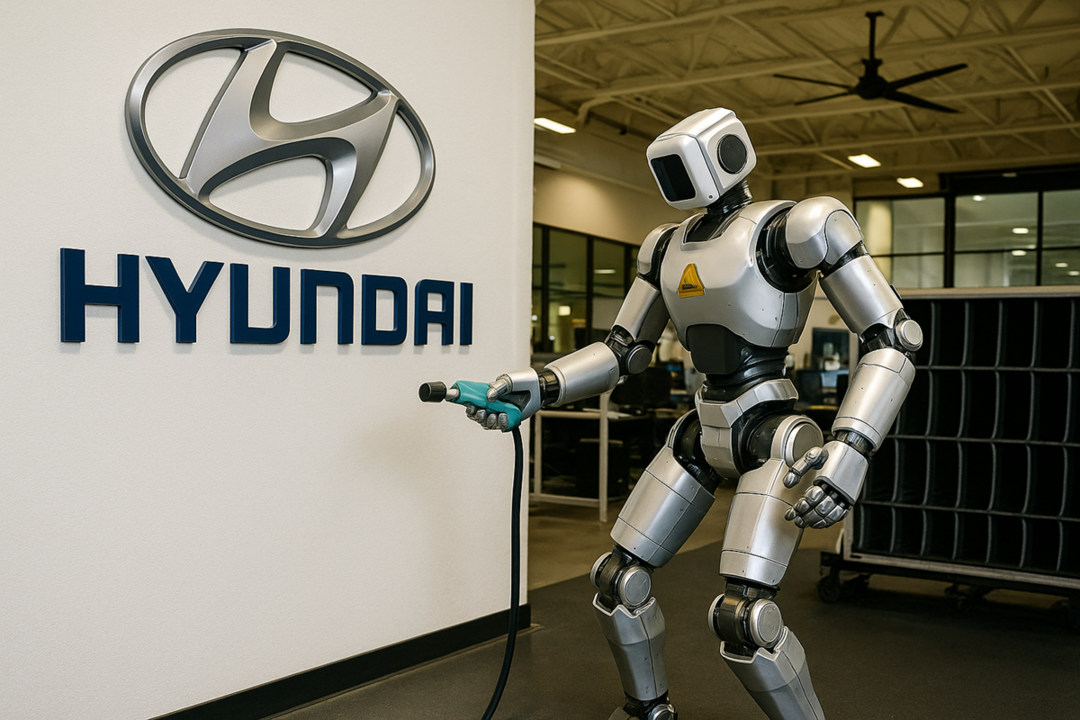
SEOUL — Hyundai Motor Group (HMG) has officially shifted its robotics ambitions into high gear. In a strategic move to dominate the burgeoning "Physical AI" market, the South Korean automotive giant has reportedly established a massive production roadmap for Atlas, the flagship humanoid robot from its subsidiary, Boston Dynamics.
According to industry sources on February 26, 2026, Hyundai Motor Group has begun building a dedicated supply chain capable of scaling Atlas production from an initial pilot phase to a staggering 150,000 units annually by 2029.
The Roadmap: From Pilot to Mass Production
The outlined roadmap suggests a rapid acceleration of manufacturing capabilities. Following the initial rollout in 2027, the group plans to enter true mass production in 2028 with an estimated volume of 35,000 to 40,000 units. By 2029, the goal is to quadruple that output to reach the 150,000-unit milestone.
"Competitive bidding for parts supply, technical validation, and discussions regarding manufacturing line investments are currently underway," stated a source familiar with the matter. "Hyundai is laying the groundwork to deploy Atlas robots across its U.S. facilities, starting with the Hyundai Motor Group Metaplant America (HMGMA) in Georgia."
The Race Against Tesla and China
Hyundai’s aggressive scaling is a direct response to the intensifying rivalry with Tesla, whose humanoid robot, Optimus, has so far enjoyed a higher public profile. While Atlas stole the spotlight at CES 2026 with its fluid, human-like mobility and advanced dexterity, industry analysts generally view Hyundai as a "fast follower" in the mass-production race compared to Tesla's vertically integrated approach.
Tesla CEO Elon Musk previously set an ambitious target of producing 1 million Optimus units annually by 2030. Hyundai’s decision to aim for 150,000 units by 2029 indicates a firm resolve to close the gap and leverage its existing world-class automotive manufacturing infrastructure to gain an edge.
Furthermore, there is growing pressure from Chinese robotics firms, which are rapidly scaling and benefiting from aggressive government subsidies. "Hyundai feels the urgency to secure market leadership before Chinese players can flood the market with low-cost alternatives," an industry insider noted.
Economies of Scale: Driving Costs Down
A critical component of this strategy is price competitiveness. Currently, the production cost for an Atlas unit is estimated at approximately $130,000 to $140,000. However, the principles of economies of scale suggest a dramatic shift:
At 50,000 units: Production costs are expected to plummet to $30,000.
At 150,000 units: Costs are projected to hit the $20,000 mark, aligning Atlas with Tesla's long-term price target for Optimus.
Lowering the price point to $20,000 is considered the "magic number" for widespread commercial adoption, allowing businesses to replace or augment human labor in logistics, manufacturing, and eventually, service sectors with a positive Return on Investment (ROI).
Strategic Alliances and Future Outlook
To compensate for Tesla’s perceived lead in AI software, Hyundai is doubling down on external collaborations. The group is reportedly deepening its ties with Google and other tech titans while aggressively recruiting global AI talent to refine Atlas’s autonomous decision-making capabilities.
When asked for comment, a Hyundai Motor Group official maintained a cautious stance, stating, "Industry estimates may differ from reality. Mid-to-long-term production plans for Atlas beyond 2028 have not yet been finalized."
Despite the official caution, the movement within the supply chain tells a different story. By requesting suppliers to expand their capacity now, Hyundai is ensuring that when the "Age of Humanoids" arrives, it will not just be a participant, but the primary architect of the new industrial landscape.
[Copyright (c) Global Economic Times. All Rights Reserved.]