![[등록] 2026-09-01 15:48:31](/support/_updata/banner2/tl181982910_6749.png)


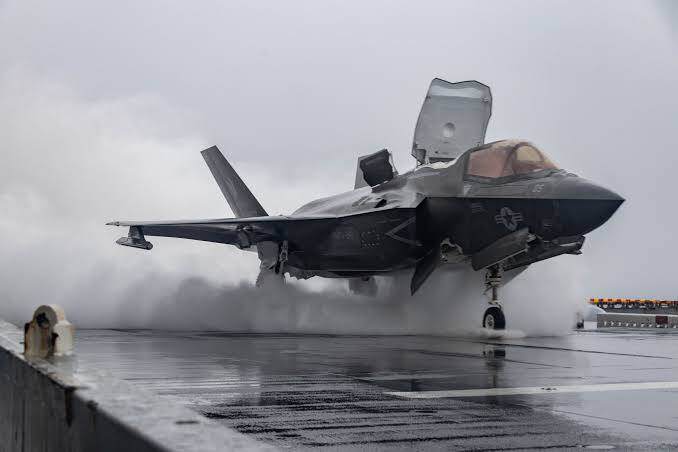
SAN DIEGO — A United States Marine Corps F-35B Lightning II stealth fighter jet crashed near Miramar Air Station in San Diego, California, marking the latest in a series of costly incidents involving one of the U.S. military’s most advanced aviation assets.
According to military officials and news reports on July 31 (local time), the aircraft belonged to the 3rd Marine Aircraft Wing. The pilot successfully ejected prior to impact and was immediately transported to a local medical facility. Officials confirmed that the pilot suffered non-life-threatening injuries. However, the multi-million-dollar fighter jet was completely destroyed upon impact, resulting in an almost total financial loss for the aircraft.
Following the crash, the U.S. Marine Corps formally designated the event as a "Class A" mishap—the military's highest severity category for aviation accidents. Class A designations are reserved for incidents that involve loss of life, permanent disability, or total property damage exceeding $2.5 million. Given that a single F-35B unit carries an estimated price tag of approximately $109 million (around 157.4 billion KRW), the destruction of the airframe automatically triggered the top-tier classification.
The F-35B variant is a cornerstone of modern American power projection. Engineered with short takeoff and vertical landing (STOVL) capabilities alongside radar-evading stealth technology, the jet is uniquely designed to operate from amphibious assault ships and short, austere runways. This flexibility makes it an essential strategic element for Marine expeditionary forces operating in contested regions worldwide.
Despite its cutting-edge capabilities, the incident has once again brought safety and reliability concerns surrounding the F-35 program back into the public eye. The platform has faced a troubling history of high-profile accidents over recent years. In 2021, a British Royal Air Force F-35B crashed into the Mediterranean Sea during operations aboard an aircraft carrier. In late 2022, another F-35B crashed during a vertical landing test at Naval Air Station Joint Reserve Base Fort Worth in Texas.
Perhaps the most astonishing incident occurred in September 2023, when a Marine Corps pilot ejected over South Carolina during bad weather; the aircraft continued flying unattended on autopilot for over 60 miles (100 kilometers) before eventually crashing in a rural field, sparking a massive search effort and public debate over automated flight control systems. More recently, an F-35 operating in the Middle East was forced to make an emergency landing after sustaining damage during operations targeting regional threats.
Military authorities have secured the crash site near Miramar and initiated a thorough investigation into the root cause of the crash. Investigators are evaluating whether the incident stemmed from mechanical failure, software glitches, or environmental factors. As the U.S. military continues to rely heavily on stealth technology for future conflict readiness, resolving these recurring operational vulnerabilities remains a critical priority for defense officials and aerospace contractors alike.
[Copyright (c) Global Economic Times. All Rights Reserved.]