• 2026.11.26 (Thu)
  • All articles
  • LOGIN
  • JOIN
Global Economic Times
한인동포뉴스(상단)
  • Synthesis
  • World
  • Business
  • Industry
  • ICT
  • Distribution Economy
  • Well+Being
    • Pet Life
    • Halal Horizon
  • Travel
  • Eco-News
  • Education
  • Korean Wave News
  • Opinion
  • Arts&Culture
  • Sports
  • People & Life
    • International Student Report
    • With Ambassador
  • Column
    • Cho Kijo Column
    • Cherry Garden Story
    • Ko Yong-chul Column
    • Kim Bong-seon's Photo Column
    • Kim Seul-Ong Column
    • Lee Yeon-sil Column
    • Professor Lee Soo-young’s Life Essays
  • Photo News
  • New Book Guide
MENU
 
Home > ICT

Memory Market Faces Crossroads as Weak Consumer Demand Clashes with AI Server Boom

KO YONG-CHUL Reporter / Updated : 2026-11-26 07:54:27
  • -
  • +
  • Print
Divergence widens between slumping spot prices for PCs and smartphones and resilient long-term contract demand for high-end AI chips.

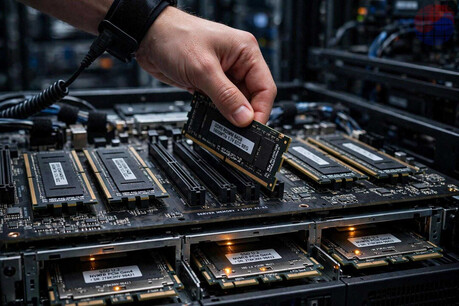
SEOUL — Global memory chipmakers are navigating a complex market split as a sharp downturn in consumer electronics demand collides with sustained infrastructure spending for artificial intelligence. While spot prices for standard memory chips have tumbled in recent weeks, industry analysts emphasize that long-term enterprise contracts continue to insulate major suppliers like Samsung Electronics and SK Hynix from broader market volatility.

Consumer Slump Weighs on Spot Market

Recent data from financial institutions, including Bank of America, indicates that spot prices for NAND flash memory fell roughly 20% over the past month, with 512-gigabit wafer prices dropping more than 10% in a single week. DRAM spot prices saw a milder pullback of about 5% over the same period.

The downturn is largely attributed to a 20% year-on-year contraction in third-quarter global smartphone and PC shipments. Ironically, the AI boom itself contributed to this consumer pullback: aggressive memory price hikes driven by data center demand forced device manufacturers to raise retail prices, cooling consumer appetite.

Geopolitical friction and supply bottlenecks in China have added further pressure. Chinese cloud operators have scaled back memory procurement amid domestic competition and tightening restrictions on advanced graphics processing units (GPUs). Industry insiders note that heightened scrutiny over unofficial GPU supply channels into China has disrupted local AI accelerator assembly, creating a ripple effect that curbed Chinese orders for enterprise-grade DRAM and NAND.

Forecasts Signal Moderation, Not Collapse

Market intelligence firms are adjusting their near-term expectations accordingly. TrendForce recently trimmed its fourth-quarter NAND contract price growth estimate to a range of 8% to 13%, down from its prior 15% to 20% projection, and warned that prices across memory categories could face downward pressure by the second quarter of next year. Similarly, Citigroup projects that contract price growth for server-grade 64GB DDR5 modules will flatten to around 1% in the first quarter of 2027.

These projections have unsettled equity investors, stoking debate over whether massive capital expenditures in AI infrastructure are outpacing near-term returns.

Long-Term Contracts and HBM Anchor Chipmakers

Despite jitters in the spot market—which primarily mirrors retail and consumer trends—analysts caution against conflating spot volatility with the financial health of top memory producers.

Unlike previous cycles, Samsung Electronics and SK Hynix have insulated their balance sheets by locking in more than half of their upcoming production capacity through multi-year, long-term agreements (LTAs). These contracts increasingly incorporate upfront payments, minimum volume guarantees, and price floors, shielding revenue from short-term market swings.

Furthermore, insatiable demand for High Bandwidth Memory (HBM)—the stacked DRAM essential for AI training and inference—continues to tighten overall industry supply. With next-generation HBM4 chips projected to command more than double the price of current models next year, chipmakers are prioritizing wafer allocation for HBM. Citigroup estimates that this manufacturing shift will restrict conventional DRAM supply enough to drive average DRAM prices up by roughly 35% next year.

Equity analysts at KB Securities echoed this view, noting in a recent client note that while regulatory concerns in Washington and corporate governance headlines in Silicon Valley have dampened investor sentiment, contract pricing—not the spot market—remains the decisive factor for Korean chipmakers' bottom lines. With much of the macroeconomic pessimism already reflected in current valuations, market observers suggest the sell-off in memory stocks may be approaching an inflection point.

[Copyright (c) Global Economic Times. All Rights Reserved.]

  • #Cherry Garden
  • #HalalFood
  • #Halal
  • #Petlife
  • #Cats
  • #Dogs
  • #Halalhorizone
  • #Hormuz Impasse
  • #Joseon
  • #globaleconomicti
KO YONG-CHUL Reporter
Reporter Page

Popular articles

  • Culinary Mashups and Nostalgia with a Twist: South Korea’s F&B Giants Vie for Consumer Attention

  • Japanese Hotel Prices Surge Nearly 9% Amid Booming Korean Tourism

  • NVIDIA Expands Local AI Horizons with RTX Spark Laptops for Offline Creators

I like it
Share
  • Facebook
  • X
  • Kakaotalk
  • LINE
  • BAND
  • NAVER
  • https://globaleconomictimes.kr/article/1065567180035833 Copy URL copied.
Comments >

Comments 0

Weekly Hot Issue

  • Grassroots Group Screenings Keep Korean Film ‘Still Shining’ in Spotlight
  • LG HelloVision and CJ ENM Avert Channel Blackout Following Regulatory Mediation
  • 'Hope' Wins Best Picture at Blue Dragon Film Awards… Sol Kyung-gu and Jeon Do-yeon Sweep Best Actor and Actress
  • Jeonbuk Pivots to Solo 2036 Olympic Bid After Co-Hosting Talks With Seoul Collapse
  • From Cafe Counter to WKBL Leader: Momona Miyasaka Sparks Samsung Life’s Early Surge
  • Startup CoreMotion Bridges Pelvic Health and AI Sports Tech Ahead of CES 2027

Most Viewed

1
Exercise Beats Diet in Extending Lifespan, Major Review Finds
2
South Korean Burger Chain Lotteria Expands Singapore Footprint with Halal Certification and New Teriyaki Lineup
3
AI Semiconductor Stocks Plummet: Philadelphia Index Drops 5.28% and Micron Plunges 7.59% Amid Executive Shakeup and Export Restrictions
4
"Stay Out, Get Paid, or Have Police Stay With You": Shenzhen Imposes Strict Security Ahead of APEC Summit
5
Taiwan Bans Short-Selling Below Previous Close Starting Nov. 23, Raises Margin Ratio to 150%
체리가든 스토리
nutri huevos
로타리
동포저널

Hot Issue

Surging Memory Costs Spark Pricing Disputes Across the AI Server Industry

Elon Musk and SpaceX Pledge $17.8 Billion in Stock to 'Trump Accounts' for American Youth

Washington Caps Tariffs on South Korean Goods at 15% Following Overcapacity Probe

Fashion Runway Show 2026

Let’s recycle the old blankets in Jeju Island’s closet instead of incinerating them.

Global Economic Times
korocamia@naver.com
CEO : LEE YEON-SIL
Publisher & Editor : KO YONG-CHUL
Registration number : Seoul, A55681
Registration Date : 2024-10-24
Youth Protection Manager: KO YONG-CHUL
Singapore Headquarters
5A Woodlands Road #11-34 The Tennery. S'677728
Korean Branch
Phone : +82(0)10 4724 5264
#304, 6 Nonhyeon-ro 111-gil, Gangnam-gu, Seoul
Copyright © Global Economic Times All Rights Reserved
  • News K
  • 반달곰 프로젝트
  • 광고문의
Search
Category
  • All articles
  • Synthesis
  • World
  • Business
  • Industry
  • ICT
  • Distribution Economy
  • Well+Being 
    • 전체
    • Pet Life
    • Halal Horizon
  • Travel
  • Eco-News
  • Education
  • Korean Wave News
  • Opinion
  • Arts&Culture
  • Sports
  • People & Life 
    • 전체
    • International Student Report
    • With Ambassador
  • Column 
    • 전체
    • Cho Kijo Column
    • Cherry Garden Story
    • Ko Yong-chul Column
    • Kim Bong-seon's Photo Column
    • Kim Seul-Ong Column
    • Lee Yeon-sil Column
    • Professor Lee Soo-young’s Life Essays
  • Photo News
  • New Book Guide
  • Overseas Koreans
  • Multicultural News