![[등록] 2026-09-01 15:48:31](/support/_updata/banner2/tl181982910_6749.png)


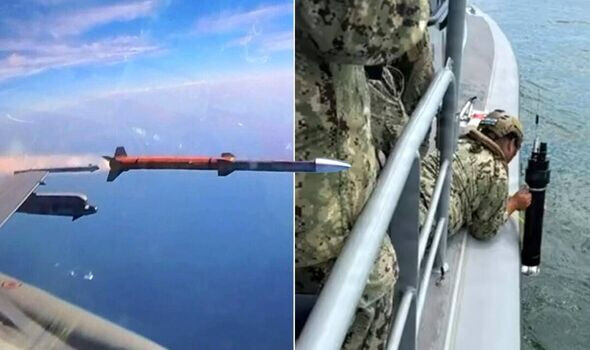
WASHINGTON — The U.S. Army has successfully conducted maritime operational tests for a cutting-edge electronic warfare system designed to neutralize adversary precision-guided weaponry by jamming crucial positioning and navigation signals.
Dubbed the "Hammer of the Gods," the portable signal-jamming system underwent rigorous sea-based testing off the U.S. West Coast as part of Project Convergence Capstone 6 (PC-C6). While ground-based variants of the system have been field-tested over the past two years, this marks the first official operational test of its maritime iteration in realistic ocean conditions.
Key Capabilities and Battlefield Impact
The newly unveiled system is engineered to degrade the accuracy of a broad array of threat vectors, including:
-Long-range artillery
-Guided missiles
-Cruise missiles
The system operates by heavily disrupting Global Positioning System (GPS) data and Positioning, Navigation, and Timing (PNT) signals that precision weapons rely on to navigate. Stripped of reliable PNT data, enemy munitions suffer a dramatic plunge in targeting accuracy, resulting in operational delays and mission failures.
Beyond its offensive disruption capabilities, "Hammer of the Gods" serves a vital defensive function. It establishes a resilient, hardened communication network that maintains secure connectivity among allied units even under severe enemy radio-jamming tactics. This ensures combat forces can continuously "shoot, move, and communicate" without interruption.
Multi-Domain Joint Operation
The high-stakes trial involved multi-domain integration across several branches of the U.S. armed forces, including:
-U.S. Army & Navy
-U.S. Space Force & Space Forces Pacific
-Naval Base San Diego
U.S. Army Space and Missile Defense Command (USASMDC)
U.S. Army officials confirmed that the test successfully demonstrated the system’s ability to be launched, operated, and safely recovered in demanding maritime environments, paving the way for broader deployment across future theaters of operation.
[Copyright (c) Global Economic Times. All Rights Reserved.]