![[등록] 2026-09-01 15:48:31](/support/_updata/banner2/tl181982910_6749.png)


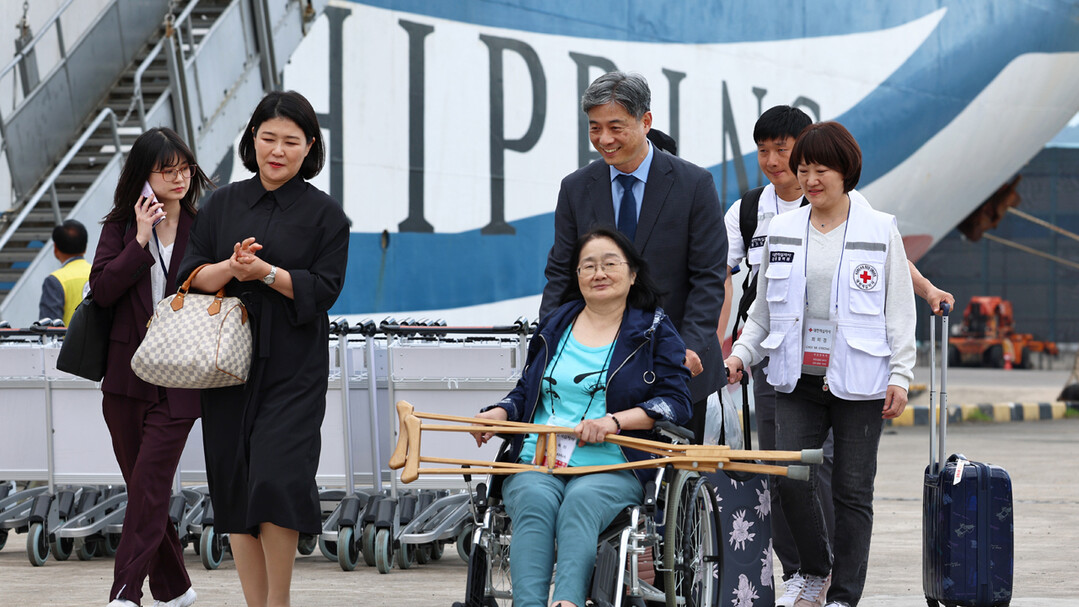
The South Korean government has amended the enforcement decree of the Special Act on Support for Sakhalin Compatriots, broadening the scope of permanent return and settlement support. This regulatory revision ensures that descendants of Sakhalin compatriots can apply for permanent repatriation even after their parents have passed away, while also accelerating the overall administrative process.
The Overseas Koreans Agency announced that the amendment to the enforcement decree of the Special Act on Support for Sakhalin Compatriots was deliberated and approved during a cabinet meeting. This legislative update follows the passage of the amended Special Act, which includes deceased Sakhalin compatriots' surviving spouses, children, and children's spouses as eligible candidates for permanent return support.
Under the revised enforcement decree, specific submission documents required for the newly eligible applicants are clearly outlined. Applicants must provide necessary paperwork such as marriage certificates, birth certificates, family census registers, forced mobilization victim determination documents, and family relation certificates depending on the individual applicant category.
The administrative schedule for permanent repatriation has been expedited by one month to grant applicants more preparation time. The deadline for submitting applications for permanent return, settlement, and livelihood stability support has been moved forward from April 30 to March 31 of each year. Consequently, the notification deadline for selected candidates has been adjusted from July 31 to June 30, allowing approved compatriots and accompanying family members to enter South Korea earlier.
Government support provisions necessary for domestic settlement are explicitly detailed within the enforcement decree as well. Qualified individuals will receive benefits pursuant to the National Basic Living Security Act, alongside support for nationality determination procedures, provision of employment and lifestyle information, social service guidance, and legal or administrative counseling. Furthermore, tasks entrusted to the Korean National Red Cross now formally encompass invitation visiting programs, application reception, eligibility determinations, airfare and initial settlement cost provisions, and lifestyle information guidance.
Anticipating a surge in permanent return applications due to the expanded eligibility pool, the Overseas Koreans Agency is pursuing an increase in the number of supported individuals for the upcoming year. The agency consulted with budgetary authorities to reflect the high demand for repatriation among Sakhalin compatriots and the legislative intent behind the recent legal amendments. As a result, the budget for next year has been allocated at 13.6 billion won, marking a 74.4 percent increase compared to the 7.8 billion won allocated this year.
The agency aims to enable all Sakhalin compatriots and accompanying family members wishing to return home within the current administration's term to do so, scaling up the permanent return support capacity to around 600 people. This target represents a 156.4 percent increase, or approximately 2.6 times the scale of the 234 selected individuals designated for permanent return. Past selection numbers recorded 258 people, 265 people, and 232 people respectively over recent years. In tandem with these budgetary expansions, the agency plans to revise relevant internal directives concerning priority rankings for target selection within this year, applying the new criteria starting from next year's selections.
Overseas Koreans Agency Commissioner Kim Kyung-hyeop emphasized that the opportunity to return to the homeland should not vanish simply because parents passed away first. He added that the agency will carefully manage permanent repatriation and domestic settlement to ensure this institutional improvement leads to practical changes for Sakhalin compatriot families who have waited for a long time to return. The newly approved enforcement decree will take effect following presidential enactment, with document submission regulations applied starting from the legal implementation date while remaining provisions take effect immediately upon promulgation.
[Copyright (c) Global Economic Times. All Rights Reserved.]