![[등록] 2026-09-01 15:48:31](/support/_updata/banner2/tl181982910_6749.png)


Next year's growth forecast also raised to 2.6% on robust exports and production
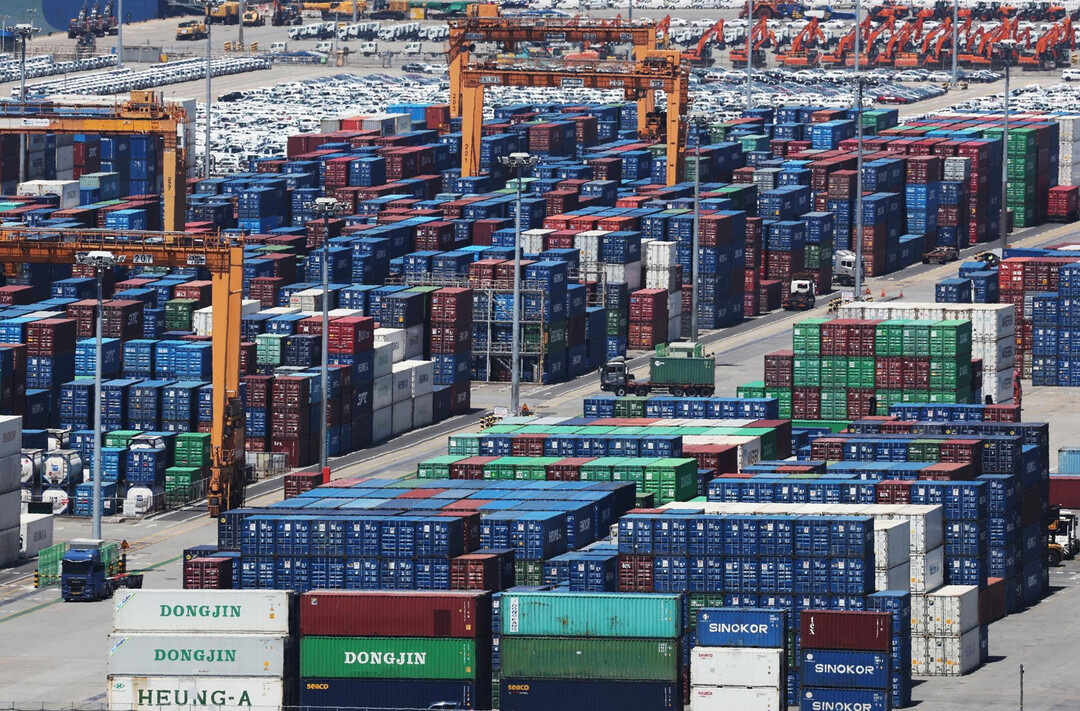
The Organisation for Economic Co-operation and Development's (OECD) outlook on the South Korean economy has changed significantly in just three months. The OECD projected South Korea's economic growth rate for this year at 3.7%, raising it by 1.1 percentage points from June, and also revised next year's forecast upward to 2.6%.
In its interim economic outlook released on the 23rd, the OECD forecast South Korea's growth rate for this year at 3.7%. After raising it from 1.7% in March to 2.6% in June, the organization has now increased it by another 1.1 percentage points. Next year's forecast was adjusted upward by 0.7 percentage points, from 1.9% to 2.6%. For both years, the magnitude of the forecast adjustments was the largest among G20 countries.
Exports and production were pointed out as the core factors supporting the recovery of the South Korean economy. The OECD projected that strong export and production growth will drive the upward trend this year, while consumption is expected to gradually recover next year, sustaining the economic rebound.
Along with growth projections, inflation expectations were also revised upward. This year's consumer price inflation rate is projected at 3.0%, up 0.4 percentage points from the June forecast, while next year's forecast was raised by 0.5 percentage points to 2.7%.
However, compared to the G20 averages of 4.1% for this year and 3.6% for next year, these figures remain at lower levels. The OECD cited the upward revision of growth forecasts and changes in international energy price projections as the background for the inflation adjustment.
The global economy was assessed as maintaining a certain level of resilience despite shocks originating from the Middle East. The analysis showed that government support measures and crude oil inventories in various countries absorbed some of the economic impact caused by the war, while the spread of artificial intelligence (AI) has been supporting investment, production, and trade.
Accordingly, the OECD projected this year's global economic growth rate at 2.9%, a 0.1 percentage point increase from the June forecast. Conversely, next year's growth rate was lowered by 0.1 percentage points to 3.0%. The G20's growth forecast for this year was revised upward by 0.1 percentage points to 3.1%, while next year's forecast was maintained at 3.0%.
International energy prices and supply shocks were cited as future variables. The OECD noted that prolonged high energy prices or supply disruptions caused by worsening weather conditions could pose a burden on the economy.
Further increases in long-term government bond yields were also presented as a downside risk. On the other hand, it evaluated that an early end to the Middle East conflict or an expansion of investment and production driven by AI spread could bolster economic recovery.
The OECD recommended that countries implement monetary policies to stabilize inflation expectations, alongside temporary energy-related support limited strictly to targeted vulnerable groups. It also called for structural reforms to raise potential growth rates and enhance economic resilience against external shocks.
[Copyright (c) Global Economic Times. All Rights Reserved.]