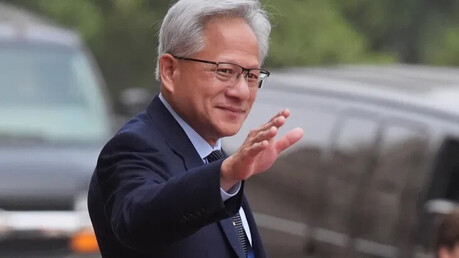
The recent revelation surrounding NVIDIA CEO Jensen Huang—who confirmed a personal entanglement with an individual linked to Chinese intelligence networks—has cast a harsh spotlight on a familiar playbook: the modern evolution of state-sponsored honey traps. For decades, foreign intelligence services have used personal relationships to bypass firewalls, compromising everyone from rank-and-file investigators to federal lawmakers.
The blueprint for deep-cover infiltration was starkly illustrated by the case of Katrina Leung in the 1980s. Recruited by the FBI as an informant due to her extensive network in Beijing, Leung operated as a double agent for nearly two decades. Collecting close to $2 million in operational funding, she systematically bypassed institutional security by cultivating intimate relationships with multiple case officers assigned to monitor her. Despite red flags raised internally, the romantic entanglements blinded handlers to her compromises until her arrest in 2003.
Decades later, the tactics shifted from established networks to grass-roots political cultivation. The 2010s exposed the case of Christine Fang, a student leader in California who targeted rising political figures. By orchestrating fundraising networks and building long-term bonds with local officials—most notably Eric Swalwell before his tenure on the House Intelligence Committee—Fang maintained close proximity to sensitive policymaking circles before abruptly disappearing to China as counterintelligence pressure mounted.
Even state-level administrations have proven vulnerable. In 2024, high-profile indictments unmasked former New York state official Linda Sun, who allegedly leveraged her position as a deputy chief of staff to undermine diplomatic engagements with Taiwan and covertly advance foreign interests from within state governance.
Military structures have similarly suffered profound breaches. From a former U.S. Army contractor leaking Pacific Command operational plans to a Chinese romantic partner, to high-ranking Taiwanese military officials like Major General Lo Hsien-che trading critical defense network layouts for financial and personal incentives, personal vulnerabilities have consistently proven to be an effective wedge for state actors.
As geopolitical competition pivots toward artificial intelligence, microchips, and digital infrastructure, intelligence targets have naturally expanded. Today, the focus has shifted from legislative corridors and command posts to the executive suites of global tech giants—proving that modern espionage relies as much on private vulnerabilities as it does on cyber intrusions.
[Copyright (c) Global Economic Times. All Rights Reserved.]