![[등록] 2026-09-01 15:48:31](/support/_updata/banner2/tl181982910_6749.png)


Chungcheongnam-do announced preventive guidelines on the 16th for water-borne and food-borne infectious diseases, tick- and rodent-borne infectious diseases, and respiratory infectious diseases to ensure a safe Chuseok holiday free from infectious diseases.
During the Chuseok holiday, outdoor activities such as visiting graves, weeding, and farming increase, raising the possibility of exposure to tick- and rodent-borne infectious diseases. Additionally, increased contact between people due to homecomings and travel calls for special vigilance in preventing respiratory infectious diseases.
First, to prevent water-borne and food-borne infectious diseases, basic preventive rules must be followed, such as washing hands with soap under running water for 30 seconds or more, cooking food thoroughly, drinking boiled water, and washing vegetables and fruits thoroughly before eating.
If symptoms of intestinal infection such as diarrhea or vomiting occur, people should refrain from preparing food, and attention must be paid to safe food handling, including washing hands before and after food preparation and maintaining hygienic management of cooking utensils.
If symptoms such as vomiting, diarrhea, or abdominal pain occur after eating food, patients should receive medical treatment at a nearby medical institution, and if similar symptoms occur in a group, they should report them to the local public health center.
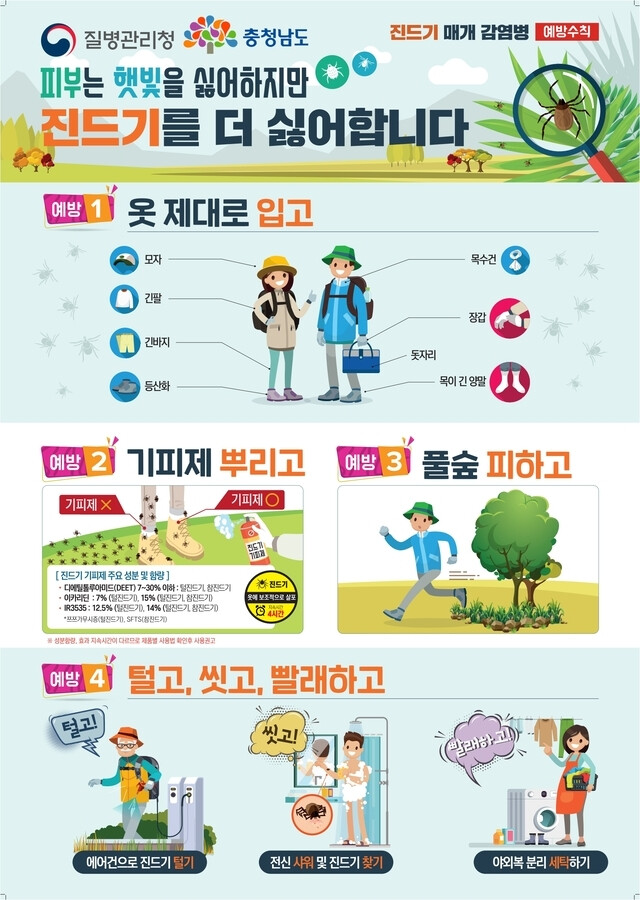
To prevent tick-borne infectious diseases, skin exposure should be minimized during outdoor activities by wearing light-colored, long-sleeved shirts and long pants, using tick repellents, and avoiding sitting or lying down on grass.
After outdoor activities, it is important to shake and wash clothes, take a shower or bath, and check the body for attached ticks.
To prevent rodent-borne infectious diseases such as hemorrhagic fever with renal syndrome and leptospirosis, contact with rodents such as rats and their excreta should be avoided, and skin exposure should be minimized during outdoor activities such as farming.
If symptoms such as fever, chills, headache, muscle pain, vomiting, or diarrhea appear after outdoor activities, individuals should immediately visit a medical institution and inform medical staff of their outdoor activity history, such as grave-visiting, weed clearing, or farming.
To prevent respiratory infectious diseases, practices should include covering the mouth and nose with a tissue or clothing sleeve when coughing or sneezing, wearing a mask if respiratory symptoms are present, washing hands with soap under running water for 30 seconds or more, avoiding touching the eyes, nose, and mouth with unwashed hands, and frequently ventilating indoor spaces.
If respiratory symptoms such as fever or cough are present, contact with others should be reduced, and treatment should be received at a medical institution.
Jang Dong-hwa, Head of the Infectious Disease Sanitation Division, stated, "As family and relative gatherings, travel, and outdoor activities such as grave-visiting and weed-clearing increase during the Chuseok holiday, it is important to incorporate infectious disease prevention rules into daily life." He added, "Please adhere to basic personal hygiene rules such as hand washing and safe food consumption, and be cautious not to be exposed to ticks and rodents during outdoor activities."
[Copyright (c) Global Economic Times. All Rights Reserved.]