![[등록] 2026-09-01 15:48:31](/support/_updata/banner2/tl181982910_6749.png)


(C) PBS
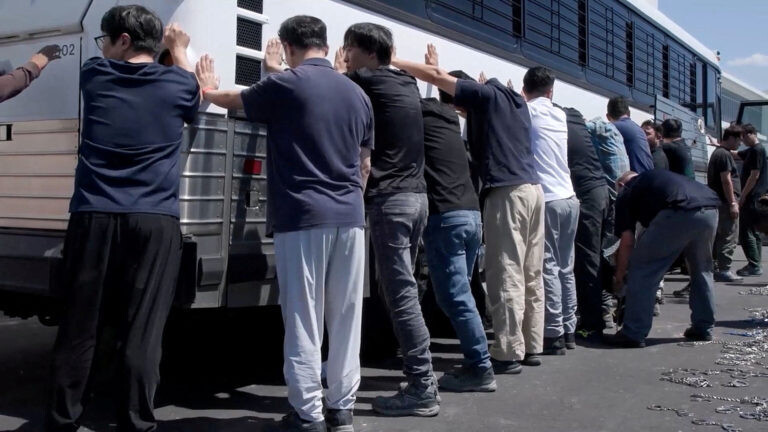
ST. PAUL, MN – The suburban quiet of Minnesota has been replaced by a chilling atmosphere of anxiety. For the Korean-American community and other Asian groups, the year 2026 has brought a wave of immigration enforcement so aggressive that many say it surpasses the hardships of the global pandemic.
On Wednesday, during an emergency virtual press conference hosted by the National Korean American Service & Education Consortium (NAKASEC), community leaders and residents shared harrowing accounts of life under constant surveillance. The consensus was grim: in the eyes of federal agents, "looking Asian" has become a liability.
Living in a State of Emergency Pastor Isaac Lee, who operates a homeless shelter in St. Paul, described a community on the brink. "We are constantly watching for ICE," Lee said. "Their vehicles have raided our shelter’s parking lot at least twice. People are living out of 'go-bags,' ready to run at a moment's notice."
The fear is not just emotional; it is existential. Families have disappeared from public life. Lee mentioned two families from his congregation who have not left their homes for a month. For those who must go out, the precautions are heartbreaking. Lee admitted to hiding GPS trackers on his four-year-old and two-year-old children. "It breaks my heart that I have to teach a toddler to blow a whistle if they are snatched away," he lamented.
Economic Paralysis and Racial Profiling The crackdown is strangling local economies more effectively than the COVID-19 lockdowns ever did. One grocery store owner in the area reported that while the pandemic caused a 10% dip in revenue, the current climate of fear has wiped out 60% of his sales. Customers are simply too terrified to go to the store.
Perhaps most alarming is that legal status provides little protection against the psychological—and sometimes physical—toll of enforcement. Kim Park Nelson, a professor at Winona State University and a Korean adoptee, warned that ICE’s reliance on racial profiling makes every person of color a potential target.
"In Minneapolis right now, having an Asian face is dangerous," Park Nelson said. She highlighted the unique vulnerability of the roughly 15,000 Korean adoptees in Minnesota. Many were raised in white families and are disconnected from immigrant support networks. "Some don't have the right paperwork or aren't even aware they lack citizenship due to past administrative errors by their parents. They are in a total state of panic."
A Pattern of Disappearance The Hmong community, the largest Asian ethnic group in Minnesota with over 95,000 residents, is also being targeted through "quiet" tactics. Sei Yang, representative of 'Transforming Generations,' noted that instead of large-scale workplace raids, agents are conducting individual home visits in the middle of the night. "People are disappearing quietly at dawn, and it’s nearly impossible to track where they are being taken," Yang stated.
Political and Legal Resistance In response, Korean-American advocacy groups are launching a massive legislative counter-offensive. Han Young-woon, an organizing director at NAKASEC, announced a campaign urging senators to vote against the Department of Homeland Security (DHS) budget.
The movement has found allies in high places. U.S. Senator Andy Kim has publicly pledged to vote against any bill containing DHS funding that facilitates these "unconstitutional" crackdowns. Other Korean-American lawmakers, including Marilyn Strickland and David Min, have also stood in opposition, though Republican Representative Young Kim remained a notable exception.
"ICE and CBP are ignoring the Constitution. They are operating without warrants," Han said. "They don't care if you speak Korean or Chinese. To them, we are all just 'immigrants.' We can no longer afford to think we are safe just because we have papers. We must stand in solidarity."
As the crackdown continues, the Korean-American community is transitioning from a state of shock to a state of organized resistance, recognizing that the struggle for civil rights in 2026 has become a fight for their very presence in the country they call home.
[Copyright (c) Global Economic Times. All Rights Reserved.]