• 2026.11.20 (Fri)
  • All articles
  • LOGIN
  • JOIN
Global Economic Times
한인동포뉴스(상단)
  • Synthesis
  • World
  • Business
  • Industry
  • ICT
  • Distribution Economy
  • Well+Being
    • Pet Life
    • Halal Horizon
  • Travel
  • Eco-News
  • Education
  • Korean Wave News
  • Opinion
  • Arts&Culture
  • Sports
  • People & Life
    • International Student Report
    • With Ambassador
  • Column
    • Cho Kijo Column
    • Cherry Garden Story
    • Ko Yong-chul Column
    • Kim Bong-seon's Photo Column
    • Kim Seul-Ong Column
    • Lee Yeon-sil Column
    • Professor Lee Soo-young’s Life Essays
  • Photo News
  • New Book Guide
MENU
 
Home > World

Damned if You Leave It (Hacked), Damned if You Touch It (Outage)... The U.S. IT Outage Dilemma, What is the Only Hope?

Ana Fernanda Reporter / Updated : 2026-11-19 06:46:25
  • -
  • +
  • Print

WASHINGTON — A series of sweeping digital disruptions across the United States over the past week has exposed a troubling vulnerability at the heart of the nation’s technological infrastructure: attempts to modernize and maintain critical networks are increasingly causing them to collapse.

Rather than the work of foreign hackers, investigations into recent outages at major tech firms, financial institutions, and federal agencies point to an internal culprit—routine maintenance and system upgrades gone awry.

The cascade of failures began on the 12th, when a nearly day-long outage crippled Microsoft’s core workplace tools, including Teams and Outlook, during an effort to expand computing capacity. Just 24 hours later, air travel faced widespread delays after the Federal Aviation Administration (FAA) encountered technical failures while installing new cables and replacing outdated routers.

The disruptions soon spread to the financial and national security sectors. By the 16th, customers at JPMorgan Chase—alongside users of Bank of America and U.S. Bank—reported significant delays in online banking and Zelle payment transfers. JPMorgan later attributed the hiccup to an internal server software bug, ruling out malicious cyber activity. The following day, routine maintenance temporarily degraded the National Security Agency’s classified "NSAnet," triggering a "Code Yellow" alert on internal voicemails, while Apple simultaneously battled update-related glitches across iCloud, Apple Pay, and the App Store.

A "Sedimentary" Tech Crisis

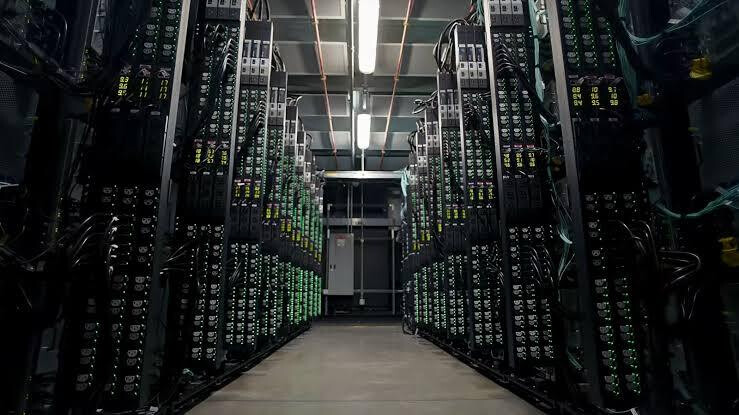
Industry analysts note that government agencies and corporations are trapped in a perilous Catch-22. Leaving legacy systems untouched leaves vital infrastructure exposed to sophisticated cyberattacks, yet intervening to patch or upgrade them risks destabilizing delicate, decades-old architectures.

In sectors like aviation, healthcare, and banking, modern software is frequently layered directly on top of antiquated hardware—a structural buildup akin to geological sediment. When engineers attempt to modify one layer, unforeseen chain reactions can bring the entire network down.

Compounding the architectural fragility is a fast-paced tech culture that often prioritizes rapid deployment over rigorous testing. As former Cybersecurity and Infrastructure Security Agency (CISA) Director Jen Easterly noted in a recent commentary, the root of America’s digital vulnerability is fundamentally an issue of software quality rather than purely cybersecurity.

Turning to AI for a Solution

With modern networks growing too intricate for human engineers to fully map or troubleshoot, technologists are increasingly looking toward artificial intelligence as a safeguard. By deploying AI to run high-precision simulations, operators hope to predict how legacy systems will react to updates before changes are pushed live.

"These technological systems have become far too complex for any human mind to analyze," said Michael Cusumano, a professor at the MIT Sloan School of Management, emphasizing that advanced AI modeling may ultimately be the only viable path forward to keep critical infrastructure running safely.

[Copyright (c) Global Economic Times. All Rights Reserved.]

  • #Cherry Garden
  • #HalalFood
  • #Halal
  • #Petlife
  • #Halalhorizone
  • #Hormuz Impasse
  • #Joseon
  • #globaleconomictimes
  • #micore
Ana Fernanda Reporter

Popular articles

  • US Army Conducts Rare Temporary Burial Drills to Prepare for Worst-Case Large-Scale War Scenarios

  • Saudi Aramco’s Astonishing Resilience: Crude Oil Transportation Resumes Days After Houthi Attacks

  • Ito En Enters Non-Alcoholic Market with Hop-Infused Tea Beverages

I like it
Share
  • Facebook
  • X
  • Kakaotalk
  • LINE
  • BAND
  • NAVER
  • https://globaleconomictimes.kr/article/1065563127513090 Copy URL copied.
Comments >

Comments 0

Weekly Hot Issue

  • Bucheon Call Center Practices Neighborly Love with Proceeds from ‘ANABADA’ Bazaar
  • Bucheon City Hosts ‘Kimchi Sharing of Love’ Event, Distributing 730 Boxes of Kimchi
  • Bucheon City Launches ‘Ondongne Bom·Bom·Bom’… Full-Scale Push for Loneliness Relief PolicyAround 100 Community Social Security Council members participate… Over 400 hand-warmer dolls made
  • 28th Busan Independent Film Festival Kicks Off, Celebrating Local Indie Cinema
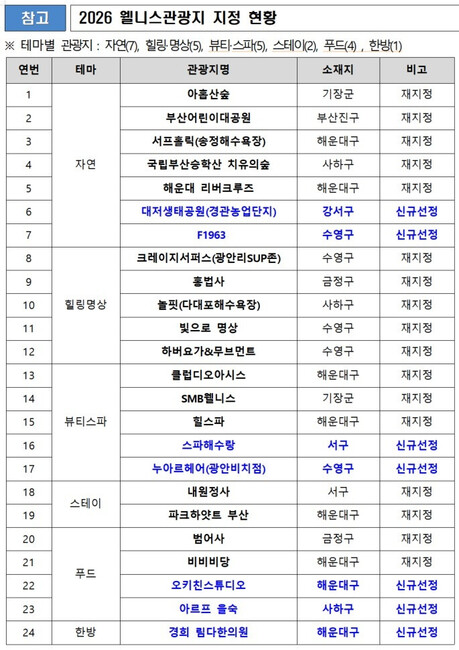
  • Busan Leaps Toward Becoming a Global Healing Tourism City by Expanding New Wellness Destinations
  • From Temple Food to Traditional Makgeolli: British Broadcaster Peter Bint Promotes the Charm of Geumjeongsan National Park

Most Viewed

1
South Korea and Ethiopia Sign Trilateral MOU to Introduce Liquid-Based Cytology (LBC) Technology for Cervical Cancer Diagnosis
2
Meeting Christmas Early!… Busan Dessert Sales Event "Daldal The Market" Held
3
World Citizens are Flying Directly to Busan... The Era of 4 Million Foreigners is Just Around the Corner
4
Eating 100g of Baechu Kimchi Daily Linked to Lower High-Cholesterol Risks
5
First Snow and Freeze Hit Korea as Winter Officially Begins on 'Ipdeong'
체리가든 스토리
nutri huevos
로타리
동포저널

Hot Issue

Trump Wraps Up China Trip Amid Speculation of Surprise Kim Jong Un Meeting

Democrats Expand Senate Majority to 56 Seats Following Peltola’s Victory in Alaska

DHS Secretary Defends Taking Government Jet to College Football Game Amid Nationwide Flight Disruptions

Fashion Runway Show 2026

Let’s recycle the old blankets in Jeju Island’s closet instead of incinerating them.

Global Economic Times
korocamia@naver.com
CEO : LEE YEON-SIL
Publisher & Editor : KO YONG-CHUL
Registration number : Seoul, A55681
Registration Date : 2024-10-24
Youth Protection Manager: KO YONG-CHUL
Singapore Headquarters
5A Woodlands Road #11-34 The Tennery. S'677728
Korean Branch
Phone : +82(0)10 4724 5264
#304, 6 Nonhyeon-ro 111-gil, Gangnam-gu, Seoul
Copyright © Global Economic Times All Rights Reserved
  • News K
  • 반달곰 프로젝트
  • 광고문의
Search
Category
  • All articles
  • Synthesis
  • World
  • Business
  • Industry
  • ICT
  • Distribution Economy
  • Well+Being 
    • 전체
    • Pet Life
    • Halal Horizon
  • Travel
  • Eco-News
  • Education
  • Korean Wave News
  • Opinion
  • Arts&Culture
  • Sports
  • People & Life 
    • 전체
    • International Student Report
    • With Ambassador
  • Column 
    • 전체
    • Cho Kijo Column
    • Cherry Garden Story
    • Ko Yong-chul Column
    • Kim Bong-seon's Photo Column
    • Kim Seul-Ong Column
    • Lee Yeon-sil Column
    • Professor Lee Soo-young’s Life Essays
  • Photo News
  • New Book Guide
  • Overseas Koreans
  • Multicultural News