• 2026.06.05 (Fri)
  • All articles
  • LOGIN
  • JOIN
Global Economic Times
fashionrunwayshow2026
  • Synthesis
  • World
  • Business
  • Industry
  • ICT
  • Distribution Economy
  • Well+Being
  • Travel
  • Eco-News
  • Education
  • Korean Wave News
  • Opinion
  • Arts&Culture
  • Sports
  • People & Life
    • International Student Report
    • With Ambassador
  • Column
    • Cho Kijo Column
    • Cherry Garden Story
    • Ko Yong-chul Column
    • Kim Seul-Ong Column
    • Lee Yeon-sil Column
  • Photo News
  • New Book Guide
MENU
 
Home > Industry

Seoul to Launch Urban Air Mobility (UAM) Pilot Program in 2025

Global Economic Times Reporter / Updated : 2024-11-12 06:45:18
  • -
  • +
  • Print


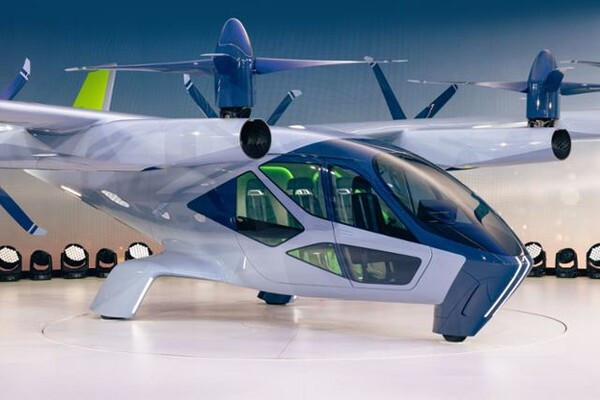
Seoul, South Korea – Seoul is set to become a pioneer in urban air mobility (UAM) as the city announced plans to launch a pilot program in 2025, aiming for full commercialization by 2030. The initiative, dubbed "Seoul-type UAM," envisions a future where residents can commute by air taxis, significantly reducing travel time between key locations within the city and beyond.

Seoul Mayor Oh Se-hoon unveiled the city's ambitious UAM vision at the "UAM, Drone, and AI Technology Cooperation Conference" on November 11th. The plan outlines a four-phase approach to UAM development, starting with a pilot phase in 2025 followed by early commercialization in the late 2020s and full-scale operation by 2035.

Pilot Program and Initial Commercialization

The pilot program will focus on two routes: KINTEX (Goyang) to Gimpo Airport to Yeouido Park, and Jamsil to Suseo Station. These routes will be used to test the safety and feasibility of UAM operations, including aircraft performance and air traffic control.

Following successful trials, commercial UAM services are expected to commence in 2026, initially focusing on routes along the Han River, such as Gimpo Airport to Yeouido to Jamsil to Suseo. Integration with the Kimpo Airport vertiport will enable the use of UAM for business, tourism, and medical purposes.

Full-Scale Commercialization and Network Expansion

By 2030, Seoul aims to establish a comprehensive UAM network, connecting major cities and towns in the metropolitan area. The network will include intermediate stops at key locations such as Sangam, Gasan, Gwanghwamun, Wangsimni, and Sangbong. This expanded network is expected to significantly reduce travel time. For instance, the journey between Pangyo and Gwanghwamun, which currently takes about an hour by car, could be completed in just 15 minutes by UAM.

Economic Impact and Infrastructure

Seoul estimates that the full implementation of UAM could generate significant economic benefits, including annual savings of 2.2 trillion won (approximately US$1.6 billion) in travel time, a 4 trillion won increase in the metropolitan transportation market, and 1.2 trillion won in revenue from vertiport construction.

To support UAM operations, the city plans to build a network of vertiports, starting with four major facilities in Yeouido, Suseo, Jamsil, and Gimpo Airport by 2030. Additionally, Seoul will develop an integrated mobility system that seamlessly connects UAM with other modes of transportation, such as buses, autonomous vehicles, and subways.

Safety and Sustainability

Safety is a top priority for Seoul's UAM initiative. The city will establish comprehensive safety measures, including air traffic control systems, emergency landing sites, and robust maintenance protocols. Furthermore, Seoul aims to promote sustainable UAM operations by encouraging the use of electric and hybrid aircraft.

Vision for the Future

Mayor Oh emphasized that the Seoul-type UAM system will transform the city into a three-dimensional transportation network, revolutionizing mobility and connectivity. By overcoming the limitations of ground transportation, UAM will create a more efficient and sustainable urban environment.

[Copyright (c) Global Economic Times. All Rights Reserved.]

Global Economic Times Reporter
Reporter Page

Popular articles

  • Hyundai Motor Group Bets $700 Million on Mexico Amid Trade Policy Volatility

  • IRANIAN STATE MEDIA DEMONSTRATES ASSAULT RIFLES ON-AIR, TARGETING UAE FLAG AMID RISING REGIONAL PRESSURES

  • Tesla Model Y Becomes First to Pass Grueling New U.S. Autonomous Safety Tests

I like it
Share
  • Facebook
  • X
  • Kakaotalk
  • LINE
  • BAND
  • NAVER
  • https://globaleconomictimes.kr/article/1065563033939110 Copy URL copied.
Comments >

Comments 0

Weekly Hot Issue

  • Nvidia CEO Jensen Huang to Arrive in South Korea for "Sam-So" Meeting with Tech Tycoons
  • Samsung Electronics Super-Enterprise Union Loses Majority Status Amid Backlash Over Bonus Disparities
  • Samsung to Embed Vital Signs and Heart Health Scores in Upcoming Galaxy Watch9 Lineup
  • Apple Honors Digital Excellence: 12 Exceptional Apps and Games Celebrated at the 2026 Design Awards
  • Nexon Revamps Signature Youth Coding Competition into AI-Driven 'Nexon Young Programmers Cup'
  • Tech University of Korea Gathers 200 Game and AI Researchers to Discuss Industrial Expansion

Most Viewed

1
From a moment of collective sacrifice to a moment of collective democracy: The Timing of the Election in Ethiopia and Korea
2
U.S. Holds Off on Immediate Comprehensive Semiconductor Tariffs, but Pressure Mounts for Samsung and SK Hynix to Accelerate Domestic Investments
3
[Interview] "Halal is Not a Religious Regulation, but a 'Trust Infrastructure'… Creating a Premium 'K-Halal' Centered on Data and Platforms"
4
‘600 Million Won Bonus’ at Samsung Electronics Triggers Deep Sense of Relative Deprivation Among Korean Workers
5
Musk’s SpaceX Secures Space Hegemony with Flawless Starship V3 Recovery Ahead of Historic IPO
광고문의
임시1
임시3
임시2

Hot Issue

Murata Unveils Next-Gen Resin Electrode MLCC for Automotive Applications

Samsung to Embed Vital Signs and Heart Health Scores in Upcoming Galaxy Watch9 Lineup

L&F Plus Secures KRW 220 Billion from National Growth Fund to Anchor South Korea’s First Mass LFP Cathode Production

Samsung Electronics Super-Enterprise Union Loses Majority Status Amid Backlash Over Bonus Disparities

Fashion Runway Show 2026

Global Economic Times
korocamia@naver.com
CEO : LEE YEON-SIL
Publisher : KO YONG-CHUL
Registration number : Seoul, A55681
Registration Date : 2024-10-24
Youth Protection Manager: KO YONG-CHUL
Singapore Headquarters
5A Woodlands Road #11-34 The Tennery. S'677728
Korean Branch
Phone : +82(0)10 4724 5264
#304, 6 Nonhyeon-ro 111-gil, Gangnam-gu, Seoul
Copyright © Global Economic Times All Rights Reserved
  • 에이펙2025
  • APEC2025가이드북TV
  • 반달곰 프로젝트
Search
Category
  • All articles
  • Synthesis
  • World
  • Business
  • Industry
  • ICT
  • Distribution Economy
  • Well+Being
  • Travel
  • Eco-News
  • Education
  • Korean Wave News
  • Opinion
  • Arts&Culture
  • Sports
  • People & Life 
    • 전체
    • International Student Report
    • With Ambassador
  • Column 
    • 전체
    • Cho Kijo Column
    • Cherry Garden Story
    • Ko Yong-chul Column
    • Kim Seul-Ong Column
    • Lee Yeon-sil Column
  • Photo News
  • New Book Guide
  • Multicultural News
  • Jobs & Workers