• 2026.11.21 (Sat)
  • All articles
  • LOGIN
  • JOIN
Global Economic Times
한인동포뉴스(상단)
  • Synthesis
  • World
  • Business
  • Industry
  • ICT
  • Distribution Economy
  • Well+Being
    • Pet Life
    • Halal Horizon
  • Travel
  • Eco-News
  • Education
  • Korean Wave News
  • Opinion
  • Arts&Culture
  • Sports
  • People & Life
    • International Student Report
    • With Ambassador
  • Column
    • Cho Kijo Column
    • Cherry Garden Story
    • Ko Yong-chul Column
    • Kim Bong-seon's Photo Column
    • Kim Seul-Ong Column
    • Lee Yeon-sil Column
    • Professor Lee Soo-young’s Life Essays
  • Photo News
  • New Book Guide
MENU
 
Home > Eco-News

Climate Shift Disrupts Arctic Food Web, Leaving Whales and Seabirds Searching for Sustenance

Kim Young Min Reporter / Updated : 2026-11-21 06:29:32
  • -
  • +
  • Print

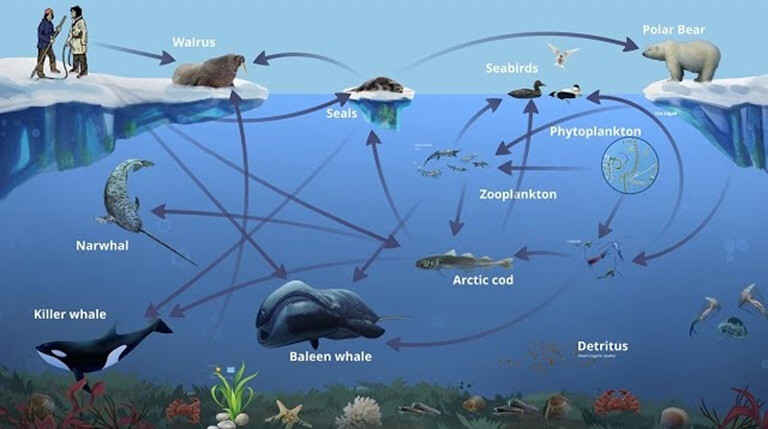
Rapidly melting sea ice and shifting ocean chemistry are destabilizing the foundation of the Arctic marine ecosystem, creating a ripple effect of food scarcity for top predators and Indigenous communities alike.

According to findings presented by the American Geophysical Union (AGU) based on over a decade of data from the Distributed Biological Observatory (DBO), warming waters in the Pacific Arctic are fundamentally altering marine habitats from the bottom up.

Ocean Acidification Weakens the Base of the Food Chain

When seasonal sea ice retreats earlier and forms later, vast stretches of open ocean are exposed to the atmosphere for extended periods. This allows the water to absorb greater amounts of carbon dioxide, triggering ocean acidification. As carbonate ion levels drop, vital organisms at the base of the food chain—including plankton, snails, and clams—struggle to build and maintain their calcium carbonate shells.

Long-term ecological monitoring spanning four decades, led by University of Maryland marine ecologist Jacqueline Grebmeier, reveals a troubling trend near St. Lawrence Island in the Bering Sea: shellfish numbers are dwindling, and tiny crustaceans known as amphipods are growing smaller.

Predators Forced to Work Harder for Less Energy

For marine predators, smaller prey translates to an energy deficit. Sea ducks like the Spectacled Eider must now expend more effort and consume significantly larger volumes of food just to meet their daily caloric needs.

Meanwhile, the ecological shifts are uneven across the region. While areas south of the Bering Strait are experiencing a decline in seafloor life, waters further north are seeing a surge in productivity fueled by nutrient-rich currents. Yet, higher productivity does not always yield the right kind of food. In several northern zones, clams are replacing amphipods—the staple diet of gray whales—forcing the massive mammals to abandon historic feeding grounds and push further north in search of nourishment.

Threat to Indigenous Livelihoods

These biological disruptions extend directly to the coastal Indigenous populations of the Arctic. Shifting ice patterns and altered migration timings are making it increasingly unpredictable to hunt traditional staples such as walruses and bowhead whales.

Henry Huntington, Arctic Science Director at the Ocean Conservancy, emphasized the critical role of ongoing environmental tracking. He noted that continuous data collection is essential not just for scientists, but for equipping local communities with the knowledge needed to adapt to rapidly changing marine populations and seasonal wildlife patterns.

[Copyright (c) Global Economic Times. All Rights Reserved.]

  • #Cherry Garden
  • #HalalFood
  • #Halal
  • #Petlife
  • #Halalhorizone
  • #Hormuz Impasse
  • #Joseon
  • #globaleconomictimes
  • #micore
Kim Young Min Reporter
Kim Young Min Reporter 前 환경데일리 발행인, mkTaiwan 편집인.

Popular articles

  • Global Credit Spreads Widened to 17-Month High Amid AI Investment Concerns

  • Stepping into the Shoes of a Joseon Scholar: Daejeon Museum Launches Immersive 'Life Game' Exhibition

  • Qnity Strengthens 'Customer Collaboration' Strategy for Semiconductor Material Innovation… “Shortening South Korea’s Semiconductor Development Cycles”

I like it
Share
  • Facebook
  • X
  • Kakaotalk
  • LINE
  • BAND
  • NAVER
  • https://globaleconomictimes.kr/article/1065562035922731 Copy URL copied.
Comments >

Comments 0

Weekly Hot Issue

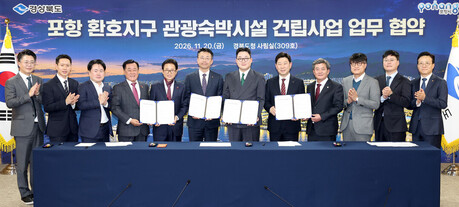
  • Gyeongsangbuk-do to Build 385-Room, 5-Star Hotel and Resort Worth 480 Billion KRW in Pohang Hwanho District
  • Address in Gwangjin-gu, Heart in Gangwon!150 Gwangjin-gu Residents Become Gangwon’s New ‘Gangwon Living Residents’
  • Osan City Launches Initiative to Channel Public Solar Power to Local Industries for RE100 Compliance
  • Jeju’s Largest Resorts Defy Regional Energy Drop, Prompting Calls for Stricter Oversight
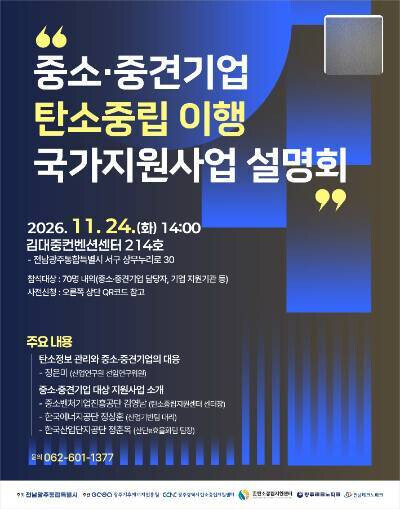
  • Jeonnam-Gwangju Special City Supports Carbon Neutrality Transition for SMEs and Mid-Sized Enterprises
  • AI Boom and Fossil Fuel Reliance to Drive 70% Jump in Data Center Emissions by 2030, IEA Warns

Most Viewed

1
South Korea and Ethiopia Sign Trilateral MOU to Introduce Liquid-Based Cytology (LBC) Technology for Cervical Cancer Diagnosis
2
Restoring Hearing with Genes, Cochlear Implants with Robots: Where Does Hearing Loss Treatment Stand Today?
3
Cold Wave and Autumn Chill Hit Korea on "Ipdong": Gangwon -6°C, Seoul Real-Feel -4°C… Rain and Snow Expected in Central Regions on Sunday
4
"Swap Snacks for Two Handfuls of Pecans?": How Triglycerides Dropped After 12 Weeks
5
AI Tsunami: Cutting Jobs Despite Record Profits—Microsoft Announces Third Round of Laydowns This Year
체리가든 스토리
nutri huevos
로타리
동포저널

Hot Issue

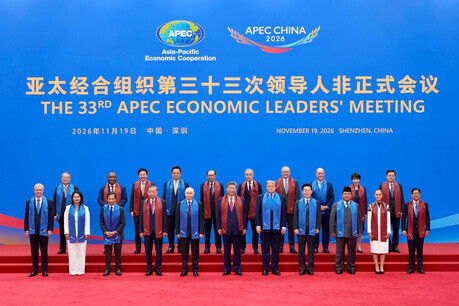
Tokyo Faces Diplomatic Isolation Concerns Following Shenzhen APEC Summit

U.S. Tightens AI Chip Export Controls as Security Warnings and Diplomatic Rifts Deepen

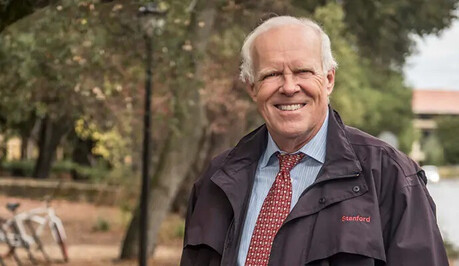
Alphabet Chairman John Hennessy: "Entry-Level Legal Document Processing Will Be Completely Replaced by AI"

Fashion Runway Show 2026

Let’s recycle the old blankets in Jeju Island’s closet instead of incinerating them.

Global Economic Times
korocamia@naver.com
CEO : LEE YEON-SIL
Publisher & Editor : KO YONG-CHUL
Registration number : Seoul, A55681
Registration Date : 2024-10-24
Youth Protection Manager: KO YONG-CHUL
Singapore Headquarters
5A Woodlands Road #11-34 The Tennery. S'677728
Korean Branch
Phone : +82(0)10 4724 5264
#304, 6 Nonhyeon-ro 111-gil, Gangnam-gu, Seoul
Copyright © Global Economic Times All Rights Reserved
  • News K
  • 반달곰 프로젝트
  • 광고문의
Search
Category
  • All articles
  • Synthesis
  • World
  • Business
  • Industry
  • ICT
  • Distribution Economy
  • Well+Being 
    • 전체
    • Pet Life
    • Halal Horizon
  • Travel
  • Eco-News
  • Education
  • Korean Wave News
  • Opinion
  • Arts&Culture
  • Sports
  • People & Life 
    • 전체
    • International Student Report
    • With Ambassador
  • Column 
    • 전체
    • Cho Kijo Column
    • Cherry Garden Story
    • Ko Yong-chul Column
    • Kim Bong-seon's Photo Column
    • Kim Seul-Ong Column
    • Lee Yeon-sil Column
    • Professor Lee Soo-young’s Life Essays
  • Photo News
  • New Book Guide
  • Overseas Koreans
  • Multicultural News