![[등록] 2026-09-01 15:48:31](/support/_updata/banner2/tl181982910_6749.png)


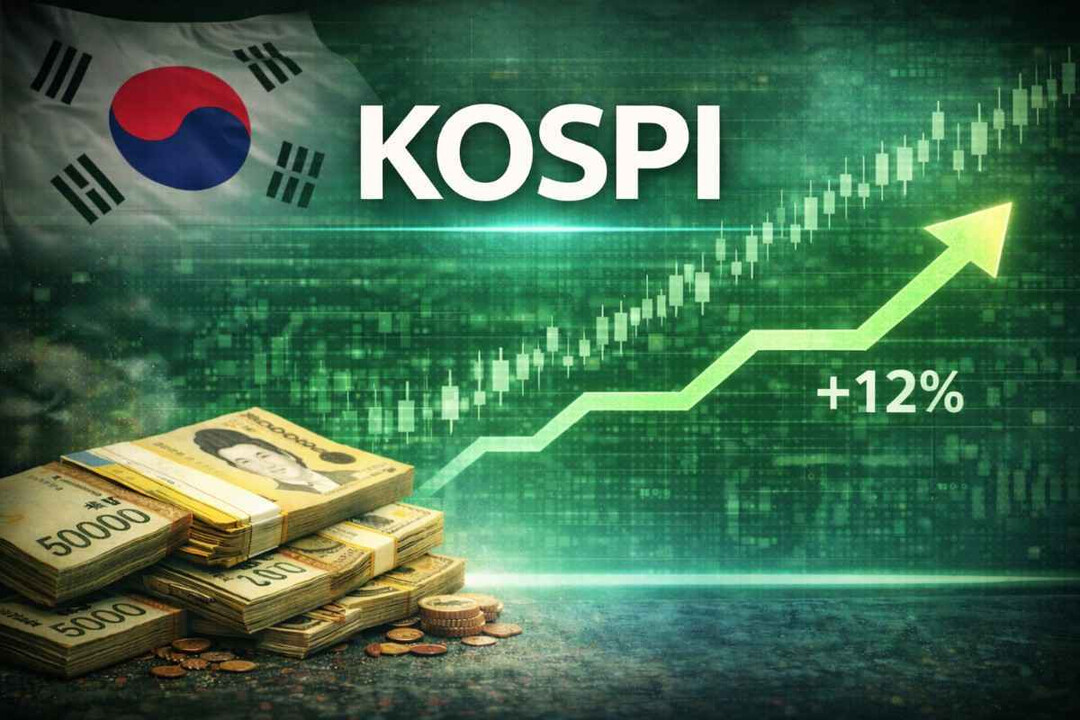
SEOUL — Following a sharp 5% decline that pulled the KOSPI back down to the 6,200 level on August 3—just after a record-breaking surge in the previous session—market analysts suggest that the recent pullbacks have pushed South Korea’s benchmark index into historically undervalued territory, creating a strategic buying opportunity for investors.
According to a strategy report titled "August Stock Market Outlook and Investment Strategy" released by Daeshin Securities on Monday, uncertainties surrounding the global semiconductor sector and the shock of leverage liquidations have largely been priced in. Provided that corporate earnings and macroeconomic fundamentals remain intact, the brokerage forecasts that the KOSPI could stage a rapid recovery, targeting the 9,300 mark before the end of the year.
While Daeshin Securities revised its year-end KOSPI target downward from 11,500 to 9,300 to reflect rising bond yields and potential central bank rate hikes, it emphasized that upside potential now far outweighs downside risk at current valuation levels.
De-leveraging Shock Reaches Its Peak
Lee Kyoung-min, a senior analyst at Daeshin Securities, noted that the steep sell-off in July was driven by an overconcentration in tech shares and the expanding footprint of single-stock leveraged ETFs, rather than a deterioration in core business fundamentals.
"Uncertainties surrounding global AI and semiconductor demand, supply disruptions from China, and recent supply-demand shocks have either moderated or been heavily priced into the market," Lee stated. "The KOSPI has fallen excessively in a direction completely detached from its underlying fundamentals."
Data shows that the market capitalization share of semiconductors within the KOSPI dropped from 62.2% on June 22 to 52.7% by July 30. Margin trading balances fell by roughly 15% from their peak, while the market caps of major Samsung Electronics and SK Hynix leveraged ETFs reverted to levels seen at their initial launch.
Analysts at Daeshin believe the forced liquidation pressure from hedge funds and retail leverage has passed its peak. With forced selling capacity now limited, market attention is expected to shift back to core drivers: semiconductor earnings and memory chip pricing trends.
Record Low Valuation Amid Solid Earnings Growth
In contrast to the sharp drop in equity prices, corporate earnings forecasts remain resilient. The 12-month forward Earnings Per Share (EPS) for the KOSPI rose from 1,170 points in mid-July to 1,190 points by the end of the month. Conversely, the 12-month forward Price-to-Earnings (P/E) ratio plunged to 4.74x—marking its lowest level since 2000.
"It is highly unusual for the KOSPI to plunge more than 30% from its high during an economic and earnings expansion cycle," Lee added. "If economic fundamentals hold steady, a easing of uncertainties alone will be enough to trigger a swift valuation normalization."
Daeshin Securities outlined a two-stage recovery trajectory: an initial target of 8,200 (corresponding to a 7x forward P/E ratio), followed by a secondary target of 9,300 (an 8x forward P/E ratio). If the index stabilizes between the 6,500 and 6,800 range, it will confirm late July’s sell-off as a temporary "fake-out" (bear trap) pattern, accelerating the pace of recovery.
Strategic Allocation: Accumulate Undervalued Leaders
To adjust for higher interest rates, Daeshin lowered its target P/E for the semiconductor sector from 8x to 7x, and for non-semiconductor sectors from 15x to 11x. However, its recommended action for investors remains clear: accumulate market leaders that suffered heavy losses despite strong earnings visibility.
Key sectors recommended for overweight position building include semiconductors, IT hardware, home appliances, secondary batteries, shipbuilding, chemicals, and machinery.
"Selling at the current 6,000 level yields little practical benefit," Lee emphasized. "Using short-term market volatility to systematically buy into oversold, high-conviction leading stocks is the most effective strategy right now."
[Copyright (c) Global Economic Times. All Rights Reserved.]