• 2026.07.24 (Fri)
  • All articles
  • LOGIN
  • JOIN
Global Economic Times
fashionrunwayshow2026
  • Synthesis
  • World
  • Business
  • Industry
  • ICT
  • Distribution Economy
  • Well+Being
  • Travel
  • Eco-News
  • Education
  • Korean Wave News
  • Opinion
  • Arts&Culture
  • Sports
  • People & Life
    • International Student Report
    • With Ambassador
  • Column
    • Cho Kijo Column
    • Cherry Garden Story
    • Ko Yong-chul Column
    • Kim Seul-Ong Column
    • Lee Yeon-sil Column
  • Photo News
  • New Book Guide
MENU
 
Home > World

Political Tensions Shifting Asian Tourism: South Korea Emerges as "Value Destination" for Chinese Travelers

Ana Fernanda Reporter / Updated : 2025-12-18 05:19:29
  • -
  • +
  • Print

(C) Trable and Tour World

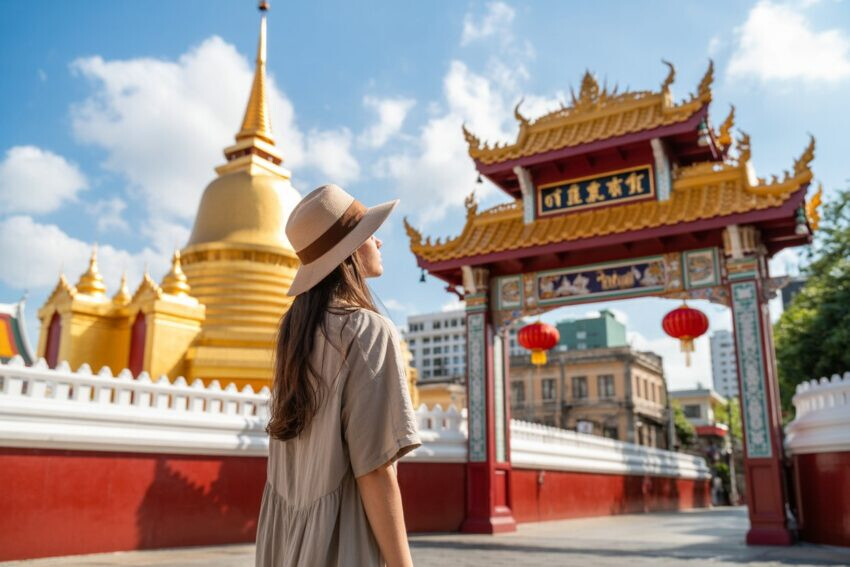
TOKYO/SEOUL – A significant shift is occurring in East Asian tourism patterns as diplomatic friction between Tokyo and Beijing sends Chinese travelers away from Japan and toward South Korea.

According to data released by the Japan National Tourism Organization (JNTO) on Wednesday, the number of Chinese visitors to Japan in November plummeted to 562,600, a sharp decline of approximately 150,000 compared to the previous month. While the figure represents a modest 3.0% increase year-on-year, it marks a severe deceleration considering the 37.5% growth rate recorded during the first ten months of the year.

The "Taiwan Factor" and Travel Restrictions

The primary catalyst for this downturn is a diplomatic row sparked by Japanese Prime Minister Sanae Takaichi’s recent comments regarding potential Japanese intervention in the event of a Taiwan emergency. Following the remarks on November 7, Beijing retaliated by issuing a de facto travel advisory, urging citizens to reconsider trips to Japan.

The impact was immediate:

Aviation: Major Chinese carriers have significantly reduced flight frequencies to Japan and extended fee-free cancellation policies through March 2024.
Accommodations: According to the booking platform Tripla, hotel reservations from China dropped by 57% in late November compared to the beginning of the month.
Regional Impact: Hong Kong also saw an 8.6% decline in visitors to Japan (207,600), as local authorities canceled exchange programs with Japan in alignment with Beijing’s stance.
In contrast, visitors from Taiwan surged by 11.1% to 542,400, nearly matching mainland China's numbers, as Taiwanese travelers showed "supportive tourism" toward Japan.

South Korea: The "Best Value" Alternative

As Japan becomes a politically "expensive" destination, South Korea is reaping the benefits. The South China Morning Post (SCMP) reports that a combination of improving diplomatic ties and a favorable exchange rate has made Seoul the primary beneficiary of the Chinese outbound market.

"For Chinese travelers, Japan has become politically costly, while the weakening Korean Won has transformed South Korea into a high-value destination," said Subramania Bhatt, CEO of China Trading Desk.
The Chinese Yuan has appreciated approximately 9.4% against the South Korean Won since July, significantly increasing the purchasing power of Chinese tourists in sectors like luxury shopping, beauty services, and medical tourism. Furthermore, South Korea’s recent visa-free entry policy for Chinese tour groups has lowered the barrier to entry, resulting in over 4.7 million Chinese visitors through October—already surpassing last year’s total.

South Koreans Remain Top Visitors to Japan

Despite the drop in Chinese arrivals, Japan’s overall tourism sector remains robust due to a surge in South Korean visitors. In November, 824,500 South Koreans visited Japan, a 10.0% increase year-on-year. For the second consecutive month, South Korea ranked as the #1 source of tourism for Japan.

Cumulatively, Japan has welcomed 39.06 million international visitors through November 2024, officially breaking the previous annual record set in 2023 (36.87 million). However, industry analysts warn that if the standoff with Beijing continues, the high-spending "Golden Route" (Tokyo-Osaka-Kyoto) typically favored by Chinese tourists may face a challenging winter season.

[Copyright (c) Global Economic Times. All Rights Reserved.]

  • #Globaleconomictimes
  • #Korea
  • #Seoul
  • #Samsung
  • #LG
  • #Bitcoin
  • #Meta
  • #Business
  • #Economic
  • #The Woori Bank
Ana Fernanda Reporter

Popular articles

  • Wemade’s Founder Exits: Chinese Investment Firm NeoPulse Becomes Largest Shareholder in 920 Billion Won Mega-Deal

  • German Prosecutors Accuse Ukrainian Government of Orchestrating Nord Stream Pipeline Bombing

  • Cuba’s National Power Grid Collapses Amid Escalating Humanitarian Crisis

I like it
Share
  • Facebook
  • X
  • Kakaotalk
  • LINE
  • BAND
  • NAVER
  • https://globaleconomictimes.kr/article/1065557819659565 Copy URL copied.
Comments >

Comments 0

Weekly Hot Issue

  • US Finalizes Section 301 ‘Forced Labor Tariffs’ on 60 Nations; South Korea Hit with 12.5% Duty
  • Daejeon Confirmed to Host the 2029 Invictus Games… First in Asia
  • Coupang’s ‘Chameleon Management’ Arbitrarily Switching Its Nationality
  •  U.S. Moves to Sever Chinese Materials and Components from Defense Supply Chains
  • Saudi Arabia Launches Naval Protection Measures as Houthi Blockade Threat Escalates in Bab-el-Mandeb Strait
  • Google Developing Custom AI Chip Optimized for Gemini, to Be Produced Alongside Existing TPUs

Most Viewed

1
[Special Feature] Laying the Foundation for Korea's Informatization: Looking Back at the 1st Administrative Computer Network Project - Part 1
2
Baek Geum-ja Wooriot to Host 'Musical Costume Fashion Gala Show' at DDP
3
South Korea to Tighten Rules on Single-Stock Leveraged Products; Minimum Deposit Raised to 30 Million Won
4
Google Cloud Deploys ‘Gemini Enterprise’ to Samsung Electronics DX Division
5
[Special Feature] The Foundation of Korea’s Informatization: Looking Back at the 1st Administrative Computer Network Project - Part 2
광고문의
임시1
임시3
임시2

Hot Issue

US Finalizes Section 301 ‘Forced Labor Tariffs’ on 60 Nations; South Korea Hit with 12.5% Duty

South Korea to Tighten Rules on Single-Stock Leveraged Products; Minimum Deposit Raised to 30 Million Won

KCCI Jeju Forum Opens: Chairman Chey Tae-won Urges Businesses to Catch the AI Wave Before It Becomes an Insurmountable Wall

Hyundai Motor Group to Acquire 100% Stake in Boston Dynamics, Accelerating Humanoid and Physical AI Commercialization

Fashion Runway Show 2026

Global Economic Times
korocamia@naver.com
CEO : LEE YEON-SIL
Publisher : KO YONG-CHUL
Registration number : Seoul, A55681
Registration Date : 2024-10-24
Youth Protection Manager: KO YONG-CHUL
Singapore Headquarters
5A Woodlands Road #11-34 The Tennery. S'677728
Korean Branch
Phone : +82(0)10 4724 5264
#304, 6 Nonhyeon-ro 111-gil, Gangnam-gu, Seoul
Copyright © Global Economic Times All Rights Reserved
  • 향기네무료급식
  • BCB부천방송
  • 반달곰 프로젝트
Search
Category
  • All articles
  • Synthesis
  • World
  • Business
  • Industry
  • ICT
  • Distribution Economy
  • Well+Being
  • Travel
  • Eco-News
  • Education
  • Korean Wave News
  • Opinion
  • Arts&Culture
  • Sports
  • People & Life 
    • 전체
    • International Student Report
    • With Ambassador
  • Column 
    • 전체
    • Cho Kijo Column
    • Cherry Garden Story
    • Ko Yong-chul Column
    • Kim Seul-Ong Column
    • Lee Yeon-sil Column
  • Photo News
  • New Book Guide
  • Multicultural News
  • Jobs & Workers