


These are stories shared by Sudan’s emergency response rooms, neighbourhood-based mutual aid groups whose members are risking their lives and liberty to assist people made hungry and destitute by 18 months of grinding war.
Despite increased recognition for the groups in recent months – topped off by a Nobel Peace Prize nomination – volunteers say they are facing repeated attacks by the country’s warring factions: the regular army and paramilitary Rapid Support Forces.
“We must pressure both sides not to target them, to release them, and to treat them as aid workers,” said Ahmed*, an emergency response room coordinator who covers the besieged capital, Khartoum, and its sister cities – Omdurman and Bahri.
Ahmed said 50 volunteers in the greater Khartoum area are currently detained by the army or RSF. These former allies began fighting last year in a war that has produced the world’s largest hunger and displacement crises, with over 11 million people uprooted.
The New Humanitarian spoke to half a dozen volunteers over the past month, seeking to gauge the risks they are facing as fighting surges following the end of seasonal rains. Interviews focused on Khartoum, though volunteers face dangers across the country.
Local responders are the main lifeline for residents of Khartoum and other conflict-affected cities, where few international aid groups are present. Agencies have been constrained by fighting and access obstacles imposed on them by both forces.
Still, despite their critical job, more than 50 volunteers have died during the war. Some have been targeted by the warring parties, while others have been caught in crossfire or died from illnesses that could have been treated if the right medicine was available.
In interviews, volunteers said both sides accuse them of being informants, distrust them for their anti-militarist views, and see them as cash cows to be ransomed and exploited. They described facing arrests, interrogations, beatings, and robberies.
Volunteers said the violence has had a major impact on their groups: Soup kitchens and other local initiatives run by emergency response rooms have had to temporarily close in some cases, while volunteers have had to escape the city following threats.
Aisha, the coordinator of the women’s emergency response room, said 21 women from a cooperative were recently detained, beaten, sexually harassed, and had their money stolen by members of the RSF.
“She left the next day due to concerns for her physical and psychological safety and that of her children,” Aisha said. “She felt she had no choice but to leave Khartoum entirely.”
False accusations
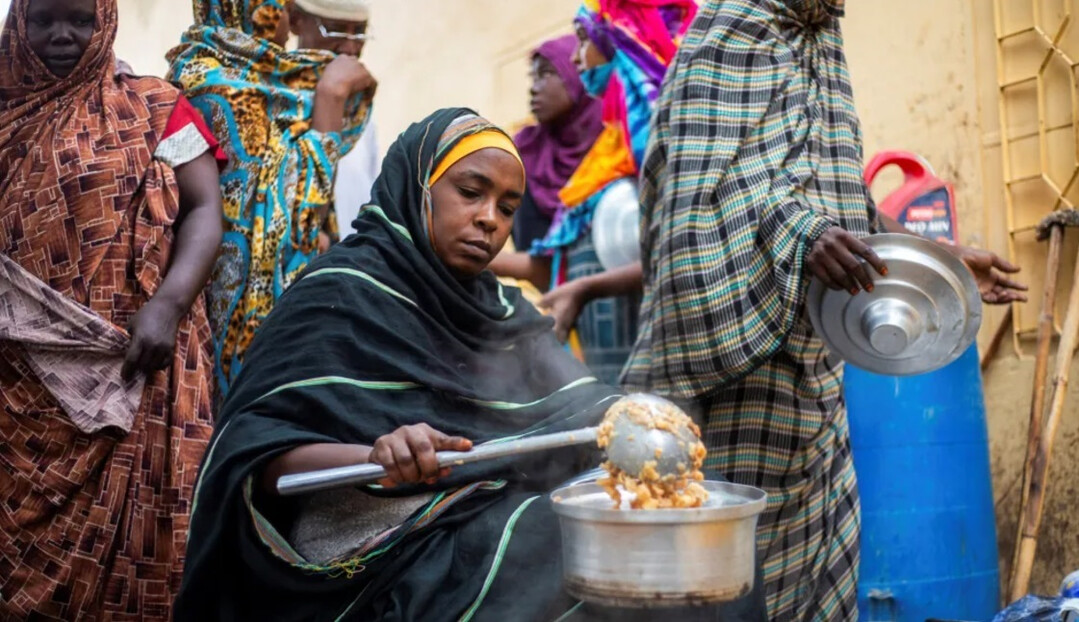
The emergency response rooms draw on a rich heritage of social solidarity in Sudan, and now number several hundred across the country. They are operated by thousands of volunteers, who make daily meals and keep services like power and water running.
Volunteers say their model of a solidarity-based mutual aid could reshape the humanitarian system. Yet their work has been constrained by funding gaps, with global donors hesitant to fully support them despite long-standing pledges to localise aid.
Volunteers said they face significant risks because they are in regular contact with the fighting groups, usually to negotiate a pathway for their supplies. This often leads to false accusations that they are supporting one side or the other.
The risks have increased in recent weeks as the army has sought to recover territory lost to the RSF in the greater Khartoum area, said Ahmed, the emergency response room member who works on volunteer protection issues.
Ahmed said the army has taken over areas from the RSF and then accused civilians and volunteers in those places of being collaborators. He said the RSF has also been arresting volunteers in areas it controls, especially following army airstrikes.
“Sometimes areas are safe and access is easy, but as soon as there is any advance from either side, there are restrictions and blockades, which have a negative impact on volunteers and citizens.”
“The security situation is bad, and this affects volunteers, who are seen as collaborators for various reasons,” Ahmed said. “Both sides use this narrative, but in the end… citizens are forced to deal with both forces.”
In RSF-held areas close to front lines, volunteers and civilians have been forced to relocate to a select number of streets where fighters can surveille them more closely, said Ibrahim, a volunteer who works on emergency response room safety issues.
Ibrahim said volunteers face even more risks in these circumstances. “If someone wants to go out to get food or medicine, they need to obtain a permit and pay money,” he said. “If they don’t return, their families may be at risk.”
“Sometimes areas are safe and access is easy, but as soon as there is any advance from either side, there are restrictions and blockades, which have a negative impact on volunteers and citizens,” Ibrahim added.
Volunteers said they also often face problems if they are caught using cameras on the streets. Photographs are taken to help document their humanitarian work, yet the RSF and the army are suspicious that sensitive information is being collected.
A volunteer called Abu said he recently experienced a “severe injustice” after being beaten by an RSF soldier irked that he had taken photos of a communal kitchen. Abu said another fighter also falsely accused him of owing a debt of $300.
Seeking profit
Volunteers said they are also being targeted because the fighting groups have a with-us-or-against-us mindset that leaves little space for a neutral humanitarian operation.
At the same time, they said they face suspicion based on the fact that many of their members were previously part of the pro-democracy resistance committees that opposed the influence of the army and the RSF over politics and the economy.
Mohammed, a volunteer who left Khartoum earlier in the war, said he was targeted for sending private messages opposing the crimes of RSF fighters who have looted neighbourhoods en masse, and committed widespread sexual violence and killings.
Mohammed said RSF fighters stopped him randomly outside his house, and took his phone. They then opened his WhatsApp, finding critical messages referring to the militia as Janjaweed, a word that was originally used to describe common criminals.
Mohammed said he was viciously beaten by the RSF fighters and then taken to a detention centre where nearly 1,000 people were being kept. He said he was held for around 20 days, without even his family knowing where he was.
“There was no water available, people desperately wanted to take a shower, and the sounds of beatings and bombing were continuous,” said Mohammed, explaining that he was only released after a social media campaign by the emergency response rooms.
In other cases, volunteers said they aren’t being targeted because of their political views, but because their groups are seen as important strategic assets within a burgeoning war economy.
The groups receive funding from local communities, the Sudanese diaspora, and local and international aid groups, and this has caught the attention of both the army and the RSF. Some reports suggest that increased international funding has led to more security incidents.
Army-aligned government authorities have long seen international aid groups as a political resource, to be controlled through state agencies. They are suspicious of the emergency response rooms because they aren’t registered or regulated.
Meanwhile, RSF fighters, who control the majority of Khartoum, are often looking for ways to make money or simply secure food. They therefore often loot communal kitchens or kidnap volunteers and demand hefty ransom payments.
Aisha, the coordinator of the women’s emergency response room in the east of Khartoum, said 21 women from a cooperative were recently detained, beaten, sexually harassed, and had their money stolen by members of the RSF.
Aisha was unable to confirm the reason behind the incident, but several sources suggested it was tied to a perception among the fighters that the cooperative was well resourced.
After the incident, Aisha said community members stopped attending weekly cooperative meetings that had enabled women to support each other emotionally and financially, and helped them work together on income-generating projects.
Ahmed, the Khartoum volunteer, described a story where volunteers were falsely accused by RSF fighters of supporting loyalists to the regime of ex-president Omar al-Bashir. He said the smear was used to extract payments of $150 per person..
Ahmed also described an incident in which a volunteer survived being shot twice in the abdomen by an RSF soldier in an eastern locality of Khartoum. He said the soldier had arrived at a communal kitchen only to find the food had been finished by civilians.
“The main thing the RSF uses to justify its actions is saying that these fighters are unruly, even though these areas are under their control,” Ahmed said. “They claim these individuals are unruly and do not acknowledge [their responsibility].”
How to respond
While there is a limited amount the emergency response rooms can do to prevent looting and attacks, Ahmed said there are two main ways they can respond to arrests: paying ransoms privately, or advocating publicly for the release of the volunteers.
Ahmed said public escalation strategies tend to involve social media campaigns that often name the detainees, the circumstances of their arrests, and the impact that their detentions have had on the emergency response room.
Ahmed said volunteers can also connect with the UN’s humanitarian agencies, asking them to exert some pressure on the fighters. However, he said local efforts, from ransom payments to social media campaigns, often “prove to be more effective”.
According to a report from Shabaka, an organisation that amplifies diaspora and civil society groups in the aid sector, volunteers would be better protected if international aid groups and donors afforded them the same recognition and treatment they do other aid workers.
The report calls on aid groups and donors to advocate for volunteers’ safety, provide them with funding and training for security and protection, and publicly condemn attacks against them as war crimes, while respecting their confidentiality.
Ibrahim, the emergency response room member who works on safety issues, said the warring parties should be reminded that volunteers are local citizens who receive no compensation or material benefit.
“We hope they are treated well, as they are not obligated to do this,” Ibrahim told The New Humanitarian. “It is just a service to the citizens.”
[Copyright (c) Global Economic Times. All Rights Reserved.]