![[등록] 2026-09-01 15:48:31](/support/_updata/banner2/tl181982910_6749.png)


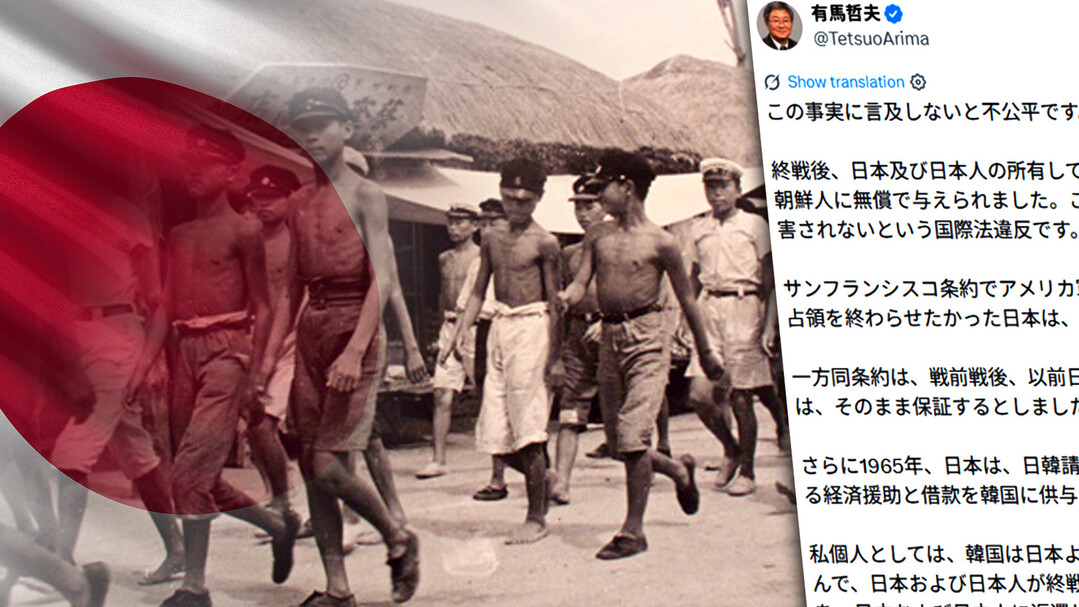
A professor emeritus at Waseda University in Japan, who previously drew criticism for denying the forced mobilization of Japanese military "comfort women," is once again sparking controversy by claiming, "Since South Korea has become wealthier than Japan, it should return Japanese properties from the Japanese colonial era."
On the 13th, Tetsuo Arima, professor emeritus at Waseda University's Faculty of Social Sciences, posted on his social media, "Assets owned by Japan and Japanese people after the end of the war were handed over free of charge to local Koreans by the U.S. military," adding, "This violates international law, which dictates that property ownership must not be infringed upon due to war."
Mentioning the Treaty of San Francisco and the 1965 Korea-Japan Claims Agreement, he claimed, "Personally, I hope that now that South Korea has become wealthier than Japan, a new agreement will be signed so that the assets originally owned by Japan and Japanese people at the end of the war—namely, vested properties—can be returned."
As controversy grew, Arima posted a follow-up message to continue his argument.
He stated, "I am suggesting a new agreement precisely because I know the contents of the Korea-Japan agreements so far," and argued, "Originally, the U.S. military's disposal of Japanese property on the Korean Peninsula without the owners' consent constitutes a violation of international law."
He added, "Despite agreements, the South Korean side continues to demand compensation from Japan for comfort women and forced labor. If so, I think it is only fair that there are Japanese people who demand the return of properties wrongfully taken from them."
He equated the claims for damages by victims of Japanese forced mobilization with the U.S. military government's confiscation of Japanese property, using it as the basis for his demand for restitution.
However, this argument directly contradicts the explicit provisions of the 1965 Korea-Japan Claims Agreement.
The agreement stipulates, "It is confirmed that the problems concerning property, rights, and interests of the two Contracting Parties and their nationals, and the claims concerning them, have been settled completely and finally."
The Japanese government has also maintained the official stance regarding the claims for damages by victims of forced mobilization and comfort women that "the matter was completely and finally resolved through the 1965 Claims Agreement."
Netizens who encountered Arima's post responded with outrage, saying, "It's an absurd claim that turns a blind eye to the history of colonial rule," and "You need to study history again."
[Copyright (c) Global Economic Times. All Rights Reserved.]