• 2026.11.28 (Sat)
  • All articles
  • LOGIN
  • JOIN
Global Economic Times
한인동포뉴스(상단)
  • Synthesis
  • World
  • Business
  • Industry
  • ICT
  • Distribution Economy
  • Well+Being
    • Pet Life
    • Halal Horizon
  • Travel
  • Eco-News
  • Education
  • Korean Wave News
  • Opinion
  • Arts&Culture
  • Sports
  • People & Life
    • International Student Report
    • With Ambassador
  • Column
    • Cho Kijo Column
    • Cherry Garden Story
    • Ko Yong-chul Column
    • Kim Bong-seon's Photo Column
    • Kim Seul-Ong Column
    • Lee Yeon-sil Column
    • Professor Lee Soo-young’s Life Essays
  • Photo News
  • New Book Guide
MENU
 
Home > World

Germany Approves Historic €109.7 Billion Defense Budget Amid Rising Debt and Neighboring Unease

Global Economic Times Reporter / Updated : 2026-11-28 03:29:43
  • -
  • +
  • Print


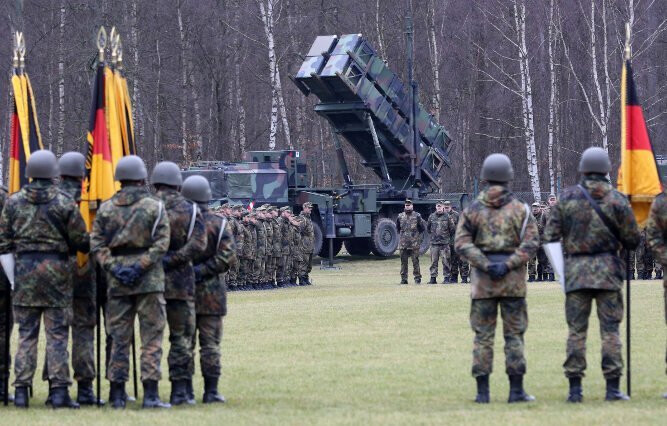
BERLIN — Germany’s lower house of parliament, the Bundestag, passed a landmark €555.9 billion federal budget for 2027 on Friday, marking a decisive shift in European security as Berlin commits a record €109.7 billion to regular defense spending.

Driven by ongoing security threats from Russia, the 32.7% surge from this year’s €82.7 billion allocation makes Germany the first European nation to breach the €100 billion threshold in annual defense expenditure. When combined with €29.6 billion drawn from a special rearmament fund created following Russia's 2022 invasion of Ukraine, Berlin's total security outlay reaches €139.3 billion—excluding an additional €12 billion earmarked directly for Ukrainian aid.

Surging National Debt Sparks Domestic Debate

To finance both its military overhaul and a €57.8 billion annual tranche for a 12-year infrastructure and climate fund, the German government has loosened its strict constitutional borrowing limits. Consequently, new federal borrowing is projected to hit €210.4 billion next year, the second-highest figure in post-war German history after the €215.4 billion borrowed during the height of the COVID-19 pandemic in 2021.

Despite attempts to offset expenditures through higher taxes on alcohol and tobacco, the fiscal trajectory has drawn sharp warnings. The German Council of Economic Experts projects that Germany’s debt-to-GDP ratio could climb from 63.5% last year to 100% by 2040.

Finance Minister Lars Klingbeil defended the spending spree as a necessary safeguard for future generations, stating that no child born in Germany today should ever experience war again. Opposition lawmakers, however, strongly criticized the long-term fiscal burden. Dietmar Bartsch of the Left Party pointed out that under the government’s medium-term plan—which targets €183.7 billion in defense spending by 2030—Germany will soon outspend nuclear-armed Britain and France combined, leaving future citizens to foot the bill.

Historical Sensitivities and Skepticism Abroad

While Chancellor Friedrich Merz has sought to reassure allies that "Europe can rely on Germany" to deter Russian aggression, Berlin’s rapid militarization has stirred historical anxieties across the continent.

In France, left-wing political figure Jean-Luc Mélenchon questioned Germany’s ambition to build Europe's strongest conventional military, warning during a recent visit to Berlin that pivoting a stagnant economy toward arms manufacturing inherently risks fueling future conflict.

Meanwhile, skepticism persists even in nations directly bordering Russia's sphere of influence. Right-wing factions in Poland have accused Berlin of leveraging European Union joint procurement initiatives to bolster its domestic defense sector. Public trust also remains mixed: a survey published last month by the Heinrich Böll Foundation revealed that only 57% of Polish respondents—and just 23% in Greece—believe Germany would actually intervene militarily if their country were invaded.

[Copyright (c) Global Economic Times. All Rights Reserved.]

  • #Cherry Garden
  • #HalalFood
  • #Halal
  • #Petlife
  • #Cats
  • #Dogs
  • #Halalhorizone
  • #Hormuz Impasse
  • #Joseon
  • #globaleconomicti
Global Economic Times Reporter
Reporter Page

Popular articles

  • World Citizens are Flying Directly to Busan... The Era of 4 Million Foreigners is Just Around the Corner

  • Restoring Hearing with Genes, Cochlear Implants with Robots: Where Does Hearing Loss Treatment Stand Today?

  • Cold Wave and Autumn Chill Hit Korea on "Ipdong": Gangwon -6°C, Seoul Real-Feel -4°C… Rain and Snow Expected in Central Regions on Sunday

I like it
Share
  • Facebook
  • X
  • Kakaotalk
  • LINE
  • BAND
  • NAVER
  • https://globaleconomictimes.kr/article/1065551334334190 Copy URL copied.
Comments >

Comments 0

Weekly Hot Issue

  • Myanmar’s President Defies Landmark UN Court Ruling on Rohingya Genocide
  • North Korean Hackers Begin Laundering Billions Stolen from Binance
  • Trump Dismisses Security Concerns Over Nvidia CEO’s Return, Citing "Great Deal of Information"
  • UN Tribunal Rules UNRWA Wrongfully Terminated Staff Over Unverified Israeli Claims
  • Man in His 20s Sentenced to 3 Years in Prison and Detained in Court for Illegally Filming Junior Soldier’s Body and Distributing It in Group Chat
  • Government Pushes to Recommend Limiting Consecutive Night Shifts to 3 Days or Less; Early-Morning Delivery Excluded

Most Viewed

1
Exercise Beats Diet in Extending Lifespan, Major Review Finds
2
Memory Chip Rout Deepens as Wall Street Questions AI Spending and DRAM Pricing
3
South Korean Burger Chain Lotteria Expands Singapore Footprint with Halal Certification and New Teriyaki Lineup
4
AI Semiconductor Stocks Plummet: Philadelphia Index Drops 5.28% and Micron Plunges 7.59% Amid Executive Shakeup and Export Restrictions
5
"Stay Out, Get Paid, or Have Police Stay With You": Shenzhen Imposes Strict Security Ahead of APEC Summit
체리가든 스토리
nutri huevos
로타리
동포저널

Hot Issue

GOP Fractures Over Trump Tariffs as Inflation Concerns Mount Post-Midterms

South Korea Moves to Mandate Domestic Chips in Security Infrastructure and Launch Strategic Export Fund

Experts Urge Focus on AI Infrastructure, Cautious Asset Allocation Ahead of 2027

Fashion Runway Show 2026

Let’s recycle the old blankets in Jeju Island’s closet instead of incinerating them.

Global Economic Times
korocamia@naver.com
CEO : LEE YEON-SIL
Publisher & Editor : KO YONG-CHUL
Registration number : Seoul, A55681
Registration Date : 2024-10-24
Youth Protection Manager: KO YONG-CHUL
Singapore Headquarters
5A Woodlands Road #11-34 The Tennery. S'677728
Korean Branch
Phone : +82(0)10 4724 5264
#304, 6 Nonhyeon-ro 111-gil, Gangnam-gu, Seoul
Copyright © Global Economic Times All Rights Reserved
  • News K
  • 반달곰 프로젝트
  • 광고문의
Search
Category
  • All articles
  • Synthesis
  • World
  • Business
  • Industry
  • ICT
  • Distribution Economy
  • Well+Being 
    • 전체
    • Pet Life
    • Halal Horizon
  • Travel
  • Eco-News
  • Education
  • Korean Wave News
  • Opinion
  • Arts&Culture
  • Sports
  • People & Life 
    • 전체
    • International Student Report
    • With Ambassador
  • Column 
    • 전체
    • Cho Kijo Column
    • Cherry Garden Story
    • Ko Yong-chul Column
    • Kim Bong-seon's Photo Column
    • Kim Seul-Ong Column
    • Lee Yeon-sil Column
    • Professor Lee Soo-young’s Life Essays
  • Photo News
  • New Book Guide
  • Overseas Koreans
  • Multicultural News