![[등록] 2026-09-01 15:48:31](/support/_updata/banner2/tl181982910_6749.png)


Gyeongsangbuk-do, South Korea — From the vast expanse of the Baekdudagan National Arboretum—the largest of its kind in Asia—to the 800-year history of Korean-Vietnamese historical connections at the Ly Dynasty site, the deeply soothing Munsuban Natural Recreation Forest, and the whimsical Buncheon Santa Village where canyon trains run along mountain tracks, Bonghwa-gun in Gyeongsangbuk-do serves as a premier forest travel destination. It is a place where the untouched nature, history, and culture of the Baekdudagan mountain range come together in harmony. Walking slowly along these lush forest trails, travelers encounter the deep comfort offered by nature alongside the captivating local stories unique to Bonghwa.
A Land Wrapped in Greenery
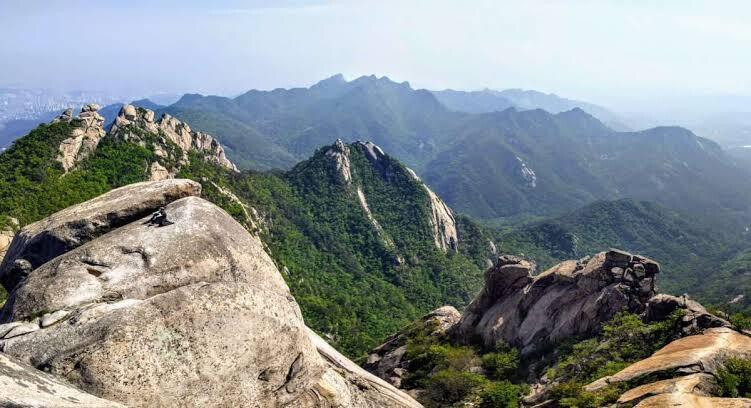
Bonghwa is often referred to as the "Land of Forests." Situated at the very heart of the Baekdudagan mountain range, virtually anywhere you turn your gaze, your eyes land on overlapping mountain ridges and dense, ancient woods. Mountain streams flowing gently beside winding roads, soft morning mist rolling over peaks, and trees that dramatically shift color with each passing season give the landscapes of Bonghwa a deep and enduring dignity.
Yet, Bonghwa’s true appeal extends far beyond its sweeping natural panoramas. Hidden throughout this quiet mountain county are diverse narratives waiting to be discovered: Asia's largest arboretum dedicated to alpine ecology, the preserved traces of an 800-year friendship connecting Korea and Vietnam, forest sanctuaries designed to heal the mind and body, and scenic tourist trains winding through dramatic river canyons.
Rather than consuming commercialized tourist facilities at a rapid pace, Bonghwa reveals its genuine beauty when visitors slow down, stroll between the woods and quiet villages, and linger for a while. This journey explores four representative destinations of Bonghwa: the Baekdudagan National Arboretum, the Ly Dynasty historical site, the Munsuban Natural Recreation Forest, and the Buncheon Santa Village.
Embracing the Life of the Mountain Range: Baekdudagan National Arboretum
The first destination on any journey through Bonghwa must be the Baekdudagan National Arboretum. Tucked away in the deep mountain folds of Chunyang-myeon, this massive conservation facility was established to preserve and research the unique forest ecosystems of the Baekdudagan range, standing today as the largest arboretum in Asia.
The moment you pass through the visitor center and step into the grounds, the ambient noise of city life fades completely. In its place, the rustling of leaves in the mountain breeze, cheerful bird calls, and the crisp fragrance of wild soil and flora welcome travelers. Because the arboretum spans an immense area, an efficient way to explore is to take the internal tram up toward the observation deck or the Tiger Forest, and then take a leisurely walk back down along the manicured paths.
The primary charm of the arboretum lies in its ability to present the biodiversity of the Baekdudagan range in a single location. Walking through thematic gardens such as the Wildflower Hill, Alpine Wetland, Rock Garden, and Rhododendron Garden, visitors encounter species that thrive across varying altitudes and habitats. Walking paces naturally slow down in front of rare plants and delicate wildflowers, many carrying names unfamiliar to the average visitor.
With each season, the arboretum changes its expression. In spring, delicate wildflowers like trout lilies and windflowers carpet the forest floor. Summer brings thick, verdant canopies that block out the sun with vibrant green shades. In autumn, brilliant red and golden foliage paints the mountain slopes, while winter transforms the quiet peaks into a snow-covered landscape of serene grandeur.
The crowning highlight of the arboretum is the "Tiger Forest." Here, visitors can observe endangered Baekdusan tigers roaming across a expansive forest habitat designed to mirror their natural wild environment. Rather than waiting in front of small cages like a traditional zoo, visitors quietly look out over the vast forest in hopes of spotting a tiger moving naturally through the landscape. Even if the tigers choose to stay out of view, gazing across the pristine wilderness and ecological habitat is a deeply meaningful experience in itself.
For children, it serves as a living outdoor classroom; for adults, it provides a poignant moment to reflect on wildlife conservation and the irreplaceable value of forest ecosystems. With a bit of good fortune, visitors can spot a tiger walking gracefully between the trees or resting atop a sunlit rock.
There is no reason to hurry at the Baekdudagan National Arboretum. Instead of rushing to check off designated photo spots, select a quiet forest path and walk without a tight schedule. Listening to the rustle of leaves and observing tiny organisms living among the grass leaves travelers feeling lighter and refreshed.
Travel Tip: To truly experience the arboretum, set aside at least four hours. Because the grounds are vast and feature uphill terrain, make good use of the tram system, wear comfortable walking shoes, bring a hat, and carry drinking water. Please note that because the tigers are wild animals, sightings depend heavily on weather conditions and the time of day.
Location: Baekdudagan National Arboretum Visitor Center, 1501 Chunyang-ro, Chunyang-myeon, Bonghwa-gun, Gyeongsangbuk-do.
800 Years of Shared History: The Ly Dynasty Historical Site and Chunghyodang
Deep within the mountains and countryside of Bonghwa lies a remarkable historical story. Located in Changpyeong-ri, Bongseong-myeon, Chunghyodang is a historical pavilion that preserves the heritage of Prince Lee Yong-sang (Ly Xuong Caan) of the Vietnamese Ly Dynasty and his descendants.
Prince Lee Yong-sang was a royal family member of Vietnam's Ly Dynasty who fled his homeland during a period of dynastic transition in the 13th century, eventually arriving in the Goryeo Kingdom. After settling in Korea, he played a crucial role in repelling Mongol invasions, earning honor and military recognition. He subsequently became the founder of the Hwasan Lee clan in Korea. Today, he is remembered as a symbolic figure representing the long-standing, 800-year bond between Korea and Vietnam.
Bonghwa's Chunghyodang serves as a space that reflects the settlement of his descendants and honours their dedication to filial piety and loyalty. Constructed around 1750 by descendants alongside local Confucian scholars, the building retains the neat and unpretentious elegance of traditional Hanok architecture to this day.
Standing quietly across a spacious courtyard, the structure exudes understated charm rather than opulent ornament. Surrounded by gentle hills and peaceful village views, the site conveys a profound sense of time preserved across generations. Nearby, a bronze statue of Prince Lee Yong-sang and related commemorative markers have been erected.
While it is not a massive commercial tourist site, the historical weight carried by Chunghyodang is considerable. A life story that began in the Goryeo era continues to serve centuries later as a powerful symbol of cultural exchange between Korea and Vietnam. In recent years, an increasing number of Vietnamese tourists, dignitaries, and international students visiting Korea have traveled to this site. For them, Chunghyodang is a place to connect with their heritage and roots far from home.
Recognizing this heritage, Bonghwa County is currently developing cultural tourism infrastructure around the Chunghyodang area focused on Vietnamese traditions and Ly Dynasty history. Plans include a re-created traditional Vietnamese village, historical display areas, performance spaces, and a scenic trail and observation deck surrounding nearby Changpyeong Reservoir.
Once these developments are completed, Chunghyodang will evolve beyond a historic house into an active cultural exchange hub where visitors can experience both Korean and Vietnamese history. At present, it remains a tranquil destination where travelers can enjoy a quiet walk while reflecting on the historical legacy of Prince Lee Yong-sang.
Travel Tip: Currently, visitors can view Chunghyodang, the statue of Lee Yong-sang, and the immediate surrounding historical markers. Reading about the historical background before visiting enhances the trip considerably. Once the surrounding lakeside walking paths and facilities are complete, it will become an even richer destination for longer stays.
Location: 19-1 Changpyeongbonma-gil, Bongseong-myeon, Bonghwa-gun, Gyeongsangbuk-do.
Finding Deep Rest in the Forest: Munsuban Natural Recreation Forest
For those seeking complete relaxation surrounded by nature, head deep into the Munsuban Natural Recreation Forest. Nestled in the secluded valleys of Munsuban Mountain, this sanctuary offers a pristine retreat filled with dense pine forests, oak groves, and crystal-clear mountain streams.
The atmosphere changes as soon as you turn onto the approach road. As the winding road climbs higher into the mountains, the air becomes noticeably cooler and the forest outside the window turns a deeper green. Upon arriving at the lodging facilities and opening a window, the trees and mountain peaks feel close enough to touch.
The recreation forest features wooden cabins in the woods, a dedicated Forest Healing Center, campsites, and well-maintained walking trails. It is equally suited for families seeking a peaceful getaway, couples looking for a quiet retreat, or solo travelers desiring solitude.
The primary attraction of Munsuban Natural Recreation Forest is that it requires no complex agenda. Sitting on a porch chair to watch the wind move through the trees or taking a gentle walk along the sound of flowing mountain streams naturally releases everyday stress. Even during the summer heat, the shaded valley trails retain a cool breeze, making them ideal for morning walks.
Early morning is the most magical time at the forest retreat. Thin veils of mist drift slowly between the trees, and the ambient songs of wild birds signal the start of a new day. At night, minimal artificial lighting allows visitors to view starry skies rarely seen in urban environments.
Inside the forest grounds, the Forest Healing Center provides wellness programs that leverage the natural ecosystem. Visitors can check their basic health markers, experience soothing foot baths or warm hydrotherapy, and practice singing bowl sound meditation to relax the body and quiet the mind.
Focusing on the gentle vibrations of the singing bowls helps quiet busy thoughts and slow down one's breathing. In this way, spending time in the forest moves beyond simply looking at beautiful scenery; it becomes an active practice of tuning into one's physical and mental well-being.
For families, it serves as an opportunity to focus on health together, while for couples, it creates lasting memories in a tranquil environment. Munsuban Natural Recreation Forest is less of a standard lodging site and more of an invitation to learn how to truly rest in nature.
Travel Tip: Walking paths along the stream are ideal for light strolls at sunrise or sunset. Because space in the Forest Healing Center's wellness programs can be limited, it is best to check schedules and make reservations in advance.
Location: 378 Sigeori-gil, Bongseong-myeon, Bonghwa-gun, Gyeongsangbuk-do.
A Fairytale Train Ride Through Canyons: Buncheon Santa Village
The final stop on a tour through Bonghwa is Buncheon Station, a small mountain village train station located in Socheon-myeon. Once a quiet stop serving local residents, this remote railway platform has transformed into one of Bonghwa's iconic, year-round tourist attractions.
Upon arriving at Buncheon Station, visitors are greeted by a charming, Christmas-themed landscape. Bright red rooftops, cheerful Santa statues, decorated Christmas trees, and colorful photo zones give the small station the feel of an idyllic holiday village tucked away in the mountains.
During the winter, snow-covered hills combined with festive red decorations evoke the feel of a Nordic winter village. However, Buncheon Santa Village offers charm across all four seasons. In spring, soft green mountains envelope the tracks, while summer brings cool forest views and clear river streams. In autumn, the surrounding canyon walls burst into vivid fall foliage.
The true highlight of Buncheon is the scenic tourist train that runs along the steep river canyons of the Baekdudagan range. The train moves at a relaxed pace through deep valleys along the upper stretches of the Nakdong River and between isolated mountain villages. Its primary draw is providing access to dramatic canyon vistas that cannot be easily reached by car.
Sheer cliffs rising above flowing rivers, dense mountain slopes, short railway tunnels, steel trestle bridges, and small hamlets perched on hillside terraces appear one after another outside the train windows. Whenever the train slows down along scenic curves, passengers naturally lean toward the windows to take in the view. Rather than a single famous landmark, the continuous landscape flowing past the windows constitutes the main event of the journey.
In the fall, the train winds past fiery canyon walls; in the winter, it glides through snow-covered peaks and frozen riverbeds. This seasonal transformation is why these routes are affectionately called the Autumn Leaves Train or the Snowflower Train. The train serves not merely as rapid transit to a destination, but as a moving observatory offering a rare look into the heart of the mountain range.
Around the Buncheon Station plaza, visitors will find a Santa Post Office, photo zones, cozy cafes, and souvenir shops, ensuring that waiting for the train is enjoyable. Children can explore the Santa installations, while adults capture photos along the classic railway lines.
Taking a walk through the village itself is equally rewarding. Crossing the nearby bridge leads to the Santa Forest Resort, which provides accommodation and dining facilities for travelers wishing to stay overnight. While taking a day trip on the canyon train is popular, spending an evening in the quiet mountain village offers a completely different, peaceful perspective.
Travel Tip: Visitor numbers peak during the winter festival period, so booking train tickets and accommodations well in advance is essential. Visiting during the quieter spring, summer, or autumn seasons allows for a more relaxed exploration of the Santa Village and the surrounding canyon trails. Always check tourist train schedules and route operational status before traveling.
The Enduring Quiet of Bonghwa
Bonghwa is a destination defined not by flashy modern attractions, but by natural heritage, rich historical narratives, and a relaxed pace of life. At the Baekdudagan National Arboretum, travelers connect with the deep vitality of alpine forests. At the Ly Dynasty historical sites, they reflect on an extraordinary 800-year story of international friendship. In the quiet confines of the Munsuban Natural Recreation Forest, they find true rest, and at Buncheon Santa Village, they rediscover a sense of wonder and childlike delight.
The best way to experience Bonghwa is simply to avoid rushing. Walk slowly along the forest paths, pause quietly in front of historical homes, and spend time gazing out the window of a train as it winds through deep mountain canyons.
Framed by the Baekdudagan mountain range, this quiet country corner may not offer loud or ostentatious entertainment, but it leaves an impression that grows clearer and more meaningful long after the journey is over.
[Copyright (c) Global Economic Times. All Rights Reserved.]