SEOUL — South Korean households are facing mounting financial pressure as commercial borrowing costs climb sharply, driven by a string of interest rate hikes from the central bank and a prolonged downturn in the domestic stock market.
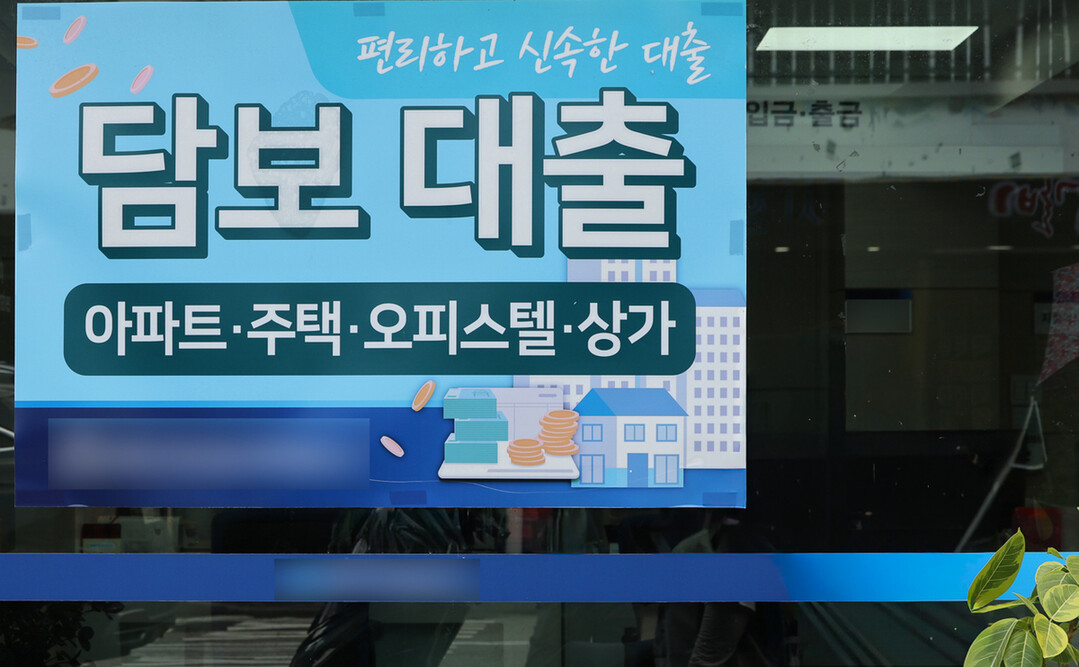
Data released by the Bank of Korea (BOK) on Thursday showed that average rates on newly issued five-year fixed-rate mortgages reached 5.13 percent in October, extending an upward streak to 13 consecutive months. The figure represents a 0.6 percentage point jump from June, shortly before the central bank began its tightening cycle. Meanwhile, upper-end interest rates on unsecured overdraft accounts at South Korea’s five largest commercial banks—KB Kookmin, Shinhan, Hana, Woori, and NH Nonghyup—have breached the 7 percent threshold, ranging between 5.77 percent and 7.05 percent.
The surge in borrowing costs follows the BOK’s decision a day earlier to raise its benchmark policy rate by 25 basis points to 3.25 percent. Having now delivered three rate increases totaling 0.75 percentage points since July, the central bank has signaled that further monetary tightening remains on the table for next year.
For heavily indebted households, the financial math is becoming increasingly punishing. On a 500 million won ($360,000) mortgage, an interest rate increase from 4.25 percent to 5.0 percent adds roughly 310,000 won to monthly interest payments alone, translating to an extra 3.75 million won in annual debt servicing costs.
A Polarized Economy
The central bank finds itself navigating an uneven economic landscape. Robust earnings in the country's flagship semiconductor sector are expected to trickle down into the broader economy next year through corporate bonuses and dividends, threatening to stoke demand-pull inflation. The BOK currently forecasts consumer price growth at 2.7 percent this year and 2.4 percent in 2027—both above its 2 percent target.
Yet outside the chip sector, domestic sentiment is cooling rapidly. A steep correction in the benchmark KOSPI index, which has tumbled more than 30 percent since late September, has eroded retail investor wealth and curtailed consumer spending.
According to the BOK's latest survey, the Composite Consumer Sentiment Index dropped 2.3 points in November to 103.1, marking its lowest reading since April. Simultaneously, government data revealed that while nominal monthly household income edged up 0.8 percent year-on-year to 5.47 million won in the third quarter, inflation-adjusted real income contracted by 2.1 percent.
"Sluggishness in the equity market has undeniably weighed on private consumption," BOK Governor Shin Hyun-song acknowledged, while noting that broad monetary policy tools cannot be applied selectively. He stressed that targeted fiscal and financial interventions are necessary to shield lower-income borrowers from the fallout of higher rates.
Calls for Comprehensive Policy Action
Despite growing distress among retail borrowers—many of whom took out credit lines to invest in equities prior to the market downturn—concrete government relief has been slow to arrive.
Average interest rates on new unsecured bank loans hit 6.43 percent in October, staying above 6 percent for the third straight month. While Deputy Prime Minister and Finance Minister Lee Hyung-il pledged additional support measures for vulnerable borrowers late last month, detailed policies have yet to be unveiled.
Economists warn that debt restructuring programs alone will not suffice in a high-rate environment. Kang Kyung-hoon, a business professor at Dongguk University, noted that aiding struggling households requires a multi-pronged approach that pairs financial relief with broader social welfare support.
[Copyright (c) Global Economic Times. All Rights Reserved.]