• 2026.11.13 (Fri)
  • All articles
  • LOGIN
  • JOIN
Global Economic Times
[등록] 2026-09-01 15:48:31
  • Synthesis
  • World
  • Business
  • Industry
  • ICT
  • Distribution Economy
  • Well+Being
    • Pet Life
    • Halal Horizon
  • Travel
  • Eco-News
  • Education
  • Korean Wave News
  • Opinion
  • Arts&Culture
  • Sports
  • People & Life
    • International Student Report
    • With Ambassador
  • Column
    • Cho Kijo Column
    • Cherry Garden Story
    • Ko Yong-chul Column
    • Kim Bong-seon's Photo Column
    • Kim Seul-Ong Column
    • Lee Yeon-sil Column
  • Photo News
  • New Book Guide
MENU
 
Home > Opinion

Beyond the Classroom Gates: Why Teachers Deserve Their Political Voice

KO YONG-CHUL Reporter / Updated : 2026-11-13 03:01:24
  • -
  • +
  • Print

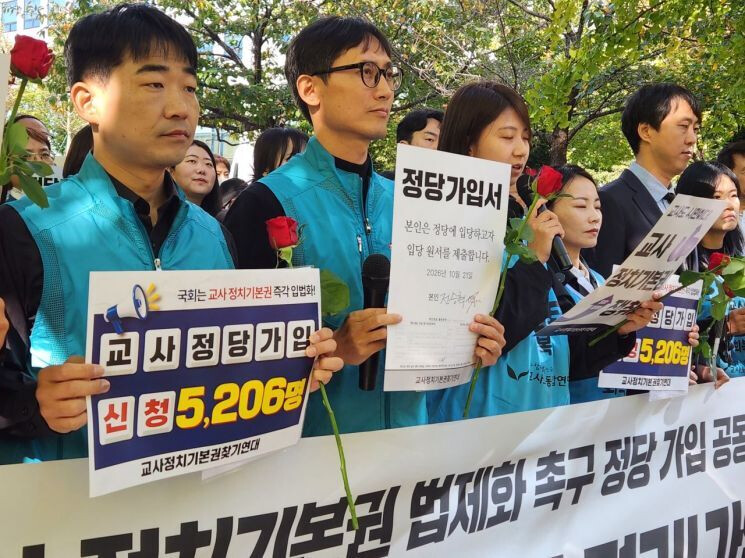
For decades, South Korea’s education system has operated under a profound paradox: it mandates that teachers cultivate active, democratic citizens while stripping educators of their own fundamental civic rights. While university professors can step away from campus to run for office or engage in political discourse without risking their careers, elementary and secondary school teachers face an absolute prohibition. Under current laws, even a social media "like" on a political post or a small campaign donation can brand a dedicated teacher a criminal. This is an anachronistic restriction that urgently demands reform.

The primary argument defending this status quo is "the political neutrality of education." This concept originated as a crucial safeguard following the authoritarian eras of the mid-20th century, designed to prevent political regimes from turning schools into propaganda instruments and teachers into partisan tools. However, over time, a protective measure meant to secure academic freedom morphed into a institutional gag. It conflates professional duty with personal disenfranchisement, treating teachers as subjects devoid of political agency once they step onto school grounds.

Critics often raise the specter of the classroom turning into a chaotic political battlefield, warning that educators might indoctrinate impressionable minds. Yet, this argument relies on the false premise of a "political vacuum." Classrooms are never sterile zones. Children and teenagers today navigate a constant stream of algorithmic content, social media, and digital media that actively shapes their worldviews. Denying teachers the right to engage in public discourse does not protect students from bias; rather, it leaves them vulnerable to unguided, extremist echo chambers.

True educational neutrality does not mean enforcing a culture of silence. As demonstrated by models like Germany’s Beutelsbach Consensus, neutrality is a procedural framework: teachers must not force their personal views onto students, controversial social topics must be presented from multiple perspectives, and students must be equipped to think critically. A teacher’s role is neither to indoctrinate nor to avoid political reality, but to act as a skilled facilitator of balanced debate. Expecting a disenfranchised citizen—someone barred from party membership or basic political expression—to effectively model democratic citizenship to the next generation is fundamentally contradictory.

A practical solution lies in a clear "two-track" approach: strict neutrality and professional ethics inside the classroom, combined with full constitutional rights as citizens outside the school gates. Just as public servants can maintain personal religious or philosophical beliefs without compromising their official duties, teachers are fully capable of separating their private civic participation from their pedagogical responsibilities.

Moreover, silencing teachers harms the broader political and educational landscape. Policy decisions regarding curricula, funding, and student welfare are inherently political, yet the voices of those who know the classrooms best—the teachers—are locked out of the legislative process.

The National Assembly must stop shelving pending legislative reforms. By updating outdated provisions in the State Public Officials Act and related laws, South Korea can firmly secure neutrality inside the classroom while restoring fundamental civil liberties outside of it. It is time to treat teachers as equal citizens and breathe genuine democratic vitality back into our schools.

[Copyright (c) Global Economic Times. All Rights Reserved.]
  • #Cherry Garden
  • #HalalFood
  • #Halal
  • #Petlife
  • #Halalhorizone
  • #Hormuz Impasse
  • #Joseon
  • #globaleconomictimes
  • #micore
KO YONG-CHUL Reporter
Reporter Page

Popular articles

  • US Pushes to Deploy Special Task Force to the Korean Peninsula—Is It Also Targeting China?

  • Samsung Electronics Unveils 'AI Memory' Technologies and Yongin Cluster Roadmap at SEDEX 2026

  • Culinary Mashups and Nostalgia with a Twist: South Korea’s F&B Giants Vie for Consumer Attention

I like it
Share
  • Facebook
  • X
  • Kakaotalk
  • LINE
  • BAND
  • NAVER
  • https://globaleconomictimes.kr/article/1065549592034045 Copy URL copied.
Comments >

Comments 0

Weekly Hot Issue

  • Wall Street Tech Sector Shaken by NVIDIA CEO's Sudden Departure; Rivals See Potential Gains
  • Hidden Health Crisis: Why One in Five Young Japanese Women Faces Severe Underweight Risks
  • Corporate Misconduct and Leadership Exits: A Retrospective on Tech and Retail Chief Executives
  • NVIDIA Chief Jensen Huang Steps Down After Three Decades at the Helm
  • Collette Kress Steps In as Interim NVIDIA CEO Following Jensen Huang’s Departure
  • The Rise of the Sports Pharmacist: Safeguarding Athletes from Unintentional Doping to Holistic Health

Most Viewed

1
South Korea and Ethiopia Sign Trilateral MOU to Introduce Liquid-Based Cytology (LBC) Technology for Cervical Cancer Diagnosis
2
US Army Conducts Rare Temporary Burial Drills to Prepare for Worst-Case Large-Scale War Scenarios
3
From Kim Whanki to Pokémon Cards... Seoul Auction Opens the Floodgates
4
Meeting Christmas Early!… Busan Dessert Sales Event "Daldal The Market" Held
5
World Citizens are Flying Directly to Busan... The Era of 4 Million Foreigners is Just Around the Corner
체리가든 스토리
nutri huevos
로타리
동포저널

Hot Issue

Collette Kress Steps In as Interim NVIDIA CEO Following Jensen Huang’s Departure

NVIDIA Chief Jensen Huang Steps Down After Three Decades at the Helm

Corporate Misconduct and Leadership Exits: A Retrospective on Tech and Retail Chief Executives

Fashion Runway Show 2026

Let’s recycle the old blankets in Jeju Island’s closet instead of incinerating them.

Global Economic Times
korocamia@naver.com
CEO : LEE YEON-SIL
Publisher : KO YONG-CHUL
Registration number : Seoul, A55681
Registration Date : 2024-10-24
Youth Protection Manager: KO YONG-CHUL
Singapore Headquarters
5A Woodlands Road #11-34 The Tennery. S'677728
Korean Branch
Phone : +82(0)10 4724 5264
#304, 6 Nonhyeon-ro 111-gil, Gangnam-gu, Seoul
Copyright © Global Economic Times All Rights Reserved
  • News K
  • 반달곰 프로젝트
  • 광고문의
Search
Category
  • All articles
  • Synthesis
  • World
  • Business
  • Industry
  • ICT
  • Distribution Economy
  • Well+Being 
    • 전체
    • Pet Life
    • Halal Horizon
  • Travel
  • Eco-News
  • Education
  • Korean Wave News
  • Opinion
  • Arts&Culture
  • Sports
  • People & Life 
    • 전체
    • International Student Report
    • With Ambassador
  • Column 
    • 전체
    • Cho Kijo Column
    • Cherry Garden Story
    • Ko Yong-chul Column
    • Kim Bong-seon's Photo Column
    • Kim Seul-Ong Column
    • Lee Yeon-sil Column
  • Photo News
  • New Book Guide
  • Overseas Koreans
  • Multicultural News