![[등록] 2026-09-01 15:48:31](/support/_updata/banner2/tl181982910_6749.png)


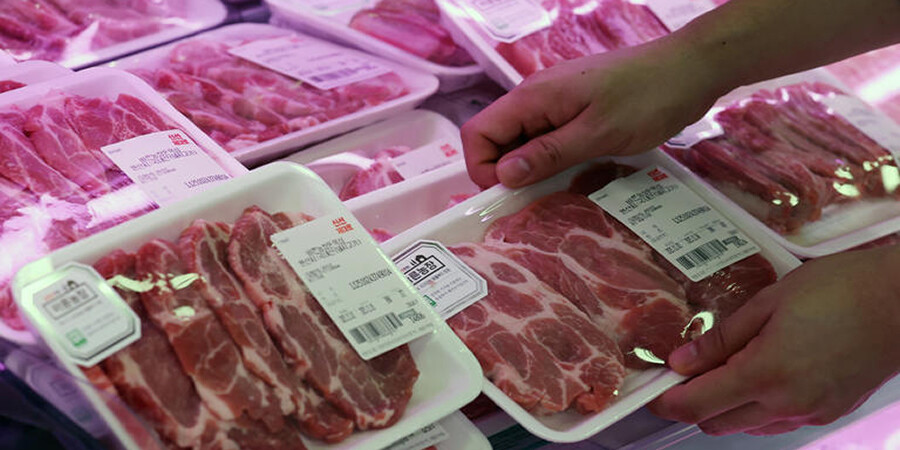
SEOUL — When consumers watch glossy television commercials promoting Korean native beef (Hanwoo) or purchase discounted pork belly (Samgyeopsal) at major supermarket butcher counters, many naturally assume the funding comes entirely from government subsidies or retail conglomerates. However, the financial backbone behind these national advertising campaigns and discount drives includes a direct contribution from local livestock farmers.
Across South Korea's agricultural sector, producers pool their personal capital into a "shared wallet" known as a Checkoff Fund (Jajogeum). Far from a modest collection, these funds represent tens of millions of dollars. For instance, the 2026 budget for the Handon (Korean Pork) Checkoff Fund stands at 40.71 billion KRW, with direct farmer levies comprising 19.85 billion KRW. The Handon board allocated 3.3 billion KRW specifically for television and radio advertising this year, featuring celebrity Chef Anh Sung-jai to position domestic pork as a world-class culinary ingredient. Meanwhile, the Hanwoo (Korean Beef) Checkoff Fund operates on a 32.85 billion KRW budget, funding campaigns like "Hanwoo Answers" to reframe native beef from a luxury treat reserved for special occasions into a versatile, daily meal choice.
"Individual farmers cannot alter national supply or run television campaigns on their own. Checkoff funds grant producers the collective structure and legal authority to solve market failures together."
Why Advertise a Product That Already Sells So Well?
Pork belly is arguably South Korea's favorite cut of meat. This prompts an obvious economic question: Why do pork farmers spend billions of won advertising a staple item that already commands immense consumer demand?
According to Handon Checkoff representatives, overall high consumption does not equate to balanced consumption across the whole animal. Meat demand fluctuates based on broader economic conditions, dining out trends, and weather seasons. Crucially, when consumer demand concentrates overwhelmingly on pork belly, secondary cuts like loin, shoulder, and leg experience severe demand drops. This imbalance creates oversupply crises for other cuts and threatens the economic health of the entire pork industry. Advertising campaigns and organized promotional events, such as "Samgyeopsal Day" or "Handon Day," serve as vital instruments to guide consumer behavior, boost less popular cuts, and stabilize national livestock supply.
Structural Volatility: Why Individual Farmers Cannot Act Alone
Agricultural products differ fundamentally from manufactured goods. Factory assembly lines can instantly adjust production quotas when market demand shifts. Livestock and produce, however, cannot be scaled up or disposed of overnight in response to short-term price swings. Extreme summer heatwaves might drastically reduce egg output, sparking sudden price spikes, while bumper harvests can flood markets and cause farm-gate prices to collapse.
Faced with falling prices, an individual farmer reducing herd size makes virtually no dent in total market supply. Similarly, an isolated farm cannot afford national television advertising to boost sagging consumer demand during economic downturns.
To bridge this gap, producers organize by commodity. As Kim Eung-chul, director of the Commodity Organization Research Institute, explains, agricultural supply management broadly encompasses supply control and consumer marketing. In a detailed breakdown, these functions include production and distribution self-regulation, brand marketing, advertising, and sales promotion.
The Checkoff Fund is not merely a marketing account. It supports essential collective operations that individual farmers cannot undertake alone. For example, out of Handon’s 40.71 billion KRW budget, 11.52 billion KRW goes to consumer promotion, 8.88 billion KRW is reserved for market supply stabilization, and 4.18 billion KRW is dedicated to technical education and industry research.
Global Benchmarks and Solving the Free-Rider Problem
The practice of farmers pooling funds to promote entire commodity classes is an established global model. In the United States, beef producers operate a mandatory national checkoff program collecting $1 per head of cattle sold. This revenue does not promote individual ranches but builds consumer demand for the commodity as a whole.
However, voluntary collective action suffers from a classic economic dilemma: the "free-rider" problem. If contributions were strictly optional, uncooperative farmers could withhold payment while still benefiting from increased market demand and price stability generated by paying members.
To prevent free-riding, major South Korean livestock categories operate under mandatory checkoff funds (Uimu Jajogeum). Backed by specific legislation and formal consent procedures among producers, contribution levies are mandatory at the point of slaughter or transaction. Checkoff fee calculations vary across agricultural sectors, based on fixed rates per head, cultivated surface area, shipment volume, or total sales value.
The True Purpose of the Shared Wallet
While television commercials and meat counter discount banners are the most visible expressions of checkoff funds, they represent only the surface of a deeper institutional framework. The primary goal of these checkoff programs goes far beyond selling meat at discounted prices.
By entrusting farmers with collective self-regulatory authority and financial responsibility, the checkoff system enables producers to independently address market instability, fund vital research, and safeguard agricultural livelihoods without relying exclusively on direct government intervention. In essence, the checkoff fund is the farming community's "shared wallet"—a self-funded safety net built to navigate the volatility of modern food economics.
[Copyright (c) Global Economic Times. All Rights Reserved.]